Carlo V del Sacro Romano Impero
Attribuite
Origine: Citato in AA.VV., I grandi di tutti i tempi: Carlo Quinto, Periodici Mondadori, Verona, 1965, p. 75.
Carlo d'Asburgo fu Re di Spagna , Imperatore del Sacro Romano Impero , Re di Napoli e Duca di Borgogna . È stato una delle più importanti figure della storia dell'Europa, padrone di un impero talmente vasto ed esteso, su due continenti, che gli viene tradizionalmente attribuita l'affermazione secondo cui sul suo regno non tramontava mai il sole.
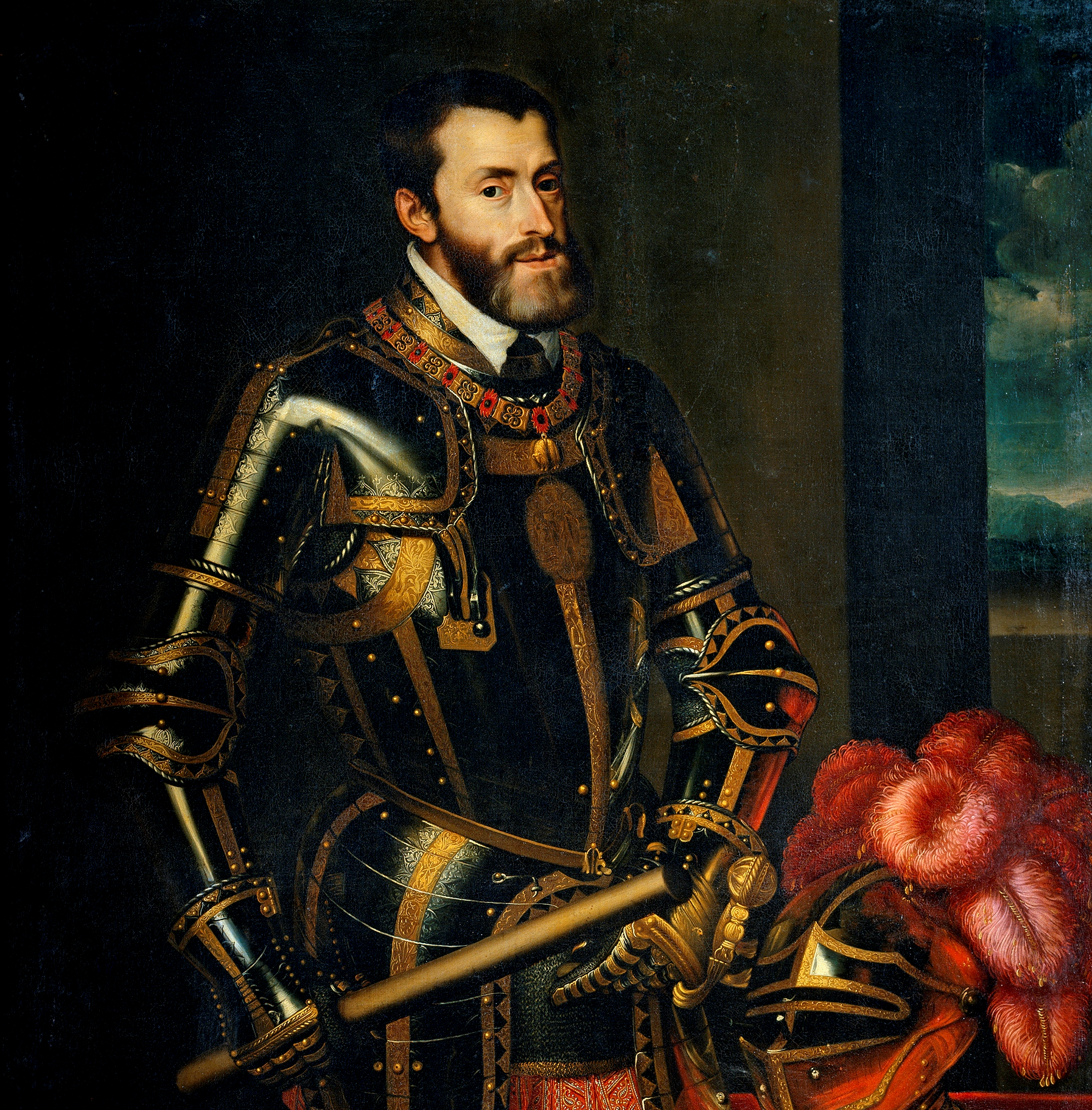
Carlo V del Sacro Romano Impero
Attribuite
Origine: Citato in AA.VV., I grandi di tutti i tempi: Carlo Quinto, Periodici Mondadori, Verona, 1965, p. 75.
Carlo V del Sacro Romano Impero
Attribuite
Origine: Citato in AA.VV., Storia universale: volume secondo, Rizzoli Larousse, Milano, 1973, p. 323.
“Sul mio regno non tramonta mai il Sole.”
Carlo V del Sacro Romano Impero
Attribuite
Origine: Citato in Antonio Brancati, Trebi Pagliarani, Dialogo con la storia 1, La Nuova Italia, Firenze, cap. 20, L'Impero di Carlo V, una formazione anacronistica, p. 263.
“As many languages as you know, so many separate individuals you are worth.”
Variante: The more languages you know, the more human you become. <br class="br">Origine: John G. Robertson "Robertson's Words for a Modern Age: A Cross Reference of Latin and Greek Combining Elements" https://books.google.com.ua/books?id=RFqlPtTSB2kC&pg=PA250&lpg=PA250&dq=Quot+linguas+calles,+tot+homines+vales.&source=bl&ots=EtA4qFqwbn&sig=C9citjpkEkL6ZjovF9_4_AQ1cCw&hl=en&sa=X&ved=0ahUKEwji4ICXl5XRAhULESwKHRp9C6cQ6AEILjAC#v=onepage&q=Quot%20linguas%20calles%2C%20tot%20homines%20vales.&f=false: "Attributed to Charles V"
“Fortune have somewhat the nature of a woman; if she be too much wooed, she is the farther off.”
Origine: As quoted in The Advancement of Learning (1605), Book II, by Francis Bacon
“I speak in Latin to God, Italian to Women, French to Men, and German to my Horse.”
Charles V may have said something in this general format, but not with this specific wording. Variants have been quoted for centuries, and the earliest known citation, itself a secondary source dating from 40 years after his death, gives two versions that both differ from the modern one. Girolamo Fabrizi d'Acquapendente's 1601 De Locutione gives:
Unde solebat, ut audio, Carolus V Imperator dicere, Germanorum linguam esse militarem: Hispanorum amatoriam: Italorum oratoriam: Gallorum nobilem ("When Emperor Charles V used to say, as I hear, that the language of the Germans was military; that of the Spaniards pertained to love; that of the Italians to prayer; that of the French was noble").
Alius vero, qui Germanus erat, retulit, eundem Carolum Quintum dicere aliquando solitum esse; Si loqui cum Deo oporteret, se Hispanice locuturum, quod lingua Hispanorum gravitatem maiestatemque prae se ferat; si cum amicis, Italice, quod Italorum dialectus familiaris sit; si cui blandiendum esset, Gallice, quod illorum lingua nihil blandius; si cui minandum aut asperius loquendum, Germanice, quod tota eorum lingua minax, aspera sit ac vehemens (Indeed another, who was German, related that the same Charles V sometimes used to say: if it was necessary to talk with God, that he would talk in Spanish, which language suggests itself for the graveness and majesty of the Spaniards; if with friends, in Italian, for the dialect of the Italians was one of familiarity; if to caress someone, in French, for no language is tenderer than theirs; if to threaten someone or to speak harshly to them, in German, for their entire language is threatening, rough and vehement").
“My life has been one long journey.”
As quoted at his last public speech, in reference to the peripatetic nature of his reign.
“I will not blush like my predecessor Sigismund.”
Contesto: This was supposedly said by Charles when Martin Luther appeared at the Diet of Worms (16 - 18 April 1521) under an imperial safe-conduct; members of the pro-papal party (sometimes Johann Maier von Eck is specified) are supposed to have urged the emperor to seize Luther in despite of the safe-conduct, whereupon Charles alluded to the story that when Jan Huss had appeared before the Emperor Sigismund under a similar safe-conduct and had been arrested anyway, Hus reproached Sigismund, who visibly reddened at his own lack of faith. The quotation appears in various similar forms, e. g., "I shall not blush as Sigismund did at Constance." The saying is attributed to Charles by the French ecclesiastical historian Jacques Lenfant in his Histoire du Concile de Constance (1714) without a specific source.
“Leave him alone. He has already met his judge. I wage war on the living, not the dead.”
In response to the Duke of Alva who proposed to desecrate the tomb of Martin Luther, burn his body, and scatter his ashes to the wind.
Origine: Luther and His Times Michael Grzonka
“Francis and I are in perfect accord. He wants Milan and so do I.”
Origine: As quoted in "The Story of Civilization: The Renaissance; a history of civilization in Italy from 1304-1576 A.D", Will Durant and Ariel Durant
“I have a glove into which I can put your whole city of Paris.”
Contesto: Allegedly told to Francis I of France. The glove, gant in French, is a reference to the city of Ghent (Gandes in French), where Charles was born.
Diet of Augsburg (1530)
Origine: Ruth Kastner, ed., Quellen zur Reformation 1517-1555. Darmstadt: Wissenschaftliche Buchgesellschaft, 1994, pp. 501-20.
Diet of Worms (1521)
Origine: *Detlef Ploese and Guenther Vogler, eds., Buch der Reformation. Eine Auswahl zeitgenössischer Zeugnisse (1476-1555). Berlin: Union Verlag, 1989, pp. 245-53


