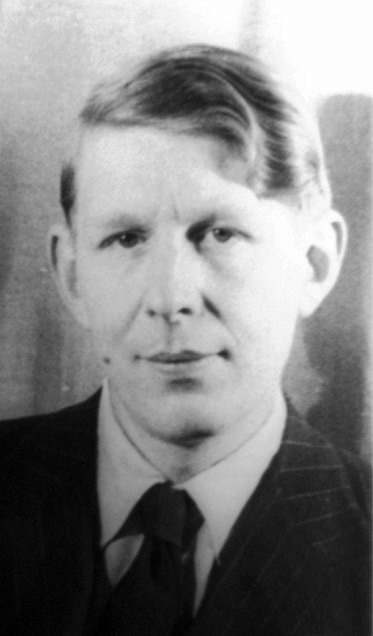
Origine: Da La verità, vi prego, sull'amore; in W. H. Auden, La verità, vi prego, sull'amore, traduzione di Gilberto Forti, Adelphi, 1995; p. 17.
Wystan Hugh Auden: 128 citazioni1 Mi piace
Wystan Hugh Auden frasi celebri
Origine: Citato in John Le Carré, L'onorevole scolaro (The Honourable Scoolboy), traduzione di Attilio Veraldi, Rizzoli, 1978.
Origine: Da Masée des Beaux Arts; citato in Robert Fisk, Cronache mediorientali, Il Saggiatore.
“Ci sono dei libri ingiustamente dimenticati; non ce ne sono di ingiustamente ricordati.”
Origine: Da The Dyer's Hand; citato in Dizionario delle citazioni, a cura di Ettore Barelli e Sergio Pennacchietti, BUR, 2013.
Origine: Blues in memoria; in W. H. Auden, La verità, vi prego, sull'amore, traduzione di Gilberto Forti, Adelphi, 1995.
Wystan Hugh Auden: Frasi in inglese
W. H. Auden libro Forewords and Afterwords
"C.P. Cavafy", p. 341
Forewords and Afterwords (1973)
Contesto: In most poetic expressions of patriotism, it is impossible to distinguish what is one of the greatest human virtues from the worst human vice, collective egotism.
The virtue of patriotism has been extolled most loudly and publicly by nations that are in the process of conquering others, by the Roman, for example, in the first century B. C., the French in the 1790s, the English in the nineteenth century, and the Germans in the first half of the twentieth. To such people, love of one's country involves denying the right of others, of the Gauls, the Italians, the Indians, the Poles, to love theirs.
W. H. Auden libro Spain
Origine: Spain (1937), Lines 81–92
W. H. Auden libro The Age of Anxiety
Epilogue
The Age of Anxiety (1948)
W. H. Auden libro The Dyer's Hand
"Hic et Ille", p. 96
The Dyer's Hand, and Other Essays (1962)
“To ask the hard question is simple,
The simple act of the confused will.”
To Ask the Hard Question is Simple, first published in book form in Poems (1930)
The Fall of Rome (1947), lines 21–28
W. H. Auden libro Forewords and Afterwords
"The Greeks and Us", p. 21
Forewords and Afterwords (1973)
“The surest sign that a man has a genuine taste of his own is that he is uncertain of it.”
W. H. Auden libro The Dyer's Hand
"Reading", p. 6
The Dyer's Hand, and Other Essays (1962)
“One can only blaspheme if one believes.”
W. H. Auden libro Forewords and Afterwords
"Concerning the Unpredictable", p. 472
Forewords and Afterwords (1973)
“Death is the sound of distant thunder at a picnic.”
A misquotation of a haiku by Auden found elsewhere on this page ("Thoughts of his own death" etc.)
Misattributed
Variante: Thoughts of his own death,
like the distant roll
of thunder at a picnic.
As I Walked Out One Evening (1937)
W. H. Auden libro The Dyer's Hand
"American Poetry", p. 367
The Dyer's Hand, and Other Essays (1962)
W. H. Auden libro Forewords and Afterwords
"As It Seemed to Us", p. 498
Forewords and Afterwords (1973)
W. H. Auden libro The Dyer's Hand
"Reading", p. 9
The Dyer's Hand, and Other Essays (1962)
W. H. Auden September 1, 1939
Origine: September 1, 1939 (1939), Lines 1–11
Origine: Paris Review interview (1972), p. 266
W. H. Auden libro Forewords and Afterwords
"The Justice of Dame Kind", p. 464
Forewords and Afterwords (1973)
It's no use raising a shout (1929), first published in book form in Poems (1930)
Origine: Paris Review interview (1972), p. 251
W. H. Auden libro The Dyer's Hand
"Notes on the Comic", p. 372
The Dyer's Hand, and Other Essays (1962)
W. H. Auden libro The Dyer's Hand
"Reading", p. 12
The Dyer's Hand, and Other Essays (1962)
W. H. Auden libro The Age of Anxiety
Prologue
The Age of Anxiety (1948)
Widely attributed online to Auden, this phrase does not occur anywhere in his writings. It is apparently a confused recollection of the title of his long poem The Age of Anxiety (1947). (The phrase "age of anxiety" occurs only in the title of the poem, not in the text, nor in anything else by Auden.)
Misattributed
W. H. Auden libro The Dyer's Hand
"Hic et Ille", p. 104
The Dyer's Hand, and Other Essays (1962)
W. H. Auden libro The Dyer's Hand
"The Guilty Vicarage", p. 157
The Dyer's Hand, and Other Essays (1962)
W. H. Auden libro Forewords and Afterwords
"The Protestant Mystics", p. 52
Forewords and Afterwords (1973)


