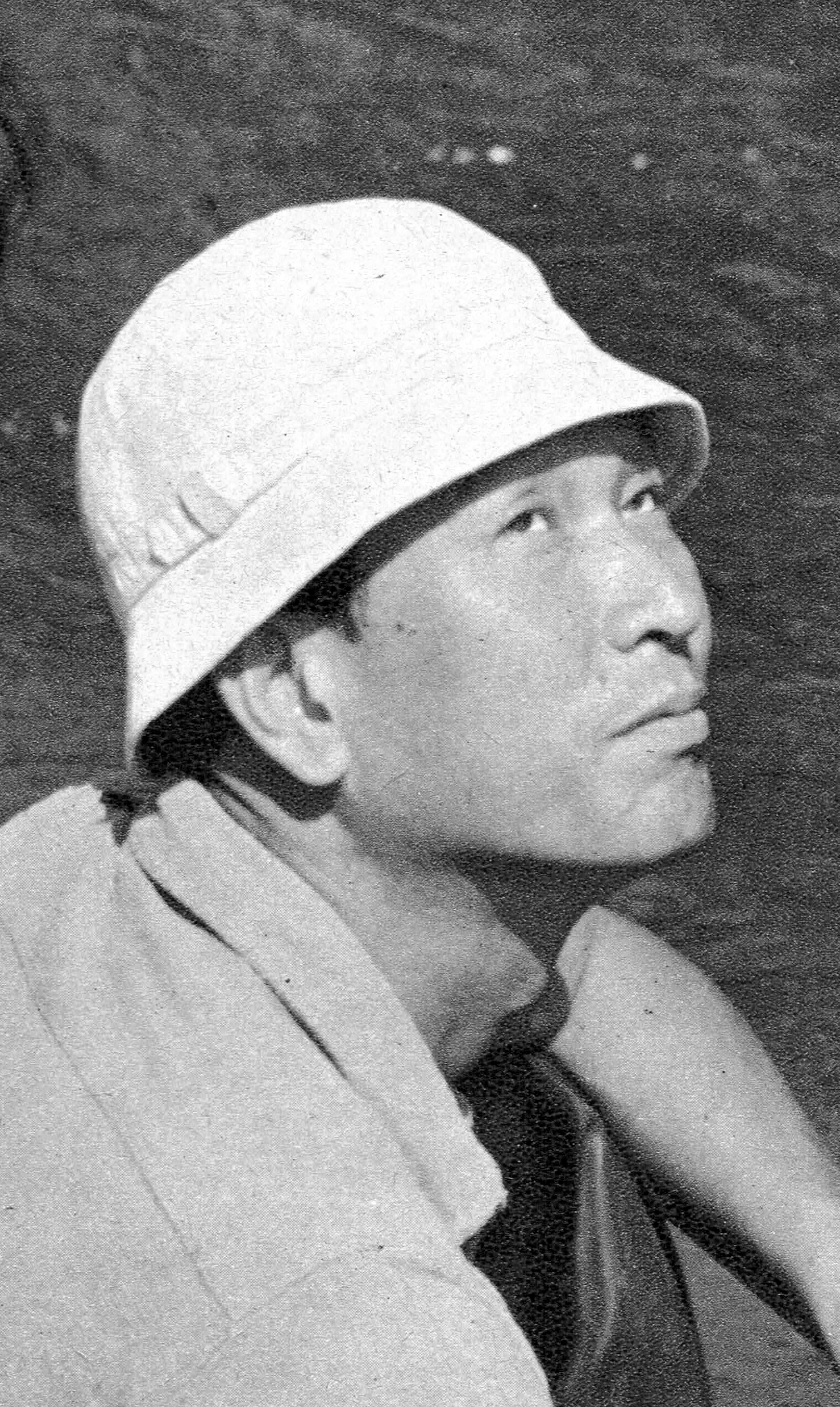
Akira Kurosawa frasi celebri
Origine: Da una registrazione vocale riprodotta all'inizio del documentario A.K. (1985) di Chris Marker, incluso nell'edizione speciale in due DVD di Ran.
“[Hayao Miyazaki] Talvolta lo paragonano a me. Mi dispiace per lui perché lo abbassano di livello.”
Origine: Citato in Pino e Rossella Farinotti, il Farinotti 2010: Dizionario di tutti i film, con la collaborazione di Giancarlo Zappoli e Bartolomeo Corsini, Newton Compton editori, Roma, 2009, p. 449. ISBN 978-88-541-1555-2
Akira Kurosawa: Frasi in inglese
Akira Kurosawa libro Something Like an Autobiography
Akira Kurosawa 'Something Like an Autobiography (1981)
Something Like an Autobiography (1981)
“Man is a genius when he is dreaming.”
Variante: Man is a genius when he is dreaming.
On the style of the film Rashomon, as quoted in The Films of Akira Kurosawa (1998) by Donald Richie, 3rd edition, p. 79
Contesto: I like silent pictures and I always have. They are often so much more beautiful than sound pictures are. Perhaps they had to be. At any rate I wanted to restore some of this beauty. I thought of it, I remember in this way: one of techniques of modern art is simplification, and that I must therefore simplify this film.
Criterion Collection essay on Rashamon, excerpted from Something Like an Autobiography as translated by Audie E. Bock (1982) http://www.criterion.com/current/posts/196-akira-kurosawa-on-rashomon <br class="br">Contesto: Human beings are unable to be honest with themselves about themselves. They cannot talk about themselves without embellishing. This script portrays such human beings — the kind who cannot survive without lies to make them feel they are better people than they really are. It even shows this sinful need for flattering falsehood going beyond the grave — even the character who dies cannot give up his lies when he speaks to the living through a medium. Egoism is a sin the human being carries with him from birth; it is the most difficult to redeem. This film is like a strange picture scroll that is unrolled and displayed by the ego. You say that you can’t understand this script at all, but that is because the human heart itself is impossible to understand. If you focus on the impossibility of truly understanding human psychology and read the script one more time, I think you will grasp the point of it.
“In a mad world, only the mad are sane!”
Ran (1985)
Variante: In a mad world, only the mad are sane.
Akira Kurosawa libro Something Like an Autobiography
Something Like an Autobiography (1981)
Contesto: Although human beings are incapable of talking about themselves with total honesty, it is much harder to avoid the truth while pretending to be other people. They often reveal much about themselves in a very straightforward way. I am certain that I did. There is nothing that says more about its creator than the work itself.
Criterion Collection essay on Rashamon, excerpted from Something Like an Autobiography as translated by Audie E. Bock (1982) http://www.criterion.com/current/posts/196-akira-kurosawa-on-rashomon <br class="br">Contesto: Human beings are unable to be honest with themselves about themselves. They cannot talk about themselves without embellishing. This script portrays such human beings — the kind who cannot survive without lies to make them feel they are better people than they really are. It even shows this sinful need for flattering falsehood going beyond the grave — even the character who dies cannot give up his lies when he speaks to the living through a medium. Egoism is a sin the human being carries with him from birth; it is the most difficult to redeem. This film is like a strange picture scroll that is unrolled and displayed by the ego. You say that you can’t understand this script at all, but that is because the human heart itself is impossible to understand. If you focus on the impossibility of truly understanding human psychology and read the script one more time, I think you will grasp the point of it.
“There is nothing that says more about its creator than the work itself.”
Akira Kurosawa libro Something Like an Autobiography
Something Like an Autobiography (1981)
Contesto: Although human beings are incapable of talking about themselves with total honesty, it is much harder to avoid the truth while pretending to be other people. They often reveal much about themselves in a very straightforward way. I am certain that I did. There is nothing that says more about its creator than the work itself.
“Egoism is a sin the human being carries with him from birth; it is the most difficult to redeem.”
Criterion Collection essay on Rashamon, excerpted from Something Like an Autobiography as translated by Audie E. Bock (1982) http://www.criterion.com/current/posts/196-akira-kurosawa-on-rashomon <br class="br">Contesto: Human beings are unable to be honest with themselves about themselves. They cannot talk about themselves without embellishing. This script portrays such human beings — the kind who cannot survive without lies to make them feel they are better people than they really are. It even shows this sinful need for flattering falsehood going beyond the grave — even the character who dies cannot give up his lies when he speaks to the living through a medium. Egoism is a sin the human being carries with him from birth; it is the most difficult to redeem. This film is like a strange picture scroll that is unrolled and displayed by the ego. You say that you can’t understand this script at all, but that is because the human heart itself is impossible to understand. If you focus on the impossibility of truly understanding human psychology and read the script one more time, I think you will grasp the point of it.
Akira Kurosawa libro Something Like an Autobiography
Something Like an Autobiography (1981)
Akira Kurosawa as quoted in Kamiski, Michael (2007). The Secret History of Star Wars(PDF). p. 48. Retrieved 2011-01-31.


