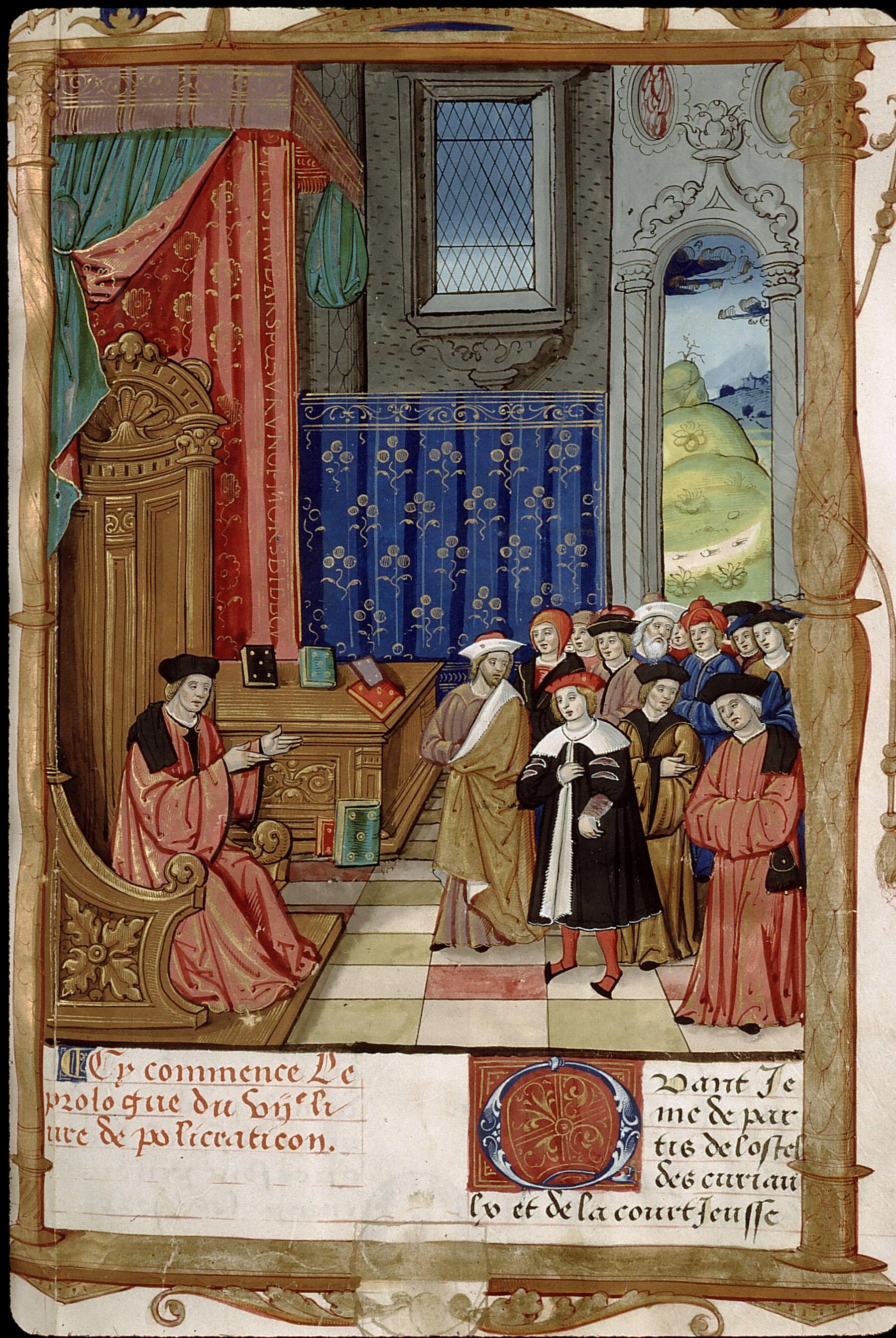
Origine: Citato in Benedetto XVI, udienza del mercoledì del 16 dicembre 2009 http://www.vatican.va/holy_father/benedict_xvi/audiences/2009/documents/hf_ben-xvi_aud_20091216_it.html.
Giovanni di Salisbury: 11 citazioni0 Mi piace
Giovanni di Salisbury frasi celebri
“Chi mai ha concesso ai Tedeschi il diritto di giudicare le altre nazioni?”
Origine: Cfr. Franco Cardini, Il Barbarossa. Vita, trionfi e illusioni di Federico I Imperatore, Milano, 1985, § X (La tunica lacerata).
Giovanni di Salisbury: Frasi in inglese
“Bernard of Chartres used to say that we were like dwarfs seated on the shoulders of giants. If we see more and further than they, it is not due to our own clear eyes or tall bodies, but because we are raised on high and upborne by their gigantic bigness.”
Dicebat Bernardus Carnotensis nos esse quasi nanos gigantium humeris insidentes, ut possimus plura eis et remotiora videre, non utique proprii visus acumine, aut eminentia corporis, sed quia in altum subvehimur et extollimur magnitudine gigantea
John of Salisbury libro Metalogicon
Metalogicon (1159) bk. 3, ch. 4. Translation from Henry Osborn Taylor The Mediaeval Mind ([1911] 1919) vol. 2, p. 159; such similes were available to Isaac Newton, when he humbly made use of them in comparing his progress in scientific ideas to those whose ideas he drew upon, in his famous statement to Robert Hooke in a letter of 15 February 1676: If I have seen further it is by standing on the shoulders of Giants.
“Between a tyrant and a prince there is this single or chief difference, that the latter obeys the law and rules the people by its dictates, accounting himself as but their servant.”
Est ergo tyranni et principis hæc differentia sola, quod hic legi obtemperat, et ejus arbitrio populum regit, cujus se credit ministrum.
John of Salisbury Policraticus
Bk. 4, ch. 1
Policraticus (1159)
Faith is intermediate between opinion and science. p. 223
The Metalogicon of John of Salisbury (1159)
“Accurate reading on a wide range of subjects makes the scholar; careful selection of the better makes the saint.”
Exquisita lectio singulorum, doctissimum; cauta electio meliorum, optimum facit.
John of Salisbury Policraticus
Bk. 7, ch. 10
Policraticus (1159)
The Metalogicon of John of Salisbury (1159)
“Law is the gift of God, the model of equity, a standard of justice, a likeness of the divine will, the guardian of well-being, a bond of union and solidarity between peoples, a rule defining duties, a barrier against the vices and the destroyer thereof, a punishment of violence and all wrongdoing.”
Lex donum Dei est, æquitatis forma, norma justitiæ, divinæ voluntatis imago, salutis custodia, unio et consolidatio populorum, regula officiorum, exclusio et exterminatio vitiorum, violentiæ et totius injuriæ pœna.
John of Salisbury Policraticus
Bk. 8, ch. 17
Policraticus (1159)
The Metalogicon of John of Salisbury (1159)
“A man is free in proportion to the measure of his virtues, and the extent to which he is free determines what his virtues can accomplish.”
Et pro virtutum habitu quilibet et liber est, et, quatenus est liber, eatenus virtutibus pollet.
John of Salisbury Policraticus
Bk. 7, ch. 25
Policraticus (1159)


