Gunnar Myrdal libro An American Dilemma
Origine: An American Dilemma (1944), p. 385
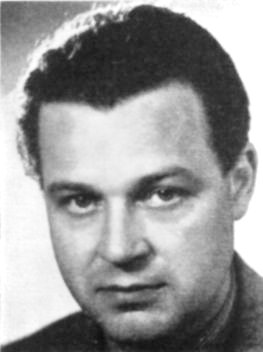
Gunnar Myrdal è stato un economista e politico svedese, vincitore del Premio Nobel per l'economia nel 1974 insieme a Friedrich von Hayek.
Si laureò alla Scuola di Legge dell'Università di Stoccolma nel 1923 e ottenne il dottorato in economia nel 1927. Sposò Alva Reimer nel 1924 ed ebbe tre figli. Uno di questi, Jan Myrdal è un giornalista, mentre Sissela Bok, altra sua figlia, è una filosofa.
Fu membro socialdemocratico del Parlamento svedese dal 1933, e Ministro del commercio dal 1945 al 1947, nel governo di Tage Erlander.
Il suo studio del 1944 An American Dilemma: The Negro Problem and Modern Democracy, influenzò la Corte Suprema degli Stati Uniti nella sentenza del 1954 sul caso Brown v. Board of Education, che dichiarava fuori legge la segregazione razziale nelle scuole pubbliche. Myrdal fu tra i firmatari del documento dell'UNESCO denominato The Race Question. Wikipedia
Gunnar Myrdal libro An American Dilemma
Origine: An American Dilemma (1944), p. 385
“Language, as we know, is full of illogicalities.”
G. Myrdal (1951), "The Trend Towards Economic Planning." The Manchester School, 19: 1–42.
Contesto: The term 'economic planning' and perhaps still more bluntly 'planned economy' contains a tautology... The word 'economy' by itself implies, of course, a co-ordination of activities, directed towards a purpose. It implies a subject, a will, a plan, and a rational adaptation of means towards an end or or a goal. To add “planned” in order to indicate that this co<ordination of activities has a purpose, does not make much sense or cannot, anyhow, be good usage. Language, as we know, is full of illogicalities.
“The treatment of the Negro is America's greatest and most conspicuous scandal.”
Gunnar Myrdal libro An American Dilemma
Origine: An American Dilemma (1944), p. 1020
Contesto: The treatment of the Negro is America's greatest and most conspicuous scandal. It is tremendously publicized, and democratic America will continue to publicize it itself. For the colored peoples all over the world, whose rising influence is axiomatic, this scandal is salt in their wounds.
Origine: Monetary Equilibrium (1939), p. 34
Contesto: An important distinction exists between prospective and retrospective methods of calculating economic quantities such as incomes, savings, and investments; and... a corresponding distinction of great theoretical importance must be drawn between two alternative methods of defining these quantities. Quantities defined in terms of measurements made at the end of the period in question are referred to as ex post; quantities defined in terms of action planned at the beginning of the period in question are referred to as.
Origine: Beyond the Welfare State (1958), p. 38
Contesto: Generally speaking, the less privileged groups in democratic society, as they become aware of their interests and their political power, will be found to press for more and more state intervention in practically all fields. Their interest clearly lies in having individual contracts subordinated as much as possible to general norms, laid down in laws, regulations, administrative dispositions, and semi-voluntary agreements between apparently private, but in reality, quasi-public organizations [e. g., wage agreements between Swedish unions and employers' confederations, and their counterparts in other countries].
Origine: Monetary Equilibrium (1939), p. 32; Cited in: Philip Pilkington, " Gunnar Myrdal’s Prescient Criticisms of Keynes’ General Theory http://fixingtheeconomists.wordpress.com/2013/08/10/gunnar-myrdals-prescient-criticisms-of-keynes-general-theory/" Posted on August 10, 2013
Gunnar Myrdal libro An American Dilemma
Origine: An American Dilemma (1944), p. 7
“The only possible way of decreasing Negro population is by means of controlling fertility.”
Gunnar Myrdal libro An American Dilemma
Origine: An American Dilemma (1944), p. 170
Gunnar Myrdal libro An American Dilemma
Origine: An American Dilemma (1944), p. 1021
Gunnar Myrdal libro An American Dilemma
Origine: An American Dilemma (1944), p. 879
Gunnar Myrdal libro An American Dilemma
Origine: An American Dilemma (1944), p. 254
Gunnar Myrdal libro An American Dilemma
Origine: An American Dilemma (1944), p. 75
Myrdal (1984), quoted in: Revue internationale de pédagogie expérimentale, Vol. 22-23. H. Dunantlaan 1. (1985), p. 367
Gunnar Myrdal libro An American Dilemma
Origine: An American Dilemma (1944), p. 1021
Gunnar Myrdal libro An American Dilemma
Origine: An American Dilemma (1944), p. 385-6
Gunnar Myrdal libro An American Dilemma
Origine: An American Dilemma (1944), p. 397
Origine: Monetary Equilibrium (1939), p. 46
Origine: Monetary Equilibrium (1939), p. 34
Gunnar Myrdal (1982, 265); as cited in: Carlson, Benny, and Lars Jonung. "Knut Wicksell, Gustav Cassel, Eli Heckscher, Bertil Ohlin and Gunnar Myrdal on the role of the economist in public debate." Econ Journal Watch 3.3 (2006): p. 534-5
Gunnar Myrdal libro An American Dilemma
Origine: An American Dilemma (1944), p. 1077. Appendix 5
Gunnar Myrdal libro An American Dilemma
Origine: An American Dilemma (1944), p. 1066
Origine: Monetary Equilibrium (1939), p. 46-7
Origine: Monetary Equilibrium (1939), p. 34


