Frasi di Ernesto Grassi

Ernesto Grassi è stato un filosofo italiano.

✵ 2. Maggio 1902 – 22. Dicembre 1991
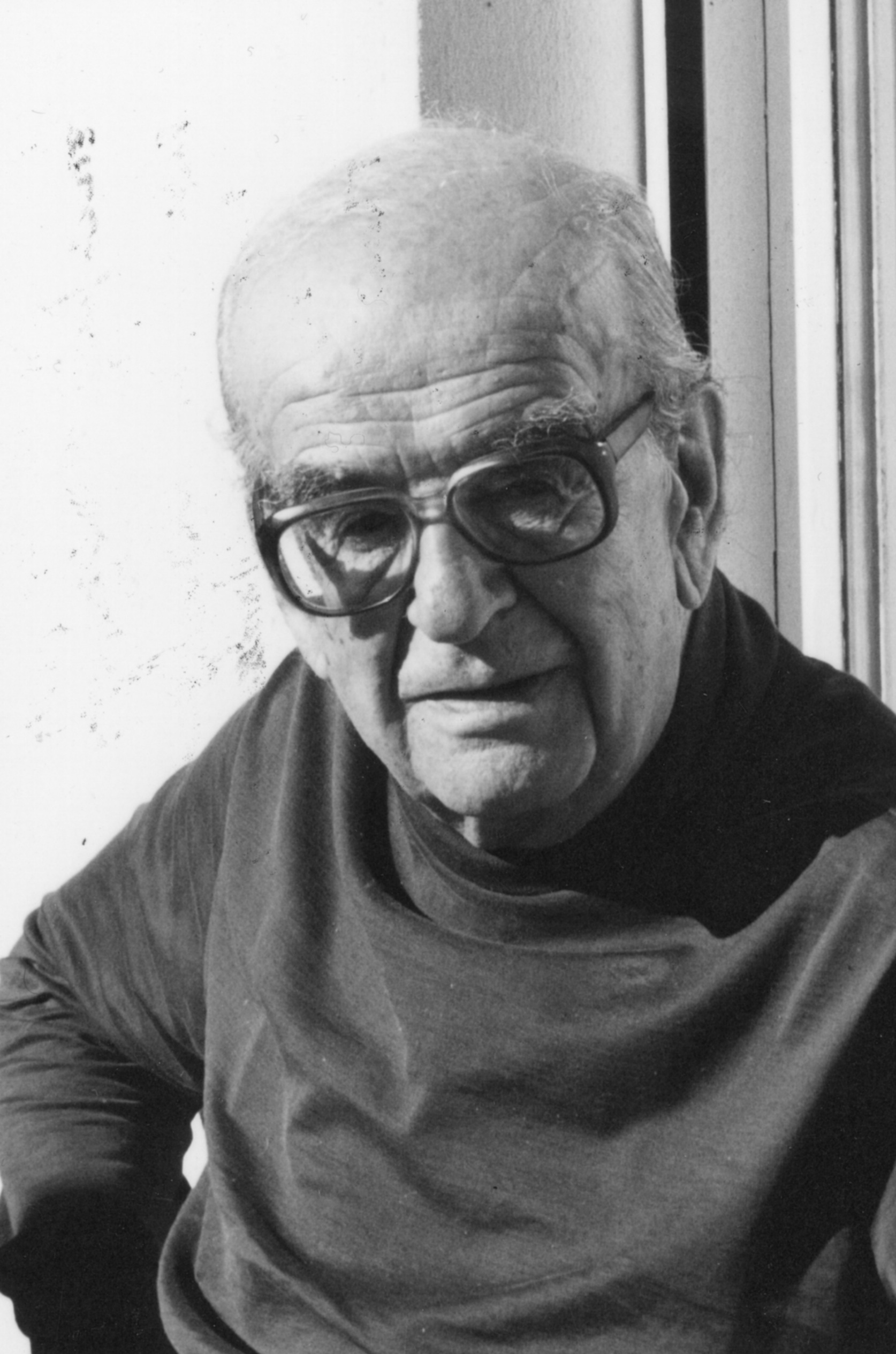
Ernesto Grassi photo
Ernesto Grassi: 12 citazioni0 Mi piace

Ernesto Grassi: Frasi in inglese

“Thus the true philosophy is rhetoric, and the true rhetoric is philosophy, a philosophy which does not need an “external” rhetoric to convince, and a rhetoric that does not need an “external” content of verity.”

Ernesto Grassi

Origine: Rhetoric as Philosophy (1980), pp. 31-32
Contesto: In the second part of the Phaedrus Plato attempts to clarify the nature of “true” rhetoric. … it does not arise from a posterior unity which presupposes the duality of ratio and passio, but illuminates and influences the passions through its original, imaginative characters. Thus philosophy is not a posterior synthesis of pathos and logos but the original unity of the two under the power of the original archai. Plato sees true rhetoric as psychology which can fulfill its truly “moving” function only if it masters original images [eide]. Thus the true philosophy is rhetoric, and the true rhetoric is philosophy, a philosophy which does not need an “external” rhetoric to convince, and a rhetoric that does not need an “external” content of verity.

“If philosophy aims at being a theoretical mode of thought and speech, can it have a rhetorical character and be expressed in rhetorical forms? The answer seems obvious. Theoretical thinking, as a rational process, excludes every rhetorical element because pathetic influences—the influences of feeling—disturb the clarity of rational thought. …
To prove means to show something to be something, on the basis of something. To have something through which something is shown and explained definitively is the foundation of our knowledge. Apodictic, demonstrative speech is the kind of speech which establishes the definition of a phenomenon by tracing it back to ultimate principles, or archai. It is clear that the first archai of any proof and hence of knowledge cannot be proved themselves because they cannot be the object of apodictic, demonstrative, logical speech; otherwise they would not be the first assertions. Their nonderivable, primary character is evident from the fact that we neither can speak nor comport ourselves without them, for both speech and human activity simply presuppose them. But if the original assertions are not demonstrable, what is the character of the speech in which we express them? Obviously this type of speech cannot have a rational-theoretical character….
Basic premises cannot have an apodictic, demonstrative character and structure but are thoroughly indicative….
Arche … cannot have a rational but only a rhetorical character. Thus the term "rhetoric" assumes a fundamentally new significance; "rhetoric" is not, nor can it be the art, the technique of an exterior persuasion; it is rather the speech which is the basis of the rational thought.”

Ernesto Grassi

Origine: Rhetoric as Philosophy (1980), pp. 18-19

“According to the traditional interpretation Plato’s attitude against rhetoric is a rejection of the doxa, or opinion, and of the impact of images, upon which the art of rhetoric relies; at the same time his attitude is considered as a defense of the theoretical, rational speech, that is, of episteme.”

Ernesto Grassi

The fundamental argument of Plato’s critique of rhetoric usually is exemplified by the thesis, maintained, among other things, in the Gorgias, that only he who "knows" [epistatai] can speak correctly; for what would be the use of the "beautiful," of the rhetorical speech, if it merely sprang from opinions [doxa], hence from not knowing? … Plato’s … rejection of rhetoric, when understood in this manner, assumes that Plato rejects every emotive element in the realm of knowledge. But in several of his dialogues Plato connects the philosophical process, for example, with eros, which would lead to the conclusion that he attributes a decisive role to the emotive, seen even in philosophy as the absolute science.
Origine: Rhetoric as Philosophy (1980), p. 28

Autori simili

Umberto Galimberti photo
Umberto Galimberti99
filosofo e psicoanalista italiano None
Umberto Eco photo
Umberto Eco257
semiologo, filosofo e scrittore italiano None
Martin Heidegger photo
Martin Heidegger39
filosofo tedesco None
Zygmunt Bauman photo
Zygmunt Bauman63
sociologo e filosofo polacco None
José Ortega Y Gasset photo
José Ortega Y Gasset37
filosofo e saggista spagnolo None
Walter Benjamin photo
Walter Benjamin33
filosofo e scrittore tedesco None
Ernst Jünger photo
Ernst Jünger277
filosofo e scrittore tedesco None
Ludwig Wittgenstein photo
Ludwig Wittgenstein112
filosofo e logico austriaco None
Hannah Arendt photo
Hannah Arendt40
filosofa, storica e scrittrice tedesca None
Henri Bergson photo
Henri Bergson16
filosofo francese None