Origine: Citato in Raffaele Morelli, Il sesso è amore, Mondadori, 2010, p. 47.
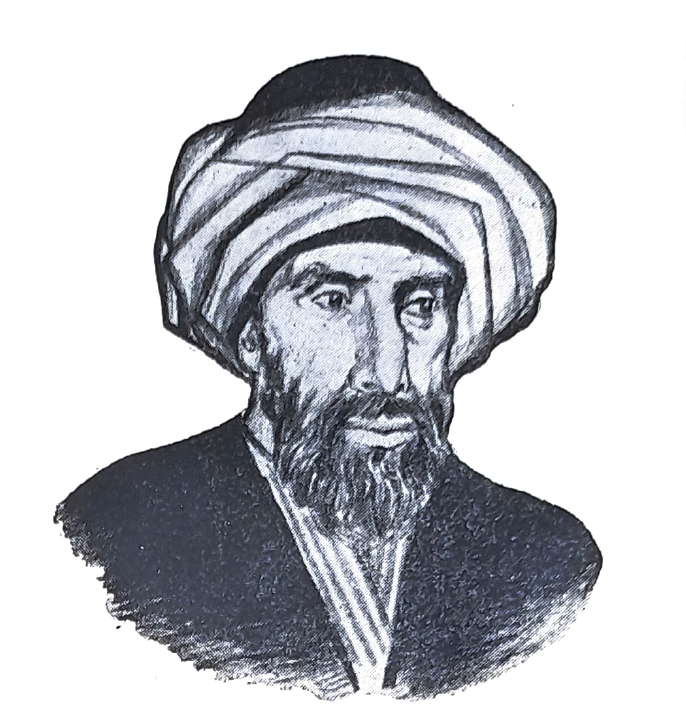
Farid al-Din 'Attar: 22 citazioni8 Mi piace
Farid al-Din 'Attar frasi celebri
da Il Canto degli Uccelli
informazioni bibliografiche?
Farid al-Din 'Attar: Frasi in inglese
"The Triumph of the Soul" as translated by Margaret Smith in The Persian Mystics
"Looking For Your Own Face" as translated by Coleman Barks in The Hand of Poetry: Five Mystic Poets of Persia
Contesto: Don't be dead or asleep or awake.
Don't be anything.
What you most want,
what you travel around wishing to find,
lose yourself as lovers lose themselves,
and you'll be that.
“Joy! Joy! I triumph! Now no more I know
Myself as simply me.”
"The Triumph of the Soul" as translated by Margaret Smith in The Persian Mystics
Contesto: Joy! Joy! I triumph! Now no more I know
Myself as simply me. I burn with love
Unto myself, and bury me in love.
The centre is within me and its wonder
Lies as a circle everywhere about me.
Joy! Joy! No mortal thought can fathom me.
“The Sea
Will be the Sea
Whatever the drop's philosophy.”
As quoted in The Sun at Midnight : The Revealed Mysteries of the Ahlul Bayt Sufis (2003) by Laurence Galian
“In Love no longer "thou" and "I" exist,
For Self has passed away in the Beloved.”
"Intoxicated by the Wine of Love" as translated by Margaret Smith from "The Jawhar Al-Dhat"
Variant translation:
From each, Love demands a mystic silence.
As translated in Essential Sufism, by James Fadiman and Robert Frager
Contesto: From each a mystic silence Love demands.
What do all seek so earnestly? 'Tis Love.
What do they whisper to each other? Love.
Love is the subject of their inmost thoughts.
In Love no longer "thou" and "I" exist,
For Self has passed away in the Beloved.
"All Pervading Consciousness"
Contesto: Yet what are seas and what is air? For all
Is God, and but a talisman are heaven and earth
To veil Divinity. For heaven and earth,
Did He not permeate them, were but names;
Know then, that both this visible world and that
Which unseen is, alike are God Himself,
Naught is, save God: and all that is, is God.
"All Pervading Consciousness"
Contesto: Yet what are seas and what is air? For all
Is God, and but a talisman are heaven and earth
To veil Divinity. For heaven and earth,
Did He not permeate them, were but names;
Know then, that both this visible world and that
Which unseen is, alike are God Himself,
Naught is, save God: and all that is, is God.
“From each a mystic silence Love demands.”
"Intoxicated by the Wine of Love" as translated by Margaret Smith from "The Jawhar Al-Dhat"
Variant translation:
From each, Love demands a mystic silence.
As translated in Essential Sufism, by James Fadiman and Robert Frager
Contesto: From each a mystic silence Love demands.
What do all seek so earnestly? 'Tis Love.
What do they whisper to each other? Love.
Love is the subject of their inmost thoughts.
In Love no longer "thou" and "I" exist,
For Self has passed away in the Beloved.
“Come you lost Atoms to your Centre draw,
And be the Eternal Mirror that you saw”
Attar of Nishapur libro The Conference of the Birds
The Conference of the Birds (1177)
Contesto: Come you lost Atoms to your Centre draw,
And be the Eternal Mirror that you saw:
Rays that have wander'd into Darkness wide
Return and back into your Sun subside.
“Since I have neither sign nor name
I shall speak only of things unnamed and without sign.”
As quoted in Music of a Distant Drum: Classical Arabic, Persian, Turkish, and Hebrew Poems (2001) by Bernard Lewis, p. 119
Contesto: I shall grasp the soul's skirt with my hand
and stamp on the world's head with my foot.
I shall trample Matter and Space with my horse,
beyond all Being I shall utter a great shout,
and in that moment when I shall be alone with Him,
I shall whisper secrets to all mankind.
Since I have neither sign nor name
I shall speak only of things unnamed and without sign.
“I shall grasp the soul's skirt with my hand
and stamp on the world's head with my foot.”
As quoted in Music of a Distant Drum: Classical Arabic, Persian, Turkish, and Hebrew Poems (2001) by Bernard Lewis, p. 119
Contesto: I shall grasp the soul's skirt with my hand
and stamp on the world's head with my foot.
I shall trample Matter and Space with my horse,
beyond all Being I shall utter a great shout,
and in that moment when I shall be alone with Him,
I shall whisper secrets to all mankind.
Since I have neither sign nor name
I shall speak only of things unnamed and without sign.
"In the Dead of Night" as translated by Andrew Harvey and Eryk Hanut in Perfume of the Desert
“All things are but masks at God's beck and call,
They are symbols that instruct us that God is all.”
Attar of Nishapur libro The Conference of the Birds
As translated by Raficq Abdulla
The Conference of the Birds (1177)
“He who would know the secret of both worlds,
Will find the secret of them both, is Love.”
"Intoxicated by the Wine of Love" as translated by Margaret Smith from "The Jawhar Al-Dhat"
"Looking For Your Own Face" as translated by Coleman Barks in The Hand of Poetry: Five Mystic Poets of Persia
Attar of Nishapur libro The Conference of the Birds
The Conference of the Birds (1177)
Attar of Nishapur libro The Conference of the Birds
The Conference of the Birds (1177)


