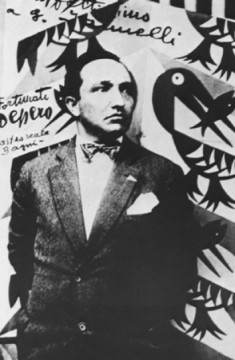
Depero (1931) "Futurism and Adverticing Art"; Partly quoted in: Jonathon Keats, " Fortunato Depero's Italian Futurism http://www.forbes.com/forbes-life-magazine/2009/0608/art-fortunato-depero-italian-futurism.html," forbes.com, 2009/06/08 <br class="br">Contesto: The art of the future will be largely advertising.<br>that bold and unimpeachable lesson I have learned from museums and great works from the past—<br>all art for centuries past has been marked by advertising purposes: the exaltation of the warrior, the saint; documentation of deeds, ceremonies, and historical personages depicted at their victories, with their symbols, in the regalia of command and splendor—<br>even their highest products were simultaneously meant to glorify something: architecture, royal palaces, thrones, drapery, halberds, standards, heraldry and arms of every sort—<br>there is scarcely an ancient work that doesn’t have advertising motifs, a garland with a trophy, with weapons of war and victory, all stamped with seals and the original symbols of clans, all with the self-celebrating freedom of ultra-advertising