“Lo scopo dell'arte medica è la salute, il fine è ottenerla.”
Origine: Da De Sectis, in Opere scelte, a cura di I. Garofalo, M. Vegetti, UTET, 1978.
Galeno di Pergamo è stato un medico greco antico, i cui punti di vista hanno dominato la medicina occidentale per tredici secoli, fino al Rinascimento, quando cominciarono lentamente e con grande cautela a essere messi in discussione, per esempio dall'opera di Vesalio.
Dal suo nome deriva la galenica, l'arte di preparare i farmaci da parte del farmacista in farmacia. Wikipedia
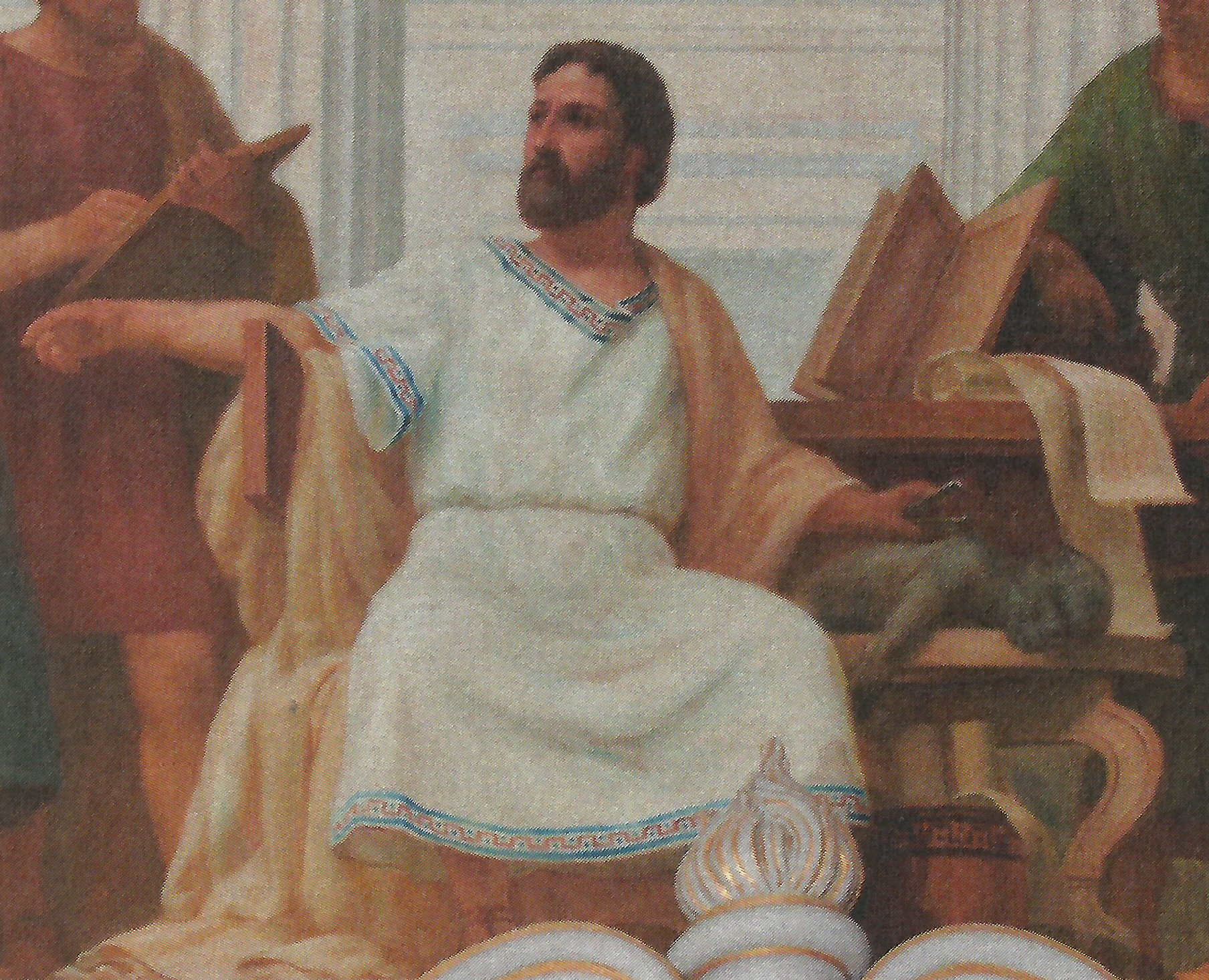
“Lo scopo dell'arte medica è la salute, il fine è ottenerla.”
Origine: Da De Sectis, in Opere scelte, a cura di I. Garofalo, M. Vegetti, UTET, 1978.
Origine: Citato in Valentina Beggio, Cosa raccontano i cristalli e come usarli, Giunti Editore, Firenze, 2001, p. 7 http://books.google.it/books?id=mRXgAERXAE0C&pg=PA7. ISBN 88-440-2138-2
Origine: Da Utrum animal sit quod est in utero, 2; citato in L'anima degli animali, p. 152.
Origine: Da De usu partium, XI, 14; citato in L'anima degli animali, p. 132.
Origine: Da Exhortat. ad Art. lib. Stud., inizio; citato in Pierre Bayle, Dizionario storico-critico, vol. I, a cura di Gianfranco Cantelli, Laterza, Bari, 1976, p. 160.
“The best physician is also a philosopher.”
Quod optimus medicus sit quoque philosophus.
Title of a treatise; cited from Judith Perkins The Suffering Self (London: Routledge, 1995) p. 154.
Latter day attributions
Galen. Margaret Tallmadge May (trans.) On the Usefulness of the Parts of the Body, Ithaca, New York: Cornell U. Press, 1968. p. 502.
Contesto: A god, as I have said, commanded me to tell the first use also, and he himself knows that I have shrunk from its obscurity. He knows too that not only here but also in many other places in these commentaries, if it depended on me, I would omit demonstrations requiring astronomy, geometry, music, or any other logical discipline, lest my books should be held in utter detestation by physicians. For truly on countless occasions throughout my life I have had this experience; persons for a time talk pleasantly with me because of my work among the sick, in which they think me very well trained, but when they learn later on that I am also trained in mathematics, they avoid me for the most part and are no longer at all glad to be with me. Accordingly, I am always wary of touching on such subjects, and in this case it is only in obedience to the command of a divinity, as I have said, that I have used the theorems of geometry
Galen, On the Natural Faculties, Bk. 1, sect. 13; cited from Arthur John Brock (trans.) On the Natural Faculties (London: Heinemann, 1963) p. 57.
“Employment is Nature's physician, and is essential to human happiness.”
Latter day attributions
Origine: Day's Collacon: an Encyclopaedia of Prose Quotations, (1884), p. 223.
“That which is, grows, while that which is not, becomes.”
Galen, On the Natural Faculties, Bk. 2, sect. 3; cited from Arthur John Brock (trans.) On the Natural Faculties (London: Heinemann, 1963) p. 139.
“Much music marreth men's manners.”
As quoted in Garnett, Vallée, Brandl, The Universal Anthology, Vol 12 (1809), p. 192.
Latter day attributions
Galen, Exhortation to Study the Arts, Coxe (1846), p. 479; cf. Diogenes Laërtius, vi. 32.
Galen, On the Doctrines of Hippocrates and Plato,: PHP III 8.35.1-11 translation: De Lacy, Phillip (1978- 1984) Galen, On the Doctrines of Hippocrates and Plato, Berlin. p. 233; cited in: Christopher Jon Elliott. "Galen, Rome and the Second Sophistic." p. 147-8.
“Every animal is sad after coitus except the human female and the rooster.”
Triste est omne animale post coitum, praeter mulierem gallumque
Galen (30-200 A.D.), in: Medical Aspects of Human Sexuality, (1973), p. 19.
Latter day attributions
Arabian Society In The Middle Ages, by Edward William Lane, (1883) citing Nowwájee, En-, Shems-ed-deen Moḥammad (died 1454), Ḥalbet El-Kumeyt, at footnote 167.
Latter day attributions
Galen, on Diogenes's views on the ignorant rich, in Exhortation to Study the Arts, Wakefield (1796), p. 217; cf. Stobaeus, iv. 31b. 48.
Latter day attributions


