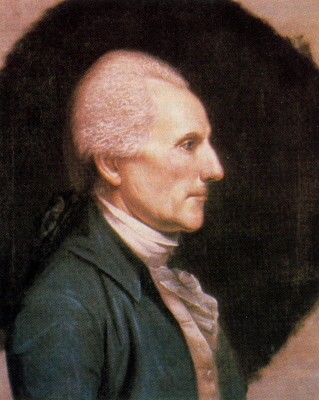
Frasi di Richard Henry Lee

Richard Henry Lee è stato un politico statunitense.

Venne eletto come sesto presidente del Congresso degli Stati Uniti, incarico che mantenne dal 30 novembre, 1784 al 22 novembre 1785. In questo incarico fu preceduto da Thomas Mifflin e gli succedette John Hancock.

Lee nacque a Stratford Hall Plantation in Virginia, colono proveniente dalla Gran Bretagna, figlio del colonnello Thomas Lee e di Hannah Harrison Ludwel, e fu fratello di Francis Lightfoot Lee

Richard venne inviato a studiare in Inghilterra alla Queen Elizabeth Grammar School nello Yorkshire. Nel 1752 fece ritorno in Virginia, dove iniziò a fare praticantato in uno studio legale. Wikipedia  

✵ 20. Gennaio 1732 – 19. Giugno 1794
Richard Henry Lee photo
Richard Henry Lee: 5 citazioni0 Mi piace

Richard Henry Lee Frasi e Citazioni

Richard Henry Lee: Frasi in inglese

“The military forces of a free country may be considered under three general descriptions — 1. The militia. 2. the navy — and 3. the regular troops — and the whole ought ever to be, and understood to be, in strict subordination to the civil authority; and that regular troops, and select corps, ought not to be kept up without evident necessity. Stipulations in the constitution to this effect, are perhaps, too general to be of much service, except merely to impress on the minds of the people and soldiery, that the military ought ever to be subject to the civil authority, &c. But particular attention, and many more definite stipulations, are highly necessary to render the military safe, and yet useful in a free government; and in a federal republic, where the people meet in distinct assemblies, many stipulations are necessary to keep a part from transgressing, which would be unnecessary checks against the whole met in one legislature, in one entire government. — A militia, when properly formed, are in fact the people themselves, and render regular troops in a great measure unnecessary. The powers to form and arm the militia, to appoint their officers, and to command their services, are very important; nor ought they in a confederated republic to be lodged, solely, in any one member of the government. First, the constitution ought to secure a genuine and guard against a select militia, by providing that the militia shall always be kept well organized, armed, and disciplined, and include, according to the past and general usuage of the states, all men capable of bearing arms; and that all regulations tending to render this general militia useless and defenceless, by establishing select corps of militia, or distinct bodies of military men, not having permanent interests and attachments in the community to be avoided. I am persuaded, I need not multiply words to convince you of the value and solidity of this principle, as it respects general liberty, and the duration of a free and mild government: having this principle well fixed by the constitution, then the federal head may prescribe a general uniform plan, on which the respective states shall form and train the militia, appoint their officers and solely manage them, except when called into the service of the union, and when called into that service, they may be commanded and governed by the union. This arrangement combines energy and safety in it; it places the sword in the hands of the solid interest of the community, and not in the hands of men destitute of property, of principle, or of attachment to the society and government, who often form the select corps of peace or ordinary establishments: by it, the militia are the people, immediately under the management of the state governments, but on a uniform federal plan, and called into the service, command, and government of the union, when necessary for the common defence and general tranquility. But, say gentlemen, the general militia are for the most part employed at home in their private concerns, cannot well be called out, or be depended upon; that we must have a select militia; that is, as I understand it, particular corps or bodies of young men, and of men who have but little to do at home, particularly armed and disciplined in some measure, at the public expence, and always ready to take the field. These corps, not much unlike regular troops, will ever produce an inattention to the general militia; and the consequence has ever been, and always must be, that the substantial men, having families and property, will generally be without arms, without knowing the use of them, and defenceless; whereas, to preserve liberty, it is essential that the whole body of the people always possess arms, and be taught alike, especially when young, how to use them; nor does it follow from this, that all promiscuously must go into actual service on every occasion. The mind that aims at a select militia, must be influenced by a truly anti-republican principle; and when we see many men disposed to practice upon it, whenever they can prevail, no wonder true republicans are for carefully guarding against it. As a farther check, it may be proper to add, that the militia of any state shall not remain in the service of the union, beyond a given period, without the express consent of the state legislature.”

Richard Henry Lee

Additional Letters From The Federal Farmer, 169 (1788)

“To preserve liberty, it is essential that the whole body of people always possess arms, and be taught alike, especially when young, how to use them…”

Richard Henry Lee

Additional Letters From The Federal Farmer, 53 (1788); although generally attributed to Lee, his authorship of these letters is disputed in "The Authorship of the Letters from the Federal Farmer" by Gordon S. Wood, in The William and Mary Quarterly, Third Series, Vol. 31, No. 2 (April 1974) http://www.jstor.org/stable/1920914

“The military forces of a free country may be considered under three general descriptions — 1. The militia. 2. the navy — and 3. the regular troops — and the whole ought ever to be, and understood to be, in strict subordination to the civil authority; and that regular troops, and select corps, ought not to be kept up without evident necessity. Stipulations in the constitution to this effect, are perhaps, too general to be of much service, except merely to impress on the minds of the people and soldiery, that the military ought ever to be subject to the civil authority, &c. But particular attention, and many more definite stipulations, are highly necessary to render the military safe, and yet useful in a free government; and in a federal republic, where the people meet in distinct assemblies, many stipulations are necessary to keep a part from transgressing, which would be unnecessary checks against the whole met in one legislature, in one entire government.”

Richard Henry Lee

A militia, when properly formed, are in fact the people themselves, and render regular troops in a great measure unnecessary. The powers to form and arm the militia, to appoint their officers, and to command their services, are very important; nor ought they in a confederated republic to be lodged, solely, in any one member of the government. First, the constitution ought to secure a genuine and guard against a select militia, by providing that the militia shall always be kept well organized, armed, and disciplined, and include, according to the past and general usuage of the states, all men capable of bearing arms; and that all regulations tending to render this general militia useless and defenceless, by establishing select corps of militia, or distinct bodies of military men, not having permanent interests and attachments in the community to be avoided. I am persuaded, I need not multiply words to convince you of the value and solidity of this principle, as it respects general liberty, and the duration of a free and mild government: having this principle well fixed by the constitution, then the federal head may prescribe a general uniform plan, on which the respective states shall form and train the militia, appoint their officers and solely manage them, except when called into the service of the union, and when called into that service, they may be commanded and governed by the union. This arrangement combines energy and safety in it; it places the sword in the hands of the solid interest of the community, and not in the hands of men destitute of property, of principle, or of attachment to the society and government, who often form the select corps of peace or ordinary establishments: by it, the militia are the people, immediately under the management of the state governments, but on a uniform federal plan, and called into the service, command, and government of the union, when necessary for the common defence and general tranquility. But, say gentlemen, the general militia are for the most part employed at home in their private concerns, cannot well be called out, or be depended upon; that we must have a select militia; that is, as I understand it, particular corps or bodies of young men, and of men who have but little to do at home, particularly armed and disciplined in some measure, at the public expence, and always ready to take the field. These corps, not much unlike regular troops, will ever produce an inattention to the general militia; and the consequence has ever been, and always must be, that the substantial men, having families and property, will generally be without arms, without knowing the use of them, and defenceless; whereas, to preserve liberty, it is essential that the whole body of the people always possess arms, and be taught alike, especially when young, how to use them; nor does it follow from this, that all promiscuously must go into actual service on every occasion. The mind that aims at a select militia, must be influenced by a truly anti-republican principle; and when we see many men disposed to practice upon it, whenever they can prevail, no wonder true republicans are for carefully guarding against it. As a farther check, it may be proper to add, that the militia of any state shall not remain in the service of the union, beyond a given period, without the express consent of the state legislature.
Additional Letters From The Federal Farmer, 169 (1788)

Autori simili

Benjamin Franklin photo
Benjamin Franklin26
scienziato e politico statunitense None
George Washington photo
George Washington10
politico e militare statunitense; 1º presidente degli Stati… None
Joseph Addison photo
Joseph Addison9
politico, scrittore e drammaturgo britannico None
Thomas Paine photo
Thomas Paine7
rivoluzionario e politico inglese None
Michel De Montaigne photo
Michel De Montaigne92
filosofo, scrittore e politico francese None
Tommaso Moro photo
Tommaso Moro19
umanista, scrittore e politico inglese None
Edmund Burke photo
Edmund Burke23
politico, filosofo e scrittore britannico None
Maximilien Robespierre photo
Maximilien Robespierre22
politico, avvocato e rivoluzionario francese None
Niccolo Machiavelli photo
Niccolo Machiavelli127
politico, scrittore, storico italiano None
Francesco Bacone photo
Francesco Bacone39
filosofo, politico e giurista inglese None