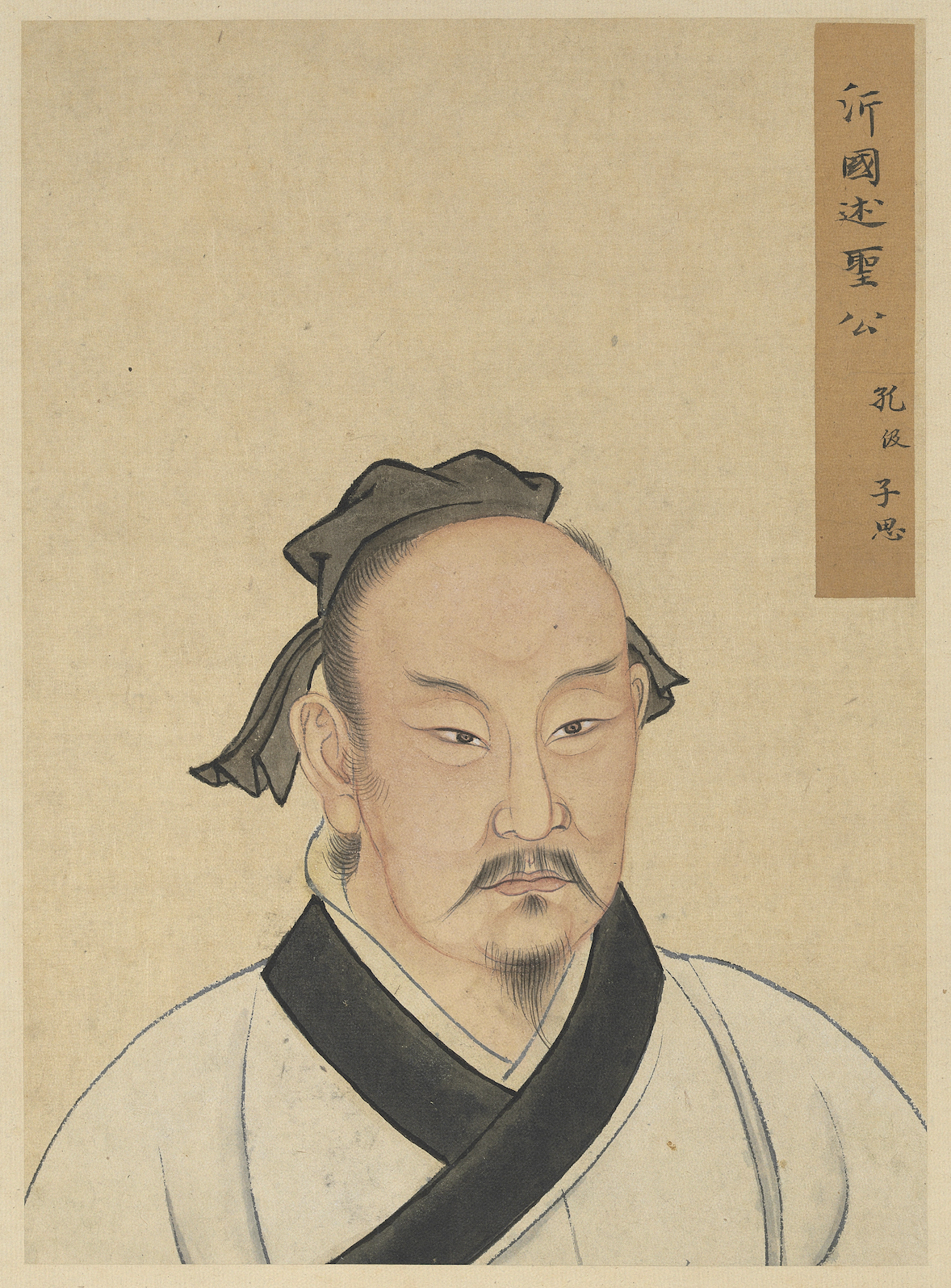
Frasi di Zisi

Zisi è stato un filosofo cinese, unico nipote di Confucio.


Zisi era figlio di Kong Li 孔鯉S o Kong Boyu 孔伯魚S, nacque con il nome di Kong Ji 孔伋S, Zisi era il suo cognome sociale.

Sarebbe nato poco prima della morte di suo nonno e di suo padre e avrebbe studiato con Zengzi 曾子S, discepolo di Confucio. Avrebbe anche servito il Duca Mu 穆公S di Lu. Zisi era il maestro di Mencio e scrisse la Dottrina del Mezzo Wikipedia  

✵ 481 a.C. – 402 a.C.
Zisi photo
Zisi: 8 citazioni0 Mi piace

Zisi: Frasi in inglese

“What is God-given is what we call human nature. To fulfil the law of our human nature is what we call the moral law. The cultivation of the moral law is what we call culture.”

Zisi

Opening lines, p. 104
Variant translations:
What is God-given is called nature; to follow nature is called Tao (the Way); to cultivate the Way is called culture.
As translated by Lin Yutang in The Importance of Living (1937), p. 143
What is God-given is called human nature.
To fulfill that nature is called the moral law (Tao).
The cultivation of the moral law is called culture.
As translated by Lin Yutang in From Pagan to Christian (1959), p. 85
The Doctrine of the Mean

“When the passions, such as joy, anger, grief, and pleasure, have not awakened, that is our central self, or moral being (chung). When these passions awaken and each and all attain due measure and degree, that is harmony, or the moral order (ho). Our central self or moral being is the great basis of existence, and harmony or moral order is the universal law in the world.
When our true central self and harmony are realised, the universe then becomes a cosmos and all things attain their full growth and development.”

Zisi

Variant translation: "Before joy, anger, sadness and happiness are expressed, they are called the inner self; when they are expressed to the proper degree, they are called harmony. The inner self is the correct foundation of the world, and harmony is the illustrious Way. When a man has achieved the inner self and harmony, the heaven and earth are orderly and the myriad things are nourished and grow thereby."
As translated by Lin Yutang in The Importance of Living (1937), pp. 143–144
Origine: The Doctrine of the Mean, p. 104

Autori simili

Confucio photo
Confucio102
filosofo cinese None
Laozi photo
Laozi37
filosofo cinese None
Zhuangzi photo
Zhuangzi7
filosofo None
Talete photo
Talete35
filosofo greco antico None
Zenone di Cizio photo
Zenone di Cizio15
filosofo greco antico None
Protagora photo
Protagora9
retore e filosofo greco antico None
Socrate photo
Socrate63
filosofo ateniese None
Plutarco photo
Plutarco144
biografo, scrittore e filosofo greco antico None
Apuleio photo
Apuleio32
scrittore e filosofo romano None
Ippocrate di Coo photo
Ippocrate di Coo119
filosofo, medico None