Eric Hobsbawm libro Il Secolo breve
The Age of Extremes: A History of the World 1914-1991
Eric John Ernest Hobsbawm è stato uno storico e scrittore britannico. Nato in una famiglia ebraica di origini austriache, studioso di formazione marxista, Hobsbawm ha dedicato molte delle proprie ricerche alla classe operaia inglese e al proletariato internazionale. Da sempre alieno a posizioni dogmatiche, è stato il creatore di alcune definizioni storiche diventate punto di riferimento per la storiografia, come Il Secolo breve e il Lungo XIX secolo, entrambi teorizzati in suoi scritti. Alla sua teorizzazione si deve anche l'enucleazione concettuale che ha dato origine a «uno dei più famosi e influenti archetipi storici, il bandito sociale». A un suo lavoro, in collaborazione con Terence Ranger, si deve la formulazione di un altro paradigma storico, l'invenzione della tradizione.
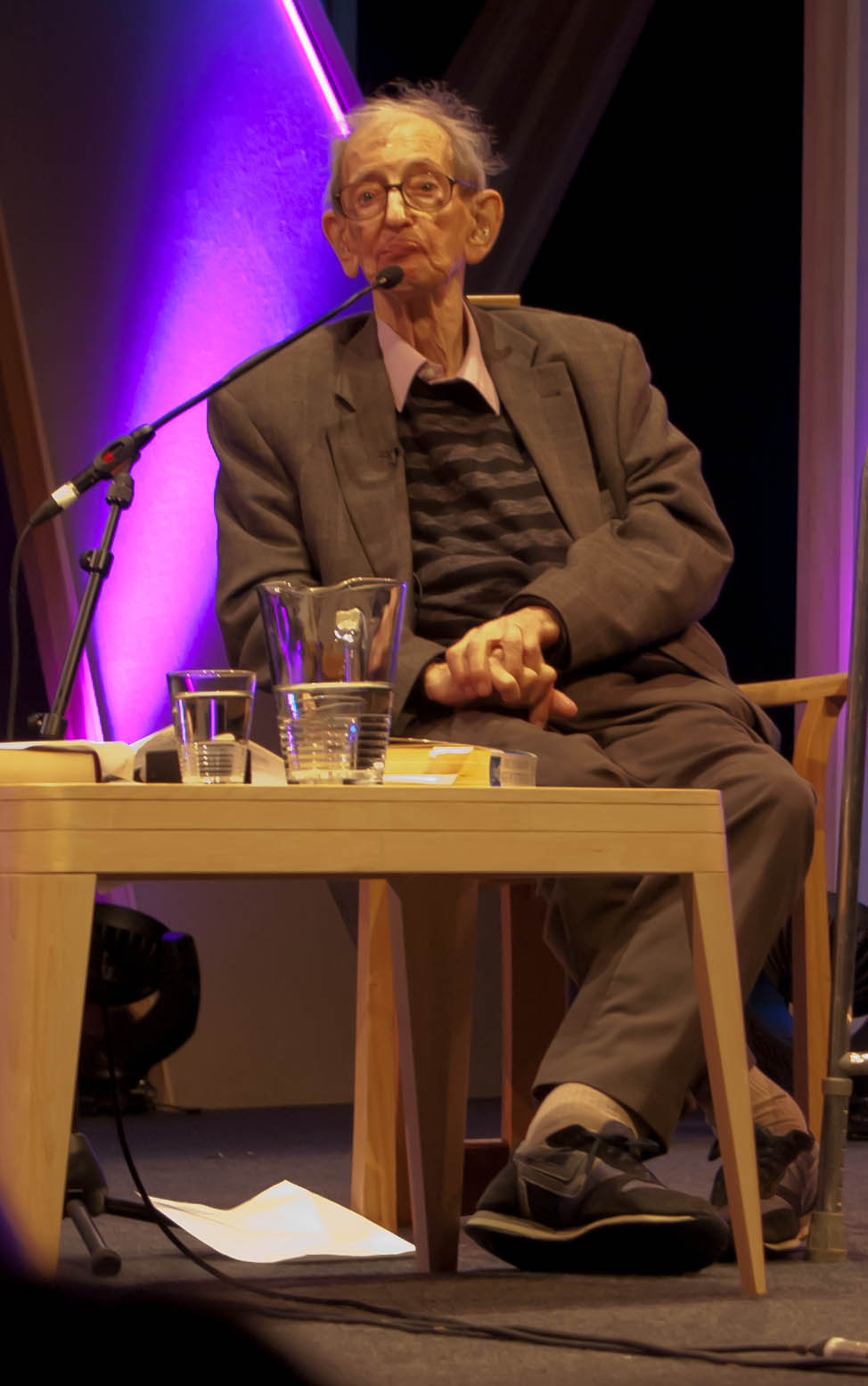
Eric Hobsbawm libro Il Secolo breve
The Age of Extremes: A History of the World 1914-1991
Eric Hobsbawm libro Il Secolo breve
The Age of Extremes: A History of the World 1914-1991
cap. 2, Dove vanno le arti?
La Fine della Cultura. Saggio su un secolo in crisi d'identità
cap. 1, Manifesti
La Fine della Cultura. Saggio su un secolo in crisi d'identità
“La società dei consumi pare considerare il silenzio un crimine.”
cap. 2, Dove vanno le arti?
La Fine della Cultura. Saggio su un secolo in crisi d'identità
cap. 2, Dove vanno le arti?
La Fine della Cultura. Saggio su un secolo in crisi d'identità
Il secolo breve
“Il paradosso del comunismo al potere consisteva nel suo essere conservatore.”
da The Age of Extremes, p. 422
da Nazioni e nazionalismo dal 1780, Einaudi, Torino, 1991, p. 158
Anni interessanti. Autobiografia di uno storico, Rizzoli, Milano, 2002, p. 101. ISBN 88-17-87032-3
Origine: The Age of Revolution (1962), Chapter 15, Science
Preface to Pantheon Edition
Bandits (1969)
The Guardian http://www.guardian.co.uk/commentisfree/2009/apr/10/financial-crisis-capitalism-socialism-alternatives (2009).
“Human beings are not efficiently designed for a capitalist system of production.”
Eric Hobsbawm libro Il Secolo breve
Origine: The Age of Extremes (1992), p. 414.
Origine: Bandits (1969), Chapter Two
Contesto: Banditry is freedom, but in a peasant society few can be free. most are shackled by double chains of lordship and labour, one reinforcing the other. For what makes peasants the victim of authority is not as much their economic vulnerability - indeed they are as often as not virtually self sufficient - as their mobility.
Eric Hobsbawm libro Il Secolo breve
Origine: The Age of Extremes (1992), Chapter Sixteen, End of Socialism
Eric Hobsbawm libro Il Secolo breve
Origine: The Age of Extremes (1992), Chapter Eleven, Cultural Revolution, p.338-339
Contesto: The old moral vocabulary of rights and duties, mutual obligations, sin and virtue, sacrifice, conscience, rewards, and penalties, could no longer be translated into the new language of desired gratification. Once such practices and institutions were no longer accepted as part of a way of ordering society that linked people to each other and ensured social cooperation and reproduction, most of their capacity to structure human social life vanished. They were reduced simply expressions of individuals' preferences, and claims that the law should recognize the supremacy of these preferences. Uncertainty and unpredictability impended. Compass needles no longer had a North, maps became useless.
Eric Hobsbawm libro Il Secolo breve
Introduction
The Age of Extremes (1992)
Contesto: My object is to understand ad explain why things turned out the way they did, and how they hang together. For anyone of my age-group who has lived through all or most of the Short Twentieth Century this is inevitably also a autobiographical endeavor. We are talking about, amplifying (and correcting) our own memories. And we are talking as men and women of a particular time and place, involved, in various ways, in its history as actors in its dramas - however insignificant our parts - as observers of our times and, not least, as people whose views of the century have been formed by what we have come to see as its crucial events.
“Words are witnesses which often speak louder than documents.”
Introduction
The Age of Revolution (1962)
Contesto: Words are witnesses which often speak louder than documents. Let us consider a few English words, which were invented or gained their modern meanings, substantially in the period of sixty years with which this volume deals. They are such words as 'industry', 'industrialist', 'factory,' middle class,' 'working class,' and 'socialism.' They include 'aristocracy,' as well as 'railway,' 'liberal' and 'conservative' as political terms, 'nationality,'scientist,' and 'engineer,' 'proletariat,' and (economic) 'crisis'.
Eric Hobsbawm libro Il Secolo breve
Origine: The Age of Extremes (1992), Chapter Six, The Arts 1914-1945
Origine: How to Change the World: Reflections on Marx and Marxism
As quoted by Eric Hobsbawn, in “A Question of Faith,” Maya Jaggi, The Guardian (Sept. 14, 2002)
How To Change the World: Reflections on Marx and Marxism (2011)
Eric Hobsbawm libro Il Secolo breve
The Arts 1914-1945
The Age of Extremes (1992)
Mapping the Nation (Mappings Series) http://books.google.co.in/books?id=39IHUaOV9fUC&pg=PA263 (13 November 2012), p. 263.
Origine: The Age of Revolution (1962), Chapter 12, Ideology: Religion
Origine: Bandits (1969), Chapter One, What is Social Banditry
Eric Hobsbawm libro Il Secolo breve
The Age of Extremes (1992)
Origine: The Age of Revolution (1962), Chapter 6, Revolutions
Eric Hobsbawm libro Il Secolo breve
The Arts 1914-1945
The Age of Extremes (1992)
How To Change the World: Reflections on Marx and Marxism (2011)
“The paradox of communism in power was that it was conservative.”
Eric Hobsbawm libro Il Secolo breve
Origine: The Age of Extremes (1992), p. 422.
Bandits (Penguin, 1985), p. 25.
Origine: Nations and nationalism since 1780 programme, myth, reality (1992), pp. 76–77.
Origine: The Age of Revolution (1962), Chapter 13, Ideology: Secular
Origine: The Age of Revolution (1962), Chapter 16, Conclusion: Towards 1848
Eric Hobsbawm libro Il Secolo breve
Origine: The Age of Extremes (1992), Chapter Eleven, Cultural Revolution, p.320


