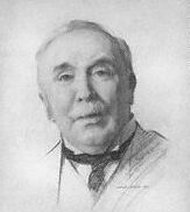
Letter to John Spencer (19 February 1900), quoted in John Wilson, C.B.: A Life of Sir Henry Campbell-Bannerman (London: Constable, 1973), p. 326
Leader of the Opposition
Henry Campbell-Bannerman: 19 citazioni0 Mi piace
Henry Campbell-Bannerman: Frasi in inglese
Speech in Belmont (25 January 1907), quoted in John Wilson, C.B.: A Life of Sir Henry Campbell-Bannerman (London: Constable, 1973), p. 588
Prime Minister
The Liberal Magazine (January 1898), p. 530, quoted in John Wilson, C.B.: A Life of Sir Henry Campbell-Bannerman (London: Constable, 1973), p. 232
“Liberal politics meant the politics of common-sense.”
The Spectator (17 February 1884), pp. 223-224, quoted in John Wilson, C.B.: A Life of Sir Henry Campbell-Bannerman (London: Constable, 1973), p. 230
… Move your amendments and let us get to business.
Speech in the House of Commons answering Conservative leader Arthur Balfour (12 March 1906), quoted in John Wilson, C.B.: A Life of Sir Henry Campbell-Bannerman (London: Constable, 1973), p. 497
Prime Minister
Cheers.
Speech to the Cobden Club denouncing the Brussels sugar convention (28 November 1902), quoted in The Times (29 November 1902), p. 12
Leader of the Opposition
Speech at the Holborn Restaurant (14 June 1901), quoted in John Wilson, C.B.: A Life of Sir Henry Campbell-Bannerman (London: Constable, 1973), p. 349
Leader of the Opposition
Letter to Herbert Gladstone on Lord Rosebery's speech advocating national efficiency collectivism (18 December 1901), quoted in John Wilson, C.B.: A Life of Sir Henry Campbell-Bannerman (London: Constable, 1973), p. 371
Leader of the Opposition
David Lloyd George upon Campbell-Bannerman's death, quoted in The Times (23 April 1908), p. 5.
About
Speech in Bolton (15 October 1903), quoted in John Wilson, C.B.: A Life of Sir Henry Campbell-Bannerman (London: Constable, 1973), p. 413
Leader of the Opposition
Speech to Liberals in Belmont (2 January 1903), quoted in John Wilson, C.B.: A Life of Sir Henry Campbell-Bannerman (London: Constable, 1973), p. 394
Leader of the Opposition
Election Address, quoted in The Times (8 January 1906), p. 8
Prime Minister
Election Address, quoted in The Times (8 January 1906), p. 8
Prime Minister
Speech in the Albert Hall, London (21 December 1905), quoted in The Times (22 December 1905), p. 7
Prime Minister
Speech in the Albert Hall, London (21 December 1905), quoted in The Times (22 December 1905), p. 7
Prime Minister
Cheers.
Speech in the Albert Hall, London (21 December 1905) launching the Liberal Party's election campaign, quoted in The Times (22 December 1905), p. 7
Prime Minister
Remarks to a friend on his death bed, quoted in J. A. Spender, The Life of The Right Hon. Sir Henry Campbell-Bannerman, G.C.B. Vol. II (1923), p. 407
Prime Minister
“The greatest of British interests is peace.”
Speech in the Circus, Anlaby Road, Hull (8 March 1899), quoted in The Times (9 March 1899), p. 6
Leader of the Opposition
“Self-government is better than good government.”
Widely attributed to Campbell-Bannerman since at least 1910 https://api.parliament.uk/historic-hansard/commons/1910/jul/12/parliamentary-franchise-women-bill-1. However it appears unattributed earlier https://books.google.co.uk/books?id=rIFPAAAAYAAJ&focus=searchwithinvolume&q=%22self-government+is+better%22, and the concept pre-dates https://books.google.co.uk/books?id=lFI3AAAAMAAJ&pg=PA403&lpg=PA403&dq=%22your+public-spirited+advocates+of+good+government,+I+do+find+sneering+upon+the+self-government+of+the+Christian%22 Campbell-Bannerman. <br class="br">Compare Gandhi: "Good government is no substitute for self-government." Young India (2 September 1920), p. 1 <br class="br">Attributed


