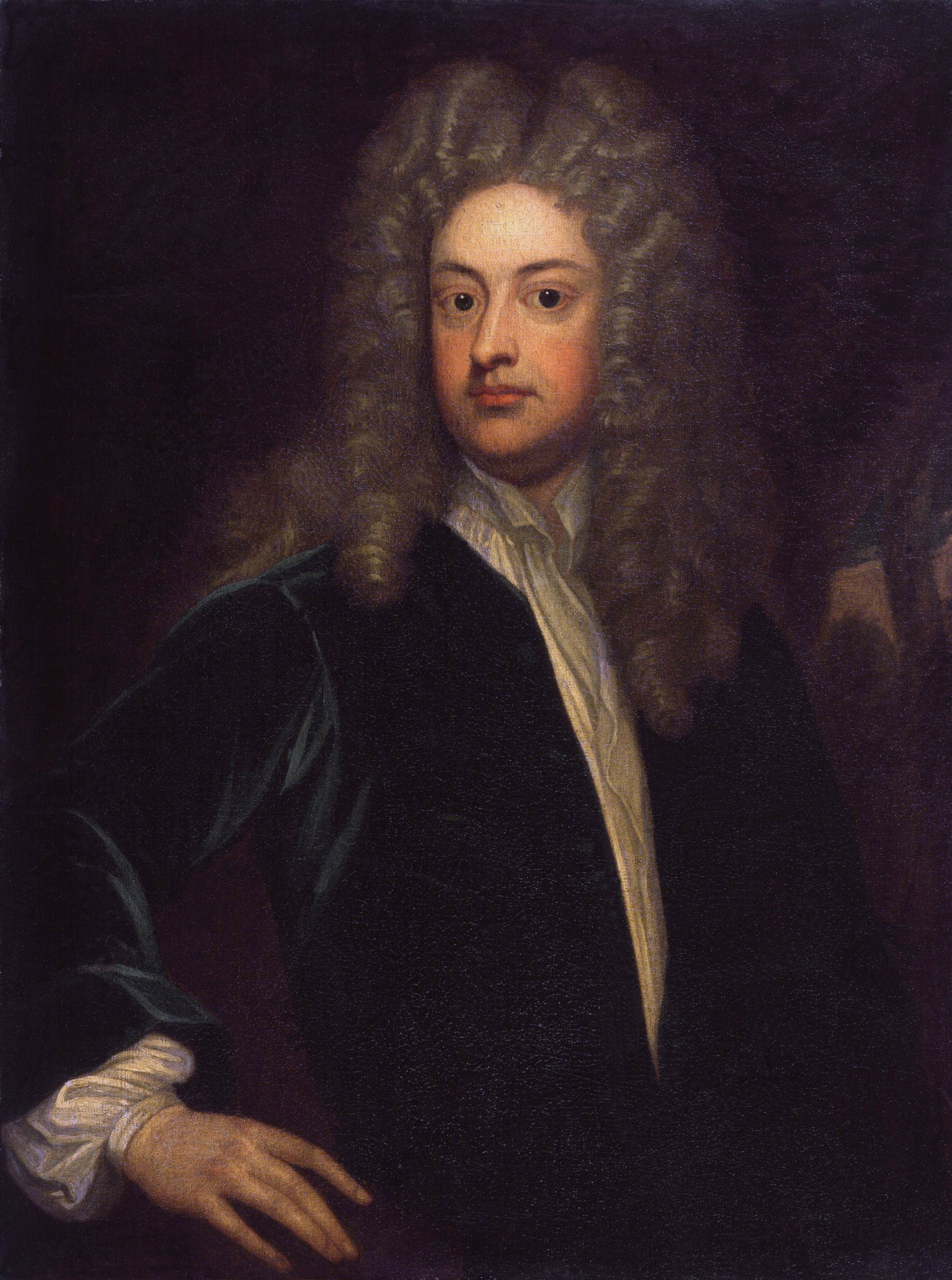
Joseph Addison frasi celebri
“La domenica pulisce tutta la ruggine della settimana.”
112
Sunday clears away the rust of the whole week.
The Spectator
dal Guardian del 1713; citato in Ian Watt, Le origini del romanzo borghese
“Niente si può mettere bene in musica che non sia privo di senso.”
18
Nothing is capable of being well set to music, that is not nonsense.
The Spectator
dallo Spectator; citato in Ian Watt, Le origini del romanzo borghese
The Spectator
Joseph Addison: Frasi in inglese
No. 256 (24 December 1711)
Often only the first half of this statement is quoted
The Spectator (1711–1714)
“From hence, let fierce contending nations know,
What dire effects from civil discord flow.”
Joseph Addison libro Cato
Act V, scene iv.
Cato, A Tragedy (1713)
No. 256 (24 December 1711)
The Spectator (1711–1714)
No. 47 (24 April 1711).
The Spectator (1711–1714)
“Round-heads and Wooden-shoes are standing jokes.”
prologue, l. 8.
The Drummer (1716)
No. 412 (23 June 1712).
The Spectator (1711–1714)
“Modesty is not only an ornament, but also a guard to virtue.”
No. 231 (24 November 1711).
The Spectator (1711–1714)
No. 162 (5 September 1711).
The Spectator (1711–1714)
“The fraternity of the henpecked.”
No. 482 (12 September 1712).
The Spectator (1711–1714)
“Much might be said on both sides.”
No. 122 (20 July 1711).
The Spectator (1711–1714)
Variante: Much may be said on both sides.
No. 94 (18 June 1711).
The Spectator (1711–1714)
No. 224.
The Tatler (1711–1714)
“Gifts and alms are the expressions, not the essence, of this virtue.”
No. 166.
The Guardian (1713)
“Antidotes are what you take to prevent dotes.”
Act IV, sc. vi.
The Drummer (1716)
No. 494 (26 September 1712).
The Spectator (1711–1714)
“Beauty soon grows familiar to the lover,
Fades in his eye, and palls upon the sense.”
Joseph Addison libro Cato
Act I, scene iv.
Cato, A Tragedy (1713)
Joseph Addison libro Cato
Act V, scene i.
Cato, A Tragedy (1713)
Joseph Addison libro Cato
Cato, A Tragedy (1713)
Variante: "When love once pleads admission to our hearts..."
Act IV, scene i. The last line has often been misreported as "He who hesitates is lost", a sentiment inspired by it but not penned by Addison. See Paul F. Boller, Jr., and John George, They Never Said It: A Book of Fake Quotes, Misquotes, & Misleading Attributions (1989), p. 3.
Joseph Addison libro Cato
Act I, scene iv.
Cato, A Tragedy (1713)
“There is nothing which we receive with so much reluctance as advice.”
No. 512 (17 October 1712).
The Spectator (1711–1714)
“Charity is a virtue of the heart, and not of the hands.”
No. 166.
The Guardian (1713)
Joseph Addison libro Cato
Act IV, scene iv.
Cato, A Tragedy (1713)
“Curse on his virtues! they've undone his country.”
Joseph Addison libro Cato
Act IV, scene iv.
Cato, A Tragedy (1713)
No. 243 (8 December 1711).
The Spectator (1711–1714)
“Mutability of temper and inconsistency with ourselves is the greatest weakness of human nature.”
No. 162 (5 September 1711).
The Spectator (1711–1714)
Spectator, No. 444.
Bartlett's Familiar Quotations, 10th ed. (1919)


