Origine: Citato in Henry S. Salt, L'etica vegetariana, traduzione di Claudio Mapelli, Castelvecchi, Roma, 2015, pp. 35-36. ISBN 978-88-6944-141-7
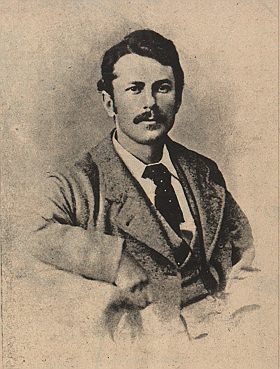
Edward Carpenter: 20 citazioni0 Mi piace
Edward Carpenter Frasi e Citazioni
Edward Carpenter: Frasi in inglese
Love's Coming of Age (1896)
Contesto: There is no solution except the freedom of woman—which means of course also the freedom of the masses of the people, men and women, and the ceasing altogether of economic slavery. There is no solution which will not include the redemption of the terms “free woman” and “free love” to their true and rightful significance. Let every woman whose heart bleeds for the sufferings of her sex, hasten to declare herself and to constitute herself, as far as she possibly can, a free woman. Let her accept the term with all the odium that belongs to it; let her insist on her right to speak, dress, think, act, and above all to use her sex, as she deems best; let her face the scorn and ridicule; let her “lose her own life” if she likes; assured that only so can come deliverance, and that only when the free woman is honored will the prostitute cease to exist. And let every man who really would respect his counterpart, entreat her also to act so; let him never by word or deed tempt her to grant as a bargain what can only be precious as a gift; let him see her with pleasure stand a little aloof; let him help her to gain her feet; so at last, by what slight sacrifices on his part such a course may involve, will it dawn upon him that he has gained a real companion and helpmate on life’s journey.
Love's Coming of Age (1896)
Contesto: There is no solution except the freedom of woman—which means of course also the freedom of the masses of the people, men and women, and the ceasing altogether of economic slavery. There is no solution which will not include the redemption of the terms “free woman” and “free love” to their true and rightful significance. Let every woman whose heart bleeds for the sufferings of her sex, hasten to declare herself and to constitute herself, as far as she possibly can, a free woman. Let her accept the term with all the odium that belongs to it; let her insist on her right to speak, dress, think, act, and above all to use her sex, as she deems best; let her face the scorn and ridicule; let her “lose her own life” if she likes; assured that only so can come deliverance, and that only when the free woman is honored will the prostitute cease to exist. And let every man who really would respect his counterpart, entreat her also to act so; let him never by word or deed tempt her to grant as a bargain what can only be precious as a gift; let him see her with pleasure stand a little aloof; let him help her to gain her feet; so at last, by what slight sacrifices on his part such a course may involve, will it dawn upon him that he has gained a real companion and helpmate on life’s journey.
England's Ideal: And Other Papers on Social Subjects (1887) p. 54
Defence of Criminals: A Criticism of Morality (1889)
Love's Coming of Age (1896)
Defence of Criminals: A Criticism of Morality (1889)
England's Ideal and Other Papers on Social Subjects (1887), Routledge, 2016, p. https://books.google.it/books?id=53uPCwAAQBAJ&pg=PT71
Defence of Criminals: A Criticism of Morality (1889)
"Custom," http://books.google.com/books?id=5WxIAAAAYAAJ&q=%22Every+human+being+grows+up+inside+a+sheath+of+custom+which+enfolds+it+as+the+swathing+clothes+enfold+the+infant%22&pg=PA136#v=onepage The Fortnightly Review (1 July 1888) <br class="br"> "Custom," http://books.google.com/books?id=WRhwu0Lvag0C&q=%22Every+human+being+grows+up+inside+a+sheath+of+custom+which+enfolds+it+as+the+swathing+clothes+enfold+the+infant%22&pg=PA148#v=onepage Civilization Its Cause And Cure And Other Essays (1889) p. 148
The Healing of Nations and the Hidden Sources of Their Strife (1919)
Pagan and Christian Creeds (1920)
Edward Carpenter libro The Intermediate Sex
The Intermediate Sex (1908), pp. 114-115
Love's Coming of Age (1896)
Defence of Criminals: A Criticism of Morality (1889)
Love's Coming of Age (1896)
Defence of Criminals: A Criticism of Morality (1889)
“The law is in a sense the consolidated public opinion of society.”
Defence of Criminals: A Criticism of Morality (1889)
Love's Coming of Age (1896)
Defence of Criminals: A Criticism of Morality (1889)


