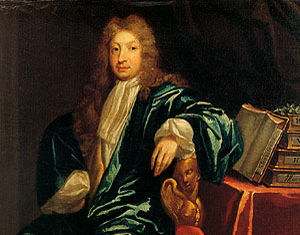
John Dryden:
202
frasi
2
Mi piace
John Dryden frasi celebri
“Iddio non creò l'opera Sua perché l'uomo la correggesse.”
Lettera a John Driden di Chesterton, 1700
Origine: Da Sir Martin Mar-all.
“Non prendere la vita che non puoi dare, | perché tutte le cose hanno un uguale diritto a vivere.”
Origine: Interpolazione di Dryden nella sua traduzione (1700) delle Metamorfosi di Ovidio, nei versi del cap. XV riguardanti il vegetarianismo pitagorico; citato in Erica Joy Mannucci, La cena di Pitagora, Carocci, Roma, 2008, p. 16. ISBN 978-88-430-4574-7
John Dryden: Frasi in inglese
John Dryden
libro
Fables, Ancient and Modern
Preface to the Fables.
Fables, Ancient and Modern (1700)
“Nor is the people's judgment always true:
The most may err as grossly as the few.”
John Dryden
Absalom and Achitophel
Pt. I, lines 781–782.
Absalom and Achitophel (1681)
“Fate, and the dooming gods, are deaf to tears.”
Aeneis, Book VI, line 512.
The Works of Virgil (1697)
“Look round the habitable world: how few
Know their own good, or knowing it, pursue.”
Juvenal, Satire X (1693), lines 1–2.
“Calms appear, when storms are past,
Love will have its hour at last.”
John Dryden
libro
Fables, Ancient and Modern
Origine: Fables, Ancient and Modern (1700), The Secular Masque (1700), Lines 72–73.
Act II, scene 2.
The Spanish Friar (1681)
Act III, scene 2.
The Spanish Friar (1681)
Act II, scene 1.
The Spanish Friar (1681)


