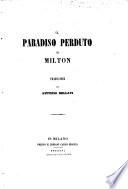
“Lunga ed impervia è la strada che dall'inferno si snoda verso la luce.”
John Milton libro Paradiso perduto
citato in Seven
Paradiso perduto
John Milton è stato uno scrittore, poeta, filosofo, saggista, statista e teologo inglese.
È considerato uno dei letterati britannici più celebri, apprezzati e influenti dell'epoca successiva a quella shakespeariana.
Il suo capolavoro è il poema epico Paradiso perduto , pubblicato in una prima edizione di 10 volumi nel 1667 quando, ormai cieco e in povertà, il 27 aprile dello stesso anno ne vendette i diritti per dieci sterline, e in una seconda edizione di 12 volumi nel 1674.
L'opera, che dà vita a quello che viene considerato un vero e proprio dramma cosmico, fu da lui iniziata negli anni della produzione saggistica.
L'Areopagitica , appello carico di fervore con cui sosteneva la libertà di stampa, è invece la sua opera in prosa più conosciuta.
Milton scrisse anche 24 sonetti e un breve testo didattico, il Trattato dell'educazione . Wikipedia

“Lunga ed impervia è la strada che dall'inferno si snoda verso la luce.”
John Milton libro Paradiso perduto
citato in Seven
Paradiso perduto
John Milton libro Paradiso perduto
Sanesi IV, 677-8
Paradiso perduto
John Milton libro Paradiso perduto
Sanesi IV, 846-8
Paradiso perduto
Origine: Citato nel film Il corvo - The Crow: «Sbalordito il diavolo rimase, quando comprese quanto osceno fosse il bene e vide la virtù nello splendore delle sue forme sinuose.»
John Milton libro Areopagitica
Areopagitica
Origine: Citato in Nuccio Ordine, L'utilità dell'inutile, Bompiani, 2014, p. 195. ISBN 978-88-452-7448-0.
“Meglio regnare all'inferno che servire in cielo.”
John Milton libro Paradiso perduto
Sanesi, I, 261
Paradiso perduto
Origine: Citato ne L'avvocato del diavolo; nel film, il nome del personaggio principale interpretato da Al Pacino, incarnazione del diavolo, è John Milton. Citato anche in Animal Factory.
John Milton libro Paradiso perduto
Sanesi IV, 17-22
Paradiso perduto
Origine: Citato nel libro La fata delle tenebre in prosa: "Orrore e dubbio confondono i suoi pensieri affranti, e dal profondo l'Inferno gli si agita dentro, poiché l'Inferno ha dentro di sé, l'Inferno attorno a sé, e non c'è passo che valga ad allontanarlo dall'Inferno che in lui alberga".
Origine: citato in È triste quel Paese che accusa Galileo, Corriere della sera, p. 49, 10 novembre 2010.
“La pace corrompe non meno | di quanto la guerra distrugge.”
John Milton libro Paradiso perduto
Sanesi XI, 784-5
Paradiso perduto
Variante: Ora vedo
Che la pace corrompe non meno di quanto la guerra distrugga.
John Milton libro Areopagitica
libro Areopagitica. Discorso per la libertà di stampa
“Chi ha prevalso sul proprio nemico | soltanto con la forza, lo ha vinto soltanto a metà.”
John Milton libro Paradiso perduto
Sanesi I, 648-9
Paradiso perduto
John Milton libro Paradiso perduto
citato in Charles Morgan, La fontana, Arnoldo Mondadori Editore, 1961
Paradiso perduto
alludendo al parlamento scheletro, Barebone, nel 1660; citato in Giampiero Carocci, La rivoluzione inglese. 1640-1660, Editori Riuniti, Roma, 1998, p. 95
“The end then of learning is to repair the ruins of our first parents.”
Tractate of Education (1644)
“Better to reign in Hell, than to serve in Heaven.”
John Milton libro Paradiso perduto
Variante: Better to reign in Hell than serve in Heaven.
Origine: Paradise Lost
“The childhood shows the man,
As morning shows the day.”
Origine: Paradise Regained by John Milton
John Milton libro Paradiso perduto
Origine: Paradise Lost
John Milton libro Paradiso perduto
Origine: Paradise Lost
John Milton libro Paradiso perduto
Variante: All is not lost, the unconquerable will, and study of revenge, immortal hate, and the courage never to submit or yield.
Origine: Paradise Lost
John Milton libro Paradiso perduto
i.17-26
Paradise Lost (1667)
Contesto: And chiefly Thou O Spirit, that dost prefer
Before all Temples th' upright heart and pure,
Instruct me, for Thou know'st; Thou from the first
Wast present, and with mighty wings outspread
Dove-like satst brooding on the vast Abyss
And mad'st it pregnant: What in me is dark
Illumine, what is low raise and support;
That to the highth of this great Argument
I may assert th' Eternal Providence,
And justifie the wayes of God to men.
John Milton libro Paradiso perduto
i.254-255
Paradise Lost (1667)
Variante: The mind is its own place, and in itself
Can make a heav'n of hell, a hell of heav'n.
Origine: Paradise Lost: Books 1-2
“As ever in my great Taskmaster's eye.”
On his being arrived to the Age of Twenty-three, reported in Bartlett's Familiar Quotations, 10th ed. (1919)
John Milton libro Areopagitica
Origine: Areopagitica
“I neither oblige the belief of other person, nor overhastily subscribe mine own.”
The History of England, Book ii
Contesto: I neither oblige the belief of other person, nor overhastily subscribe mine own. Nor have I stood with others computing or collating years and chronologies, lest I should be vainly curious about the time and circumstance of things, whereof the substance is so much in doubt. By this time, like one who had set out on his way by night, and travelled through a region of smooth or idle dreams, our history now arrives on the confines, where daylight and truth meet us with a clear dawn, representing to our view, though at a far distance, true colours and shapes.
“Revives, reflourishes, then vigorous most
When most unactive deemed”
John Milton libro Samson Agonistes
Origine: Samson Agonistes (1671), Lines 1687-1692 & 1697-1707
Contesto: But he, though blind of sight,
Despised, and thought extinguished quite,
With inward eyes illuminated,
His fiery virtue roused
From under ashes into sudden flame,
[... ]
So Virtue, given for lost,
Depressed and overthrown, as seemed,
Like that self-begotten bird
In the Arabian woods embost,
That no second knows nor third,
And lay erewhile a holocaust,
From out her ashy womb now teemed,
Revives, reflourishes, then vigorous most
When most unactive deemed;
And, though her body die, her fame survives,
A secular bird, ages of lives.
John Milton libro Samson Agonistes
Origine: Samson Agonistes (1671), Lines 1687-1692 & 1697-1707
Contesto: But he, though blind of sight,
Despised, and thought extinguished quite,
With inward eyes illuminated,
His fiery virtue roused
From under ashes into sudden flame,
[... ]
So Virtue, given for lost,
Depressed and overthrown, as seemed,
Like that self-begotten bird
In the Arabian woods embost,
That no second knows nor third,
And lay erewhile a holocaust,
From out her ashy womb now teemed,
Revives, reflourishes, then vigorous most
When most unactive deemed;
And, though her body die, her fame survives,
A secular bird, ages of lives.
“Long is the way and hard, that out of Hell leads up to light.”
John Milton libro Paradiso perduto
Origine: Paradise Lost
“Never can true reconcilement grow where wounds of deadly hate have pierced so deep…”
John Milton libro Paradiso perduto
Origine: Paradise Lost
John Milton libro Areopagitica
Origine: Areopagitica
John Milton libro Areopagitica
Origine: Areopagitica
John Milton libro Paradiso perduto
Origine: Paradise Lost
John Milton libro Paradiso perduto
Origine: Paradise Lost


