“L'arte non deve riprodurre il visibile, ma renderlo visibile.”
Origine: Citato in Focus, n. 60, p. 185
Ernst Paul Klee è stato un pittore svizzero di padre tedesco e madre svizzera, il primo musicista e la seconda cantante.
Figura eminente dell'arte del XX secolo, nel periodo della sua formazione Paul Klee si occupò di musica, poesia, pittura, scegliendo infine quest'ultima forma di espressione come ambito privilegiato e dando così inizio ad una tra le più alte e feconde esperienze artistiche del Novecento. Si mantenne comunque anche con i proventi derivati dalla sua attività di strumentista presso l'Orchestra di Berna.
Esponente dell'astrattismo, considerava l'arte un discorso sulla realtà e non una sua semplice riproduzione. Nelle sue opere la realtà è quindi rarefatta, resa essenziale, talvolta ridotta a semplici linee o campiture colorate. La sua inesausta ricerca si manifesta anche attraverso la scelta dei supporti, che vanno dalla tradizionale tela alla carta di giornale, alla juta, a cartoncini di ogni qualità e spessore. Wikipedia
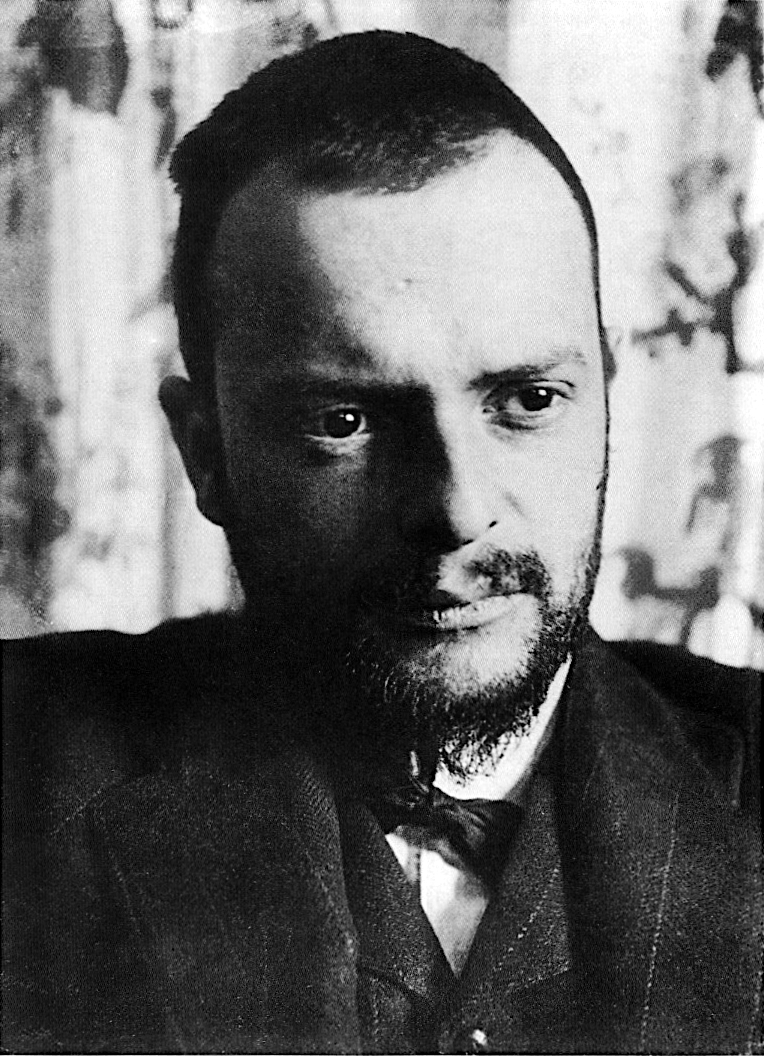
“L'arte non deve riprodurre il visibile, ma renderlo visibile.”
Origine: Citato in Focus, n. 60, p. 185
“L'occhio segue le vie che nell'opera gli sono state disposte.”
Origine: Da Pädagogisches skizzenbuch
Origine: Da Diari, Laqueur, pp. 217-218
“Nessuno si riconosce in noi e noi siamo avulsi da tutti.”
Origine: Da Sull'arte moderna, Laqueur, p. 218
I.9 A The Natural organism of movement as kinetic will and kinetic execution (supra-material), p. 27
1921 - 1930, Pedagogical Sketch Book, (1925)
IIII.37, The Arrow. p. 54
1921 - 1930, Pedagogical Sketch Book, (1925)
I.13 Productive | Receptive, p. 33
1921 - 1930, Pedagogical Sketch Book, (1925)
Quote (1908), # 840, in The Diaries of Paul Klee, translation: Pierre B. Schneider, R. Y. Zachary and Max Knight; publisher, University of California Press, 1964
1903 - 1910
I.8 Material Structure. in Nature, p. 26
1921 - 1930, Pedagogical Sketch Book, (1925)
Statement of mid-1920'; as quoted in Abstract Art (1990) by Anna Moszynska, p. 100
1921 - 1930
Diary-note (Tunisia, 16 April 1914), # 926; as quoted by Suzanne Partsch in Klee (reissue), Benedikt Taschen, Cologne, 2007 - ISBN 978-3-8228-6361-9, p. 20
1911 - 1914, Diary-notes from Tunisia' (1914)
Quote (1904), # 512, in The Diaries of Paul Klee, translation: Pierre B. Schneider, R. Y. Zachary and Max Knight; publisher, University of California Press, 1964
1903 - 1910
world view
Quote (July 1917), # 1081, in The Diaries of Paul Klee, translation: Pierre B. Schneider, R. Y. Zachary and Max Knight; publisher, University of California Press, 1964
1916 - 1920
Quote (April 1912); as cited in Kandinsky and Klee in Tunisia, Roger Benjamin & Cristina Ashjian; Univ of California Press, 2015, p. 106
In April 1912 Paul Klee spent 16 days with his wife Lily in Paris. They visited the exhibtion of the 'Salon des Independants' of 1912, where works were shown of Delaunay, Seurat and many Cubist works
1911 - 1914
Quote (November 1897), # 52, in The Diaries of Paul Klee, translation: Pierre B. Schneider, R. Y. Zachary and Max Knight; publisher, University of California Press, 1964
reflecting on his youth and on the uncertainty about the future of choice to make
1895 - 1902
Quote (Bern, April 1902), as cited in Artists on Art, from the 14th – 20th centuries, ed. Robert Goldwater and Marco Treves; Pantheon Books, 1972, London, p. 442
1895 - 1902
note from a letter, 1903
Quote from a letter (1903), as cited in Artists on Art, from the 14th – 20th centuries, ed. Robert Goldwater and Marco Treves; Pantheon Books, 1972, London, p. 443
1903 - 1910
Quote (June 1902), as cited in Artists on Art, from the 14th – 20th centuries, ed. Robert Goldwater and Marco Treves; Pantheon Books, 1972, London, p. 442
1895 - 1902
Quote (1901), # 294, in The Diaries of Paul Klee, translation: Pierre B. Schneider, R. Y. Zachary and Max Knight; publisher, University of California Press, 1964
1895 - 1902
Quote (1908), # 840, in The Diaries of Paul Klee; University of California Press, 1964; as quoted by Francesco Mazzaferro, in 'The Diaries of Paul Klee - Part Three' : Klee as a Secessionist and a Neo-Impressionist Artist http://letteraturaartistica.blogspot.nl/2015/05/paul-klee-ev.html <br class="br">1903 - 1910
IIII.37, The Arrow. p. 54
1921 - 1930, Pedagogical Sketch Book, (1925)
Diary entry (January 1912), # 905, quoting his "Munich Art Letter" in the journal Die Alpen
1911 - 1914
I.13 Productive | Receptive, p. 33
1921 - 1930, Pedagogical Sketch Book, (1925)
German original version: Diesseitig bin ich gar nicht fassbar. Denn ich wohne grad so gut bei den Toten, wie bei den Ungeborenen. Etwas näher dem Herzen der Schöpfung als üblich. Und noch lange nicht nahe genug.
Quote from Exhibition catalogue, Galerie Goltz, Munich, published in the gallery's house journal Der Ararat (May 1920). These words were later used as Klee's epitaph in 1940.
Variant translation: I cannot be understood at all on this earth. For I live as much with the dead as with the unborn. Somewhat closer to the heart of creation than usual. But not nearly close enough.
As quoted in Paul Klee: His Work and Thought (1991) by Marcel Franciscono, p. 5
1916 - 1920
“He [in general] has found his style, when he cannot do otherwise, i. e., cannot do something else.”
Diary entry (Munich, 1908), # 825, in The Diaries of Paul Klee, 1898-1918; University of California Press, 1968, p. 227
1903 - 1910
Quote (Tunisia, 16 April 1914), # 926, in: The Diaries of Paul Klee, 1898-1918, transl. Pierre B. Schneider, R.Y. Zachary and Max Knight; Berkeley and Los Angeles, University of California Press, 1964
1911 - 1914, Diary-notes from Tunisia' (1914)
Quote (1900), # 121, in The Diaries of Paul Klee, translation: Pierre B. Schneider, R. Y. Zachary and Max Knight; publisher, University of California Press, 1964
1895 - 1902
Section IV
1916 - 1920, Creative Credo (1920)
“The work as human action (genesis) is productive as well as receptive. It is continuity.”
I.13 Productive | Receptive, p. 33
1921 - 1930, Pedagogical Sketch Book, (1925)
IIII.37, The Arrow. p. 54
1921 - 1930, Pedagogical Sketch Book, (1925)
As quoted in the film Der Bauhaus, produced by TV-Rechte in Germany (1975)
Attributed from posthumous publications
Diary entry, (Tunisia, April 1914), # 926-k, in: The Diaries of Paul Klee, 1898-1918, transl. Pierre B. Schneider, R.Y. Zachary and Max Knight; Berkeley and Los Angeles, University of California Press, 1964
1911 - 1914, Diary-notes from Tunisia' (1914)
Quote in a letter to his wife Lily Klee, 1 February 1933; as quoted in 'Klee & Kandinsky', 2015 exhibition text, Lenbachhaus und Kunstbau Munich, 2015-2016 https://www.zpk.org/en/exhibitions/review_0/2015/klee-kandinsky-969.html <br class="br">in the same year Paul Klee was fired by the Nazi's; they closed the Bauhaus; the family Klee emigrated to Switzerland <br class="br">1931 -1940
Quote (1912), # 928, in The Diaries of Paul Klee, translation: Pierre B. Schneider, R. Y. Zachary and Max Knight; publisher, University of California Press, 1964
1911 - 1914


