“No virtue is equal to the good of others and
no vice greater than hurting others.”
Tulsidas in "A Garden of Deeds: Ramacharitmanas, a Message of Human Ethics", p. 37
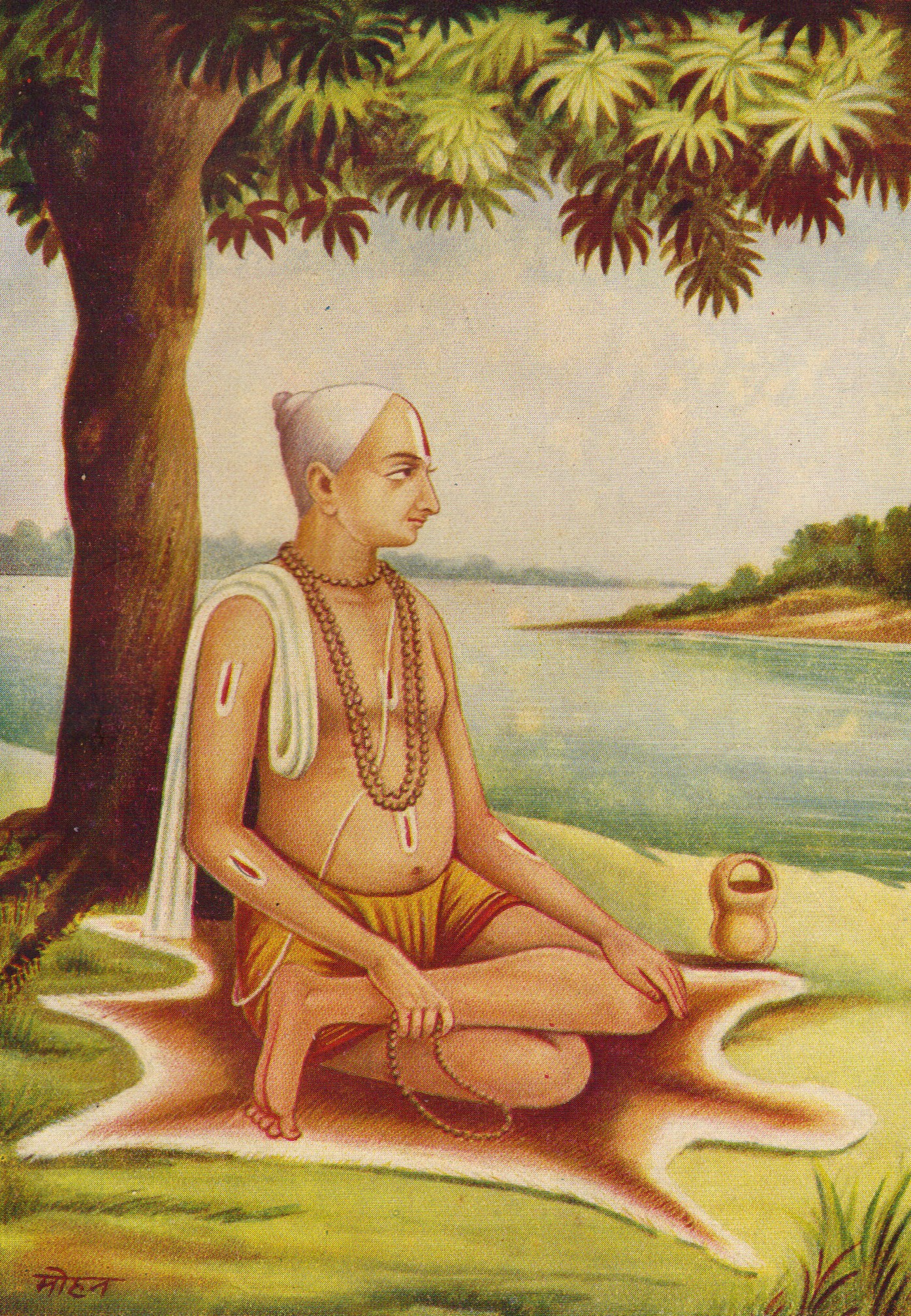
Tulsidas, , è stato un poeta e mistico indiano.
Probabilmente di famiglia bramanica, originaria dell'Uttar Pradesh, abbandonato dai suoi per essere nato in un giorno giudicato infausto, fu allevato da un asceta.
Visse gran tempo a Rajapur da dove si allontanò per vivere l'ultima parte della sua lunga esistenza nella città santa di Benares, dedito a studi e a pratiche religiose.
Oltre che per opere di minor rilievo, Tulsidas è ricordato per Il lago delle gesta di Rama, noto anche come Tulsi Ramayana. Elaborando liberamente il materiale del Rāmāyaṇa, Tulsidas intese cantare le lodi di Rāma, fonte di ogni salvezza per l'anima che si abbandoni fiduciosa nella pietà e nell'adorazione assoluta dell'amore divino.
Per la profonda influenza esercitata sullo spirito indiano durante la rinascita che seguì alle persecuzioni islamiche, il Ramayana di Tulsidas è considerato un testo sacro, la Bibbia delle masse indù dell'India settentrionale, letto e commentato in pubblico e in privato. Pur se non esente da taluni difetti per quanto concerne la proporzione delle varie parti, l'unità di ispirazione colloca quest'opera tra gli esempi più significativi della poesia indiana moderna e ne fa un capolavoro della lingua hindi, di cui Tulsidas è giustamente considerato il padre. Di notevole rilievo è anche il suo valore letterario grazie alla limpidezza del suo stile e alla ricchezza descrittiva e immaginativa. Wikipedia
“No virtue is equal to the good of others and
no vice greater than hurting others.”
Tulsidas in "A Garden of Deeds: Ramacharitmanas, a Message of Human Ethics", p. 37
“In dependence, there is no happiness, even in a dream.”
Quoted in "A Garden of Deeds: Ramacharitmanas, a Message of Human Ethics" which principle Mahatma Gandhi adopted to give a national leadership motto, in P.7
His counsel on Humanism in "A Garden of Deeds: Ramacharitmanas, a Message of Human Ethics", p. 32
Origine: On Tulsidas’s epic Ramacharritamanas, P.E.Keay in "A Garden of Deeds: Ramacharitmanas, a Message of Human Ethics", p. 35
His confessional statements on his own experiences made in Kavitavali quoted in "A Garden of Deeds: Ramacharitmanas, a Message of Human Ethics", p. 49
Tulsidas in "A Garden of Deeds: Ramacharitmanas, a Message of Human Ethics", p. 37
“As the Ruler, so the people.”
Quoted in "A Garden of Deeds: Ramacharitmanas, a Message of Human Ethics", p. 5
A Muslim weaver is called a Julaha which Tusllidas preferred to be called, as he was brought up by a Muslim couple who were weavers who had picked him up and brought him up. Quoted in "A Garden of Deeds: Ramacharitmanas, a Message of Human Ethics", p. 106
Tulsidas's philosophical approach, quoted in "Hindu spirituality: Postclassical and modern", p. 80
In Kavitavali quoted in "A Garden of Deeds: Ramacharitmanas, a Message of Human Ethics", p. 72
Tulsidas's practical approach, quoted in "Hindu spirituality: Postclassical and modern", p. 80
Tulsidas’s definition of God in verse quoted in A Garden of Deeds: Ramacharitmanas, a Message of Human Ethics http://books.google.co.in/books?id=5em1y2PczVgC&pg=PA36, p. 36
“[I] begged for crumbs and morsels door to door…Plodding and dawdling around lanes.”
In Kavitavali quoted in "A Garden of Deeds: Ramacharitmanas, a Message of Human Ethics", p. 106
“Am a servant of Rama,
Accredited to His Court,
What for should I
Be a Courier of man?”
A couplet he composed when he refused to accept the honour as one of the Ratna’s (Jewel) as a poet in the Imperial court of Akbar by his friend Abdurrahim Khan-i-Khana. Quoted in "A Garden of Deeds: Ramacharitmanas, a Message of Human Ethics", p. 54
“What did I not do, where did I not go, to whom did I not bow.”
In Vinay Patrika quoted in "A Garden of Deeds: Ramacharitmanas, a Message of Human Ethics", p. 276
Tulsidas in "A Garden of Deeds: Ramacharitmanas, a Message of Human Ethics", p. 36
Quoted in "A Garden of Deeds: Ramacharitmanas, a Message of Human Ethics", p. 5
In the invocation of his epic poetry of Ramacharitamanas. Quoted in "A Garden of Deeds: Ramacharitmanas, a Message of Human Ethics", p. 91
Tulsidas quoted in "Hindu spirituality: Postclassical and modern", p. 77
“No poet in England has ever been in the masses what Tulsidas has been to the people of this land.”
Edwin Greaves, in "A Garden of Deeds: Ramacharitmanas, a Message of Human Ethics", p. 35
On Tulsidas’s epic Ramacharritamanas
Grierson, in "A Garden of Deeds: Ramacharitmanas, a Message of Human Ethics", p. 35
On Tulsidas’s epic Ramacharritamanas
Vincent Smith in "A Garden of Deeds: Ramacharitmanas, a Message of Human Ethics", pp.34-35
On Tulsidas’s epic Ramacharritamanas
Constance Jones & James D. Ryan in "Encyclopedia of Hinduism", p. 457
On Tulsidas’s epic Ramacharritamanas
K. R. Sundararajan in Hindu spirituality: Postclassical and modern http://books.google.co.in/books?id=LO0DpWElIRIC&pg=PA306&hl=en#v=onepage&q=Bhakti&f=false, p. 73
Sir George Grierson noted this when Kabir and Dadu were Tulsidas’s contemporaries when the population of northern India at the time was about ninety million quoted in "A Garden of Deeds: Ramacharitmanas, a Message of Human Ethics", P.37
Shiva Kumar Tripathi in "A Garden of Deeds: Ramacharitmanas, a Message of Human Ethics", p. 36
F.S.Growse, in According to Tradition: Hagiographical Writing in India http://books.google.co.in/books?id=GrMwdEqHLzEC&printsec=frontcover#v=onepage&q=Tulsidas&f=false, p. 80
Constance Jones & James D. Ryan in Encyclopedia of Hinduism http://books.google.co.in/books?id=OgMmceadQ3gC&printsec=frontcover&dq=Encyclopedia+of+Hinduism+(Encyclopedia+of+World+Religions)&hl=en&sa=X&ei=6cYBU_iiIeuRiQfwgoDQBA&ved=0CCwQ6AEwAA#v=onepage&q=Tuslidas&f=false, p. 456


