Edward de Vere, 17th Earl of Oxford
from Care and Disappointment, first published in Paradyse of Dainty Devices, 1576. Published by Grosart in Miscellanies of the Fuller Worthies' Library, Vol. IV (1872)
Poems
Edward de Vere è stato un poeta inglese, cortigiano dell'Età elisabettiana e XVII conte di Oxford.
Edward era l'unico figlio di John de Vere, XVI conte di Oxford e di sua moglie, Margery Golding. Dopo la morte di suo padre il 3 agosto 1562 egli venne introdotto alla corte della Regina Elisabetta I, e ricevette un'eccellente educazione per l'epoca direttamente dal segretario personale della regina, Sir William Cecil. Il giovane acquisì contestualmente il titolo di Gran Ciambellano d'Inghilterra. Egli fu un valente campione di giostre cavalleresche, e viaggiò anche in Europa. Egli prestò servizio militare per breve tempo durante le Rivolte del Nord e nelle Fiandre durante la Guerra anglo-spagnola , anche se non si distinse per capacità particolari.
Il conte di Oxford divenne noto particolarmente per il proprio patronato che concesse a scrittori e teatri. Tra il 1564 ed il 1599 gli vennero dedicati 28 libri, tra i quali spiccano opere di Golding, Lyly, Greene e Munday. Egli inaugurò con la propria presenza il Blackfriars Theatre sul finire del Cinquecento, sponsorizzandone poi molte compagnie di attori e musicisti.Egli stesso fu un poeta, ma di scarsa fama, sebbene la sua celebrità sia perlopiù dovuta ad una sua presunta relazione con Elisabetta I d'Inghilterra e alla teoria che lo vuole autore delle opere di William Shakespeare. Wikipedia
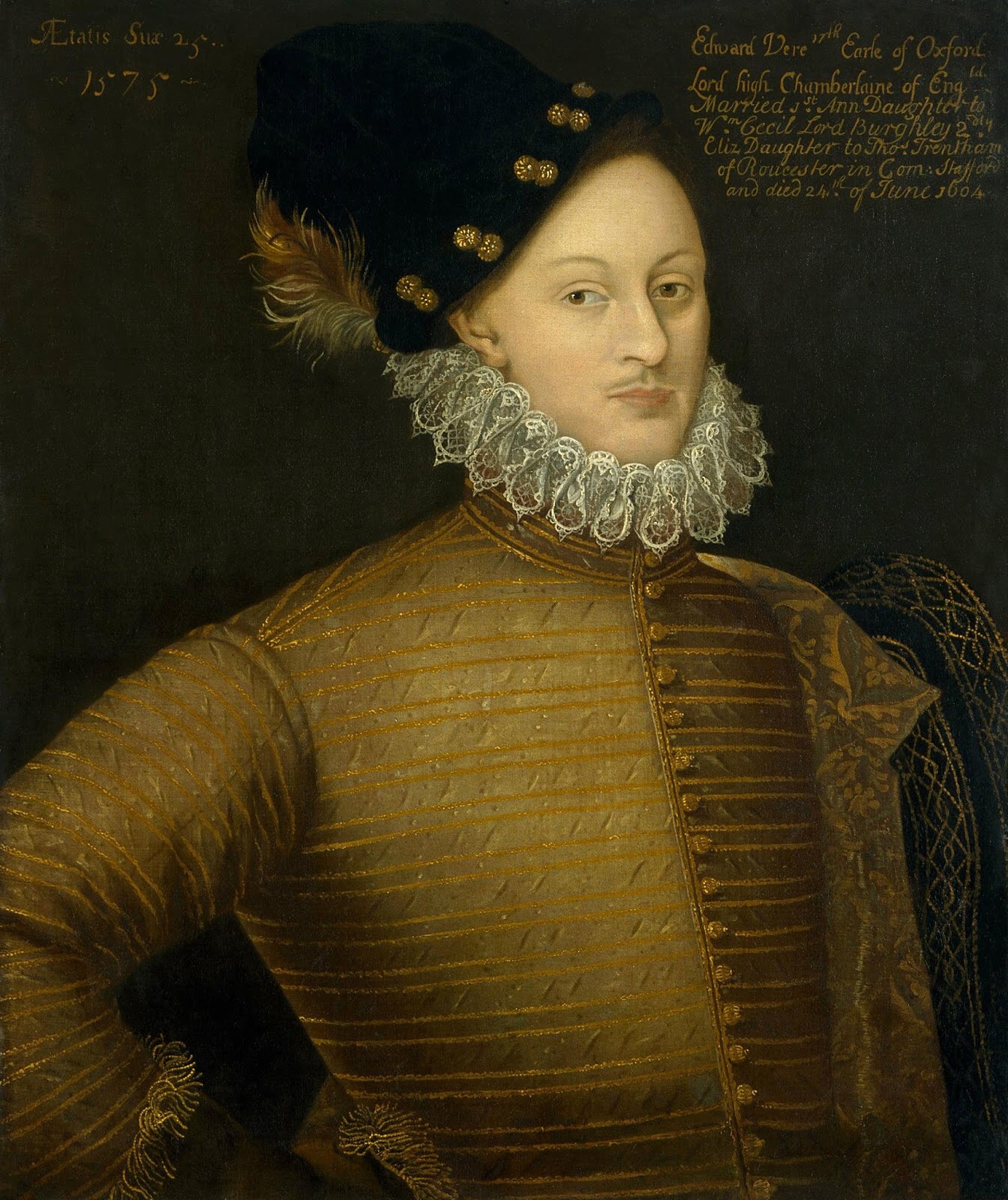
Edward de Vere, 17th Earl of Oxford
from Care and Disappointment, first published in Paradyse of Dainty Devices, 1576. Published by Grosart in Miscellanies of the Fuller Worthies' Library, Vol. IV (1872)
Poems
Edward de Vere, 17th Earl of Oxford
Poem "If women could be fair and yet not fond", also sometimes titled "Woman's Changeableness". According to Oxford specialist Steven May this is "possibly" by Oxford, but his authorship is not certain. It was printed in variant form as the work of Oxford in 1587, but attributed to "R.W." in the Harleian MS. A version was printed in Britons Bower of Delights (1591) attributed to Oxford.
Poems, Attributed
Edward de Vere, 17th Earl of Oxford
George Chapman, The Revenge of Bussy D'Ambois (2.4.84-95)
About
Edward de Vere, 17th Earl of Oxford
Attributed to Oxford by May, but also published as the work of Edward Dyer.
Poems, Attributed
“A valiant mind no deadly danger fears;”
Edward de Vere, 17th Earl of Oxford
From Reason and Affection. First published in Paradyse of Dainty Devices (1576), revised in the 1596 edition. It is also known as "Being in Love he complaineth". Published by Grosart in Miscellanies of the Fuller Worthies' Library, Vol. IV (1872)
Poems
Edward de Vere, 17th Earl of Oxford
Anecdote recorded by John Aubrey in Brief Lives (1693).
About
Edward de Vere, 17th Earl of Oxford
Origine: About, Lines attributed to Gabriel Harvey by Thomas Nashe, said to have been written to ridicule Oxford.


