“Guardati dalla furia di un uomo tranquillo.”
John Dryden Absalom and Achitophel
da "Absalom and Achitophel", 1681
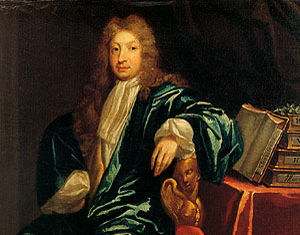
John Dryden è stato un poeta, drammaturgo, critico letterario e traduttore inglese.
“Guardati dalla furia di un uomo tranquillo.”
John Dryden Absalom and Achitophel
da "Absalom and Achitophel", 1681
“Iddio non creò l'opera Sua perché l'uomo la correggesse.”
Lettera a John Driden di Chesterton, 1700
Origine: Da Sir Martin Mar-all.
“Non prendere la vita che non puoi dare, | perché tutte le cose hanno un uguale diritto a vivere.”
Origine: Interpolazione di Dryden nella sua traduzione (1700) delle Metamorfosi di Ovidio, nei versi del cap. XV riguardanti il vegetarianismo pitagorico; citato in Erica Joy Mannucci, La cena di Pitagora, Carocci, Roma, 2008, p. 16. ISBN 978-88-430-4574-7
John Dryden Absalom and Achitophel
Pt. I, lines 230–239.
Absalom and Achitophel (1681)
John Dryden Absalom and Achitophel
Pt. I, lines 554–557.
Absalom and Achitophel (1681)
“Than a successive title long and dark,
Drawn from the mouldy rolls of Noah's ark.”
John Dryden libro The Hind and the Panther
Pt 1, line 301.
The Hind and the Panther (1687)
“Old as I am, for ladies' love unfit,
The power of beauty I remember yet.”
John Dryden libro Fables, Ancient and Modern
Origine: Fables, Ancient and Modern (1700), Cymon and Iphigenia, Lines 1–2.
“Here lies my wife:here let her lie!
Now she's at rest, and so am I.”
Epitaph, intended for his wife
“All have not the gift of martyrdom.”
John Dryden libro The Hind and the Panther
Pt. II, line 59.
The Hind and the Panther (1687)
Aeneis, Book VI, lines 374–377.
The Works of Virgil (1697)
Essay of Dramatick Poesie (1668) Full text online http://andromeda.rutgers.edu/~jlynch/Texts/drampoet.html.
“Her wit was more than man, her innocence a child.”
To the Pious Memory of Mrs. Anne Killegrew (1686), line 70.
The Indian Emperor (1667), Act III, scene ii.
John Dryden libro Fables, Ancient and Modern
Preface to the Fables.
Fables, Ancient and Modern (1700)
“When beauty fires the blood, how love exalts the mind!”
John Dryden libro Fables, Ancient and Modern
Origine: Fables, Ancient and Modern (1700), Cymon and Iphigenia, Line 41.
John Dryden libro Fables, Ancient and Modern
The Cock and the Fox line 445 - 457.
Fables, Ancient and Modern (1700)
Georgic II, lines 688–691.
The Works of Virgil (1697)
“All human things are subject to decay,
And, when fate summons, monarchs must obey.”
Origine: Mac Flecknoe (1682), l. 1–2.
“Sound the trumpets; beat the drums…
Now give the hautboys breath; he comes, he comes.”
Origine: Alexander’s Feast http://www.bartleby.com/40/265.html (1697), l. 50–51.
“A satirical poet is the check of the laymen on bad priests.”
John Dryden libro Fables, Ancient and Modern
Preface to the Fables.
Fables, Ancient and Modern (1700)
Sylvae (London, 1685), Translation of the Latter Part of the Third Book of Lucretius, "Against the Fear of Death", pp. 61–62.
“For those whom God to ruin has design'd,
He fits for fate, and first destroys their mind.”
John Dryden libro The Hind and the Panther
Pt. III, line 2387.
The Hind and the Panther (1687)
“The Wild Gallant, act ii. scene. 1.”
Bartlett's Familiar Quotations, 10th ed. (1919)
“Chaucer followed Nature everywhere, but was never so bold to go beyond her.”
John Dryden libro Fables, Ancient and Modern
Preface to the Fables.
Fables, Ancient and Modern (1700)
John Dryden libro The Hind and the Panther
Pt. I, lines 462–465.
The Hind and the Panther (1687)
“T is not for nothing that we life pursue;
It pays our hopes with something still that's new.”
John Dryden Aureng-zebe
Aureng-Zebe (1676), Act IV, scene i.
“Like a led victim, to my death I'll go,
And, dying, bless the hand that gave the blow.”
Act II, scene 1.
The Spanish Friar (1681)
“And that one hunting, which the Devil design'd
For one fair female, lost him half the kind.”
Theodore and Honoria, line 227.
Bartlett's Familiar Quotations, 10th ed. (1919)
“Thus in a pageant-show a plot is made;
And peace itself is war in masquerade.”
John Dryden Absalom and Achitophel
Pt. I, lines 750–751.
Absalom and Achitophel (1681)
Origine: Alexander’s Feast http://www.bartleby.com/40/265.html (1697), l. 77–83.
Origine: Alexander’s Feast http://www.bartleby.com/40/265.html (1697), l. 66–70.


