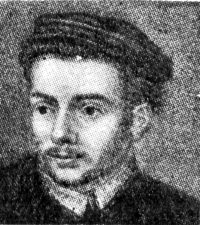
Frasi di John Skelton

John Skelton è stato un poeta inglese.


✵ 1460 – 21. Giugno 1529
John Skelton photo
John Skelton: 14 citazioni0 Mi piace

John Skelton: Frasi in inglese

“There is nothynge that more dyspleaseth God,
Than from theyr children to spare the rod.”

John Skelton

Magnificence, A goodly interlude, line 1954 (published c. 1533), reported in Bartlett's Familiar Quotations, 10th ed. (1919). Compare: He that spareth the rod hateth his son, Proverbs xiii. 24; They spare the rod and spoyl the child, Ralph Venning, Mysteries and Revelations (second ed.), p. 5. 1649; Spare the rod and spoil the child, Samuel Butler: Hudibras, pt. ii. c. i. l. 843.

“I say, thou mad March hare,
I wonder how ye dare
Open your jangling jaws
To preach in any clause,
Like prating popping daws,
Against her excellence,
Against her reverence,
Against her pre-eminence,
Against her magnificence,
That never did offence.”

John Skelton

Replication Against Certain Young Scholars (date unknown, but certainly after 1523, generally considered to be among Skelton's final works), a criticism of heretical thought among the young men then attending universities, reported in Bartlett's Familiar Quotations, 10th ed. (1919).

“Old proverbe says,
That byrd ys not honest
That fyleth hys owne nest.”

John Skelton

Poems against Sir Christopher Garnesche, probably published c. 1523, reported in Bartlett's Familiar Quotations, 10th ed. (1919). Compare: "It is a foule byrd that fyleth his owne nest", John Heywood, Proverbs (1546) part ii. chap. v.

“Steadfast of thought,
Well made, well wrought,
Far may be sought,
Ere that ye can find
So courteous, so kind
As merry Margaret,
This midsummer flower,
Gentle as falcon
Or hawk of the tower.”

John Skelton

To Mistress Margaret Hussey, lines 26-34, probably published c. 1511, reported in Bartlett's Familiar Quotations, 10th ed. (1919).

“In the spight of his teeth.”

John Skelton

Origine: Jane Scroop (her lament for Philip Sparrow) (likely published c. 1509), Colyn Cloute (published c. 1550), Line 939. Compare: "In spite of my teeth", Thomas Middleton, A Trick to catch the Old One (1605), act i, scene 2.; Henry Fielding, Eurydice Hissed.

“By hoke ne by croke.”

John Skelton

Origine: Jane Scroop (her lament for Philip Sparrow) (likely published c. 1509), Colyn Cloute (published c. 1550), Line 1240. Compare: "In hope her to attain by hook or crook", Edmund Spenser, Faerie Queene, book iii, canto i, stanza 17.

“Gentle Paul, laie doune thy sweard
For Peter of Westminster hath shaven thy beard.”

John Skelton

A couplet circulated in 1522 in criticism of Cardinal Wolsey's dissolution of convocation at St Paul's Cathedral, reported in Bartlett's Familiar Quotations, 10th ed. (1919).

“For though my ryme be ragged,
Tattered and jagged,
Rudely rayne beaten,
Rusty and moughte eaten,
It hath in it some pyth.”

John Skelton

Origine: Jane Scroop (her lament for Philip Sparrow) (likely published c. 1509), Colyn Cloute (published c. 1550), Lines 53-58 (evaluating his own ability as a poet).

“PLA ce bo!
Who is there, who?
Di le xi!
Dame Margery,
Fa, re, my, my.
Wherefore and why, why?
For the soul of Philip Sparrow
That was late slain at Carrow,
Among the Nunnės Black.
For that sweet soulės sake,
And for all sparrows' souls,
Set in our bead-rolls,
Pater noster qui,
With an Ave Mari,
And with the corner of a Creed,
The more shall be your meed.”

John Skelton

Origine: Jane Scroop (her lament for Philip Sparrow) (likely published c. 1509), Lines 1-16; the poem is about a girl who is distraught that her family's pet cat has killed her pet bird, a sparrow; the poem is the basis for the later nursery rhyme, Who Killed Cock Robin? The opening line, PLA ce bo, is from a canticle for the dead.

“He knew what is what.”

John Skelton

Origine: Jane Scroop (her lament for Philip Sparrow) (likely published c. 1509), Colyn Cloute (published c. 1550), Line 1106. Compare: "He knew what ’s what", Samuel Butler, Hudibras, part i, canto i, line 149.

“The wolfe from the dore.”

John Skelton

Origine: Jane Scroop (her lament for Philip Sparrow) (likely published c. 1509), Colyn Cloute (published c. 1550), Line 1531.

Autori simili

Alexander Pope photo
Alexander Pope36
poeta inglese None
John Donne photo
John Donne10
poeta e religioso inglese None
John Milton photo
John Milton35
scrittore e poeta inglese None
William Shakespeare photo
William Shakespeare291
poeta inglese del XVI secolo None
Jonathan Swift photo
Jonathan Swift42
scrittore e poeta irlandese None
Francesco Bacone photo
Francesco Bacone39
filosofo, politico e giurista inglese None
Friedrich Schiller photo
Friedrich Schiller53
poeta, filosofo e drammaturgo tedesco None
Jeremy Bentham photo
Jeremy Bentham13
filosofo e giurista inglese None
Samuel Johnson photo
Samuel Johnson17
critico letterario, poeta e saggista britannico None
Jean De La Fontaine photo
Jean De La Fontaine37
scrittore e poeta francese None