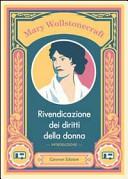
Mary Wollstonecraft libro Rivendicazione dei diritti della donna
Rivendicazione dei diritti della donna
Mary Wollstonecraft è stata una filosofa e scrittrice britannica, considerata la fondatrice del femminismo liberale.
Ebbe una vita relativamente breve e avventurosa: dopo un'adolescenza passata in una famiglia condizionata dalla povertà e dall'alcolismo del padre, si rese indipendente con il proprio lavoro e un'istruzione formata attraverso i suoi studi personali. Visse amicizie di grandi dedizioni ed ebbe relazioni tempestose fino al matrimonio con il filosofo William Godwin, precursore dell'anarchismo, dal quale ebbe la figlia Mary, nota scrittrice e moglie del poeta Percy Bysshe Shelley.
Antesignana del femminismo, Mary Wollstonecraft è nota soprattutto per il suo libro A Vindication of the Rights of Woman, nel quale sostenne, contro la prevalente opinione del tempo, che le donne non sono inferiori per natura agli uomini, anche se la diversa educazione a loro riservata nella società le pone in una condizione di inferiorità e di subordinazione. Wikipedia

Mary Wollstonecraft libro Rivendicazione dei diritti della donna
Rivendicazione dei diritti della donna
Origine: Da Rivendicazione dei diritti dell'uomo
Mary Wollstonecraft libro Rivendicazione dei diritti della donna
Rivendicazione dei diritti della donna
Mary Wollstonecraft libro Rivendicazione dei diritti della donna
Rivendicazione dei diritti della donna
Origine: Da A Vindication of the Rights of Woman (1792), pubblicato a cura di Eileen Hunt Botting, Yale University Press, 2014, pp. 70-71; traduzione di F. Ruggeri in I diritti delle donne, Editori Riuniti, Roma, 1977.
“Chi ha reso l'uomo il giudice esclusivo, se la donna condivide con lui il dono della ragione?”
Mary Wollstonecraft libro Rivendicazione dei diritti della donna
Rivendicazione dei diritti della donna
Mary Wollstonecraft libro Rivendicazione dei diritti della donna
Rivendicazione dei diritti della donna
“Le donne sono private della capacità di ragionare, come i soldati.”
Mary Wollstonecraft libro Rivendicazione dei diritti della donna
Rivendicazione dei diritti della donna
Mary Wollstonecraft libro Rivendicazione dei diritti della donna
Rivendicazione dei diritti della donna
Mary Wollstonecraft libro Rivendicazione dei diritti della donna
Rivendicazione dei diritti della donna
Mary Wollstonecraft libro Rivendicazione dei diritti della donna
Rivendicazione dei diritti della donna
Mary Wollstonecraft libro Rivendicazione dei diritti della donna
Rivendicazione dei diritti della donna
Mary Wollstonecraft libro Rivendicazione dei diritti della donna
Rivendicazione dei diritti della donna
“È la giustizia, non la carità, che manca nel mondo.”
Mary Wollstonecraft libro Rivendicazione dei diritti della donna
Rivendicazione dei diritti della donna
Mary Wollstonecraft libro Rivendicazione dei diritti della donna
Rivendicazione dei diritti della donna
“Il vincolo più sacro della società è l'amicizia.”
Mary Wollstonecraft libro Rivendicazione dei diritti della donna
Rivendicazione dei diritti della donna
Mary Wollstonecraft libro Rivendicazione dei diritti della donna
Rivendicazione dei diritti della donna
Mary Wollstonecraft libro Rivendicazione dei diritti della donna
l'uomo
Rivendicazione dei diritti della donna
Mary Wollstonecraft libro Rivendicazione dei diritti della donna
Rivendicazione dei diritti della donna
Mary Wollstonecraft libro Rivendicazione dei diritti della donna
Rivendicazione dei diritti della donna
Mary Wollstonecraft libro Rivendicazione dei diritti della donna
Rivendicazione dei diritti della donna
Mary Wollstonecraft libro Rivendicazione dei diritti della donna
Rivendicazione dei diritti della donna
Mary Wollstonecraft libro Rivendicazione dei diritti della donna
Origine: A Vindication of the Rights of Woman (1792), Ch. 3
Contesto: Should it be proved that woman is naturally weaker than man, from whence does it follow that it is natural for her to labour to become still weaker than nature intended her to be? Arguments of this cast are an insult to common sense, and savour of passion. The divine right of husbands, like the divine right of kings, may, it is to be hoped, in this enlightened age, be contested without danger, and though conviction may not silence many boisterous disputants, yet, when any prevailing prejudice is attacked, the wise will consider, and leave the narrow-minded to rail with thoughtless vehemence at innovation.
“Good habits, imperceptibly fixed, are far preferable to the precepts of reason”
Mary Wollstonecraft libro Original Stories from Real Life
Original Stories from Real Life; with Conversations Calculated to Regulate the Affections, and Form the Mind to Truth and Goodness (1788; 1791)
Contesto: Good habits, imperceptibly fixed, are far preferable to the precepts of reason; but, as this task requires more judgment than generally falls to the lot of parents, substitutes must be sought for, and medicines given, when regimen would have answered the purpose much better. I believe those who examine their own minds, will readily agree with me, that reason, with difficulty, conquers settled habits, even when it is arrived at some degree of maturity: why then do we suffer children to be bound with fetters, which their half-formed faculties cannot break.
In writing the following work, I aim at perspicuity and simplicity of style; and try to avoid those unmeaning compliments, which slip from the tongue, but have not the least connexion with the affections that should warm the heart, and animate the conduct. By this false politeness, sincerity is sacrificed, and truth violated; and thus artificial manners are necessarily taught. For true politeness is a polish, not a varnish; and should rather be acquired by observation than admonition.
Mary Wollstonecraft libro Letters Written During a Short Residence in Sweden, Norway, and Denmark
Letter 22
Letters Written in Sweden (1796)
Mary Wollstonecraft libro Rivendicazione dei diritti della donna
Origine: A Vindication of the Rights of Woman (1792), Ch. 9
“How can a rational being be ennobled by anything that is not obtained by its own exertions?”
Mary Wollstonecraft libro Rivendicazione dei diritti della donna
Origine: A Vindication of the Rights of Woman (1792), Ch. 3
Mary Wollstonecraft libro Rivendicazione dei diritti della donna
Origine: A Vindication of the Rights of Woman (1792), Ch. 4
“We reason deeply, when we forcibly feel.”
Mary Wollstonecraft libro Letters Written During a Short Residence in Sweden, Norway, and Denmark
Letter 19
Letters Written in Sweden (1796)
Mary Wollstonecraft libro Rivendicazione dei diritti della donna
Origine: A Vindication of the Rights of Woman (1792), Ch. 9
Mary Wollstonecraft libro Rivendicazione dei diritti della donna
Origine: A Vindication of the Rights of Woman (1792), Ch. 4
“No man chooses evil because it is evil; he only mistakes it for happiness, the good he seeks.”
Mary Wollstonecraft libro A Vindication of the Rights of Men
A Vindication of the Rights of Men (1790)
Mary Wollstonecraft libro Letters Written During a Short Residence in Sweden, Norway, and Denmark
Letter 2
Letters Written in Sweden (1796)
Contesto: The more I see of the world, the more I am convinced that civilisation is a blessing not sufficiently estimated by those who have not traced its progress; for it not only refines our enjoyments, but produces a variety which enables us to retain the primitive delicacy of our sensations. Without the aid of the imagination all the pleasures of the senses must sink into grossness, unless continual novelty serve as a substitute for the imagination, which, being impossible, it was to this weariness, I suppose, that Solomon alluded when he declared that there was nothing new under the sun!
Mary Wollstonecraft libro Rivendicazione dei diritti della donna
Origine: A Vindication of the Rights of Woman (1792), Ch. 10
Contesto: To be a good mother — a woman must have sense, and that independence of mind which few women possess who are taught to depend entirely on their husbands. Meek wives are, in general, foolish mothers; wanting their children to love them best, and take their part, in secret, against the father, who is held up as a scarecrow.
Mary Wollstonecraft libro Letters Written During a Short Residence in Sweden, Norway, and Denmark
Letter 19
Letters Written in Sweden (1796)
Contesto: Executions, far from being useful examples to the survivors, have, I am persuaded, a quite contrary effect, by hardening the heart they ought to terrify. Besides, the fear of an ignominious death, I believe, never deterred anyone from the commission of a crime, because in committing it the mind is roused to activity about present circumstances.
Mary Wollstonecraft libro Letters Written During a Short Residence in Sweden, Norway, and Denmark
Letter 17
Letters Written in Sweden (1796)
Contesto: Affection requires a firmer foundation than sympathy, and few people have a principle of action sufficiently stable to produce rectitude of feeling; for in spite of all the arguments I have heard to justify deviations from duty, I am persuaded that even the most spontaneous sensations are more under the direction of principle than weak people are willing to allow.
Mary Wollstonecraft libro Thoughts on the Education of Daughters
Thoughts on the Education of Daughters (1787), "Matrimony", p. 100
Contesto: Nothing, I am sure, calls forth the faculties so much as the being obliged to struggle with the world; and this is not a woman's province in a married state. Her sphere of action is not large, and if she is not taught to look into her own heart, how trivial are her occupations and pursuits! What little arts engross and narrow her mind!
Mary Wollstonecraft libro Letters Written During a Short Residence in Sweden, Norway, and Denmark
Appendix
Letters Written in Sweden (1796)
Contesto: An ardent affection for the human race makes enthusiastic characters eager to produce alteration in laws and governments prematurely. To render them useful and permanent, they must be the growth of each particular soil, and the gradual fruit of the ripening understanding of the nation, matured by time, not forced by an unnatural fermentation.
“Surely something resides in this heart that is not perishable, and life is more than a dream.”
Mary Wollstonecraft libro Letters Written During a Short Residence in Sweden, Norway, and Denmark
Letters Written in Sweden (1796)
Contesto: It appears to me impossible that I should cease to exist, or that this active, restless spirit, equally alive to joy and sorrow, should only be organised dust — ready to fly abroad the moment the spring snaps, or the spark goes out which kept it together. Surely something resides in this heart that is not perishable, and life is more than a dream.
Mary Wollstonecraft libro Letters Written During a Short Residence in Sweden, Norway, and Denmark
Letter 12
Letters Written in Sweden (1796)
Contesto: Friendship and domestic happiness are continually praised; yet how little is there of either in the world, because it requires more cultivation of mind to keep awake affection, even in our own hearts, than the common run of people suppose. Besides, few like to be seen as they really are; and a degree of simplicity, and of undisguised confidence, which, to uninterested observers, would almost border on weakness, is the charm, nay the essence of love or friendship, all the bewitching graces of childhood again appearing.
Mary Wollstonecraft libro Original Stories from Real Life
Original Stories from Real Life; with Conversations Calculated to Regulate the Affections, and Form the Mind to Truth and Goodness (1788; 1791)
Contesto: Good habits, imperceptibly fixed, are far preferable to the precepts of reason; but, as this task requires more judgment than generally falls to the lot of parents, substitutes must be sought for, and medicines given, when regimen would have answered the purpose much better. I believe those who examine their own minds, will readily agree with me, that reason, with difficulty, conquers settled habits, even when it is arrived at some degree of maturity: why then do we suffer children to be bound with fetters, which their half-formed faculties cannot break.
In writing the following work, I aim at perspicuity and simplicity of style; and try to avoid those unmeaning compliments, which slip from the tongue, but have not the least connexion with the affections that should warm the heart, and animate the conduct. By this false politeness, sincerity is sacrificed, and truth violated; and thus artificial manners are necessarily taught. For true politeness is a polish, not a varnish; and should rather be acquired by observation than admonition.
“Virtue can only flourish amongst equals.”
Mary Wollstonecraft libro A Vindication of the Rights of Men
A Vindication of the Rights of Men (1790)
“It is justice, not charity, that is wanting in the world.”
Mary Wollstonecraft libro Rivendicazione dei diritti della donna
Origine: A Vindication of the Rights of Woman (1792), Ch. 4
Mary Wollstonecraft libro Rivendicazione dei diritti della donna
Origine: A Vindication of the Rights of Woman (1792), Ch. 3
Mary Wollstonecraft libro Rivendicazione dei diritti della donna
Dedication
A Vindication of the Rights of Woman (1792)
“A modest man is steady, an humble man timid, and a vain one presumptuous.”
Mary Wollstonecraft libro Rivendicazione dei diritti della donna
Origine: A Vindication of the Rights of Woman (1792), Ch. 7
Mary Wollstonecraft libro Rivendicazione dei diritti della donna
Origine: A Vindication of the Rights of Woman (1792), Ch. 3
“You know I am not born to tread in the beaten track — the peculiar bent of my nature pushes me on.”
Letter to Everina Wollstonecraft (7 November 1787)
Mary Wollstonecraft libro Rivendicazione dei diritti della donna
Origine: A Vindication of the Rights of Woman (1792), Ch. 3
“Situation seems to be the mould in which men's characters are formed.”
Mary Wollstonecraft libro Letters Written During a Short Residence in Sweden, Norway, and Denmark
Letter 23
Letters Written in Sweden (1796)
The French Revolution, Bk. V, ch. 4 (1794)
Mary Wollstonecraft libro Rivendicazione dei diritti della donna
Origine: A Vindication of the Rights of Woman (1792), Ch. 9


