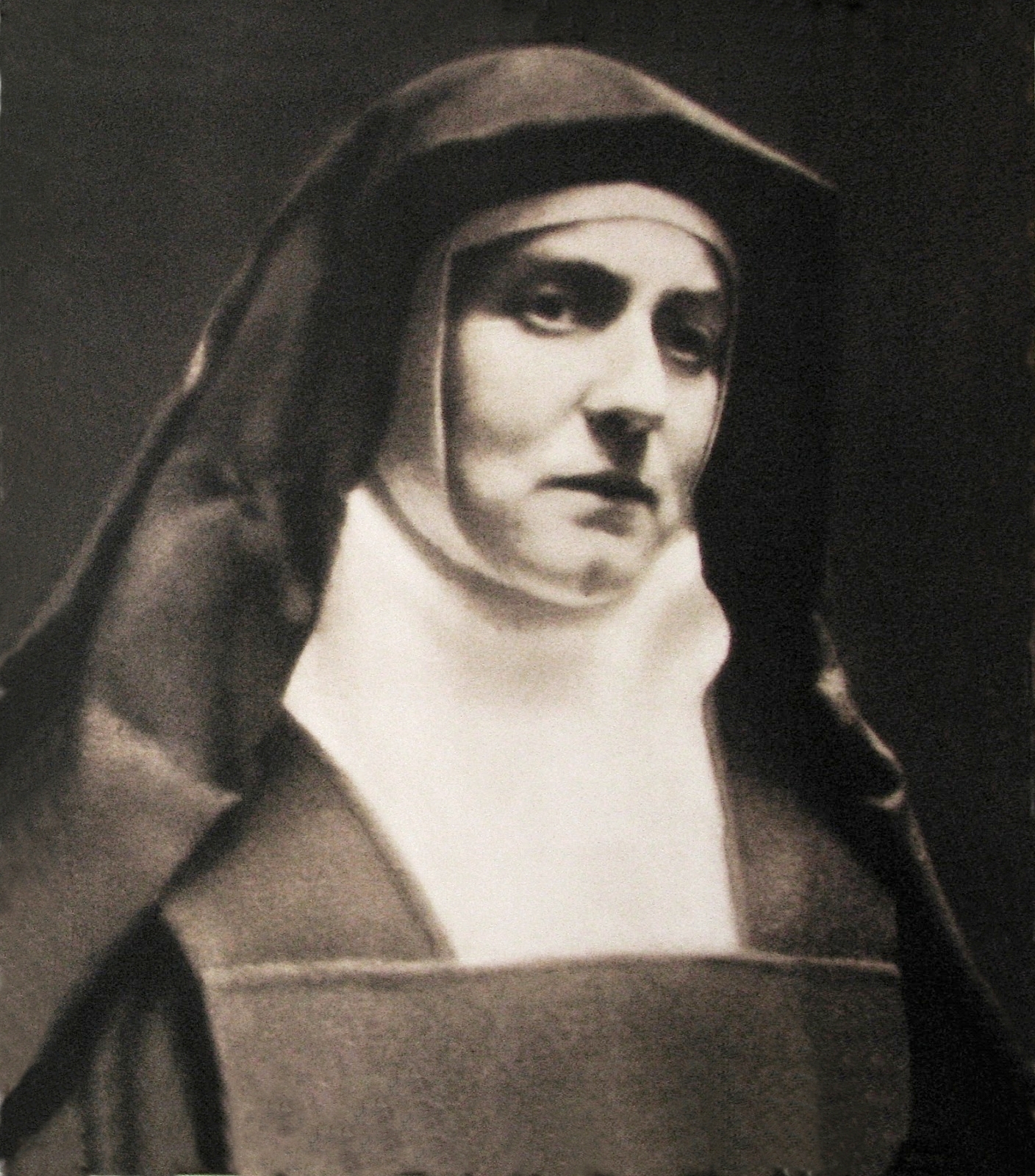

Edith Stein: 53 citazioni313 Mi piace
Edith Stein frasi celebri
“La via della sofferenza è la più sicura per giungere all'unione con Dio.”
La mistica della croce

“Ciò che possiamo fare, in paragone a quanto ci viene dato, è sempre poco.”
La mistica della croce
Frasi su Dio di Edith Stein
Edith Stein Frasi e Citazioni

Origine: Citato in A sua immagine giornale, anno II, n.° 33, p. 2.
Origine: Da La donna – Il suo compito secondo la natura e la grazia, traduzione di O. Nobile, prefazione di A. Ales Bello, Città nuova, Roma, 1968, p. 219; citato in Ales Bello, p. 146.
“La filosofia di Heidegger è la filosofia di una cattiva coscienza.”
Origine: Citato in Donald Nicholl, Il pensiero contemporaneo (Recent Thought In Focus), traduzione di Bruna De Allegri, Società Editrice Vita e Pensiero, Milano, 1956.
Edith Stein: Frasi in inglese
Essays on Woman (1996), Fundamental Principles of Women's Education (1931)
Essays on Woman (1996), Problems of Women's Education (1932)
Contesto: The concept which assumes that everything in the Church is irrevocably set for all times appears to me to be a false one. It would be naive to disregard that the Church has a history; the Church is a human institution and like all things human, was destined to change and evolve; likewise, its development takes place often in the form of struggles. Most of the definitions of dogma are conclusive results of preceding intellectual conflicts lasting for decades and even centuries. The same is true of ecclesiastical law, liturgical forms — especially all objective forms reflecting our spiritual life.
Essays on Woman (1996), The Separate Vocations of Man and Woman According to Nature and Grace (1932)
Essays on Woman (1996), Problems of Women's Education (1932)
Essays on Woman (1996), Problems of Women's Education (1932)
Essays on Woman (1996), The Separate Vocations of Man and Woman According to Nature and Grace (1932)
Essays on Woman (1996), Problems of Women's Education (1932)
Contesto: The true Christian is not obliged to renounce the things of this world or to lessen his natural abilities. On the contrary, inasmuch as he incorporates them into his normal life in a disciplined manner, he develops and perfects them; he thereby ennobles the natural life itself, supplying efficacious values to it not only of the spiritual and eternal world but also of the material and earthly world.
Essays on Woman (1996), The Ethos of Woman's Professions (1930)
Contesto: Only the person blinded by the passion of controversy could deny that woman in soul and body is formed for a particular purpose. The clear and irrevocable world of Scripture declares what daily experience teaches from the beginning of the world: woman is destined to be wife and mother.
Letter to Pope Pius XI (1933) as translated in Inside the Vatican (2003), p. 27
Contesto: As a child of the Jewish people who, by the grace of God, for the past eleven years has also been a child of the Catholic Church, I dare to speak to the Father of Christianity about that which oppresses millions of Germans. For weeks we have seen deeds perpetrated in Germany which mock any sense of justice and humanity, not to mention love of neighbor. For years the leaders of National Socialism have been preaching hatred of the Jews. But the responsibility must fall, after all, on those who brought them to this point and it also falls on those who keep silent in the face of such happenings.
Everything that happened and continues to happen on a daily basis originates with a government that calls itself "Christian." For weeks not only Jews but also thousands of faithful Catholics in Germany, and, I believe, all over the world, have been waiting and hoping for the Church of Christ to raise its voice to put a stop to this abuse of Christ’s name.
“What is meant by "the Law of the Lord"?”
Collected Works Vol. IV. Part 1 : Before the Face of God, Ch.1 : "On the History and Spirit of Carmel" http://www.karmel.at/ics/edith/stein_9.html <br class="br">Contesto: What is meant by "the Law of the Lord"? Psalm 118 which we pray every Sunday and on solemnities at Prime, is entirely filled with the command to know the Law and to be led by it through life. The Psalmist was certainly thinking of the Law of the Old Covenant. Knowing it actually did require life-long study and fulfilling it, life-long exertion of the will. But the Lord has freed us from the yoke of this Law. We can consider the Savior's great commandment of love, which he says includes the whole Law and the Prophets, as the Law of the New Covenant. Perfect love of God and of neighbor can certainly be a subject worthy of an entire lifetime of meditation. But we understand the Law of the New Covenant, even better, to be the Lord himself, since he has in fact lived as an example for us of the life we should live. We thus fulfill our Rule when we hold the image of the Lord continually before our eyes in order to make ourselves like him. We can never finish studying the Gospels.
Essays on Woman (1996), Fundamental Principles of Women's Education (1931)
“To be a mother is to nourish and protect true humanity and bring it to development.”
Essays on Woman (1996), The Significance of Woman's Intrinsic Value in National Life (1928)
Contesto: To be a mother is to nourish and protect true humanity and bring it to development. But again, this necessitates that she possess true humanity herself, and that she is clear as to what it means; otherwise, she cannot lead others to it. One can become suitable for this double duty if one has the correct personal attitude.
Collected Works Vol. IV. Part 1 : Before the Face of God, Ch.1 : "On the History and Spirit of Carmel" http://www.karmel.at/ics/edith/stein_9.html <br class="br">Contesto: What is meant by "the Law of the Lord"? Psalm 118 which we pray every Sunday and on solemnities at Prime, is entirely filled with the command to know the Law and to be led by it through life. The Psalmist was certainly thinking of the Law of the Old Covenant. Knowing it actually did require life-long study and fulfilling it, life-long exertion of the will. But the Lord has freed us from the yoke of this Law. We can consider the Savior's great commandment of love, which he says includes the whole Law and the Prophets, as the Law of the New Covenant. Perfect love of God and of neighbor can certainly be a subject worthy of an entire lifetime of meditation. But we understand the Law of the New Covenant, even better, to be the Lord himself, since he has in fact lived as an example for us of the life we should live. We thus fulfill our Rule when we hold the image of the Lord continually before our eyes in order to make ourselves like him. We can never finish studying the Gospels.
Letter to Pope Pius XI (1933) as translated in Inside the Vatican (2003), p. 27
Contesto: As a child of the Jewish people who, by the grace of God, for the past eleven years has also been a child of the Catholic Church, I dare to speak to the Father of Christianity about that which oppresses millions of Germans. For weeks we have seen deeds perpetrated in Germany which mock any sense of justice and humanity, not to mention love of neighbor. For years the leaders of National Socialism have been preaching hatred of the Jews. But the responsibility must fall, after all, on those who brought them to this point and it also falls on those who keep silent in the face of such happenings.
Everything that happened and continues to happen on a daily basis originates with a government that calls itself "Christian." For weeks not only Jews but also thousands of faithful Catholics in Germany, and, I believe, all over the world, have been waiting and hoping for the Church of Christ to raise its voice to put a stop to this abuse of Christ’s name.
Essays on Woman (1996), Spirituality of the Christian Woman (1932)
Essays on Woman (1996), The Ethos of Woman's Professions (1930)
Essays on Woman (1996), Spirituality of the Christian Woman (1932)
Essays on Woman (1996), Problems of Women's Education (1932)
Essays on Woman (1996), The Separate Vocations of Man and Woman According to Nature and Grace (1932)
Essays on Woman (1996), The Significance of Woman's Intrinsic Value in National Life (1928)
Essays on Woman (1996), Spirituality of the Christian Woman (1932)
Essays on Woman (1996), Problems of Women's Education (1932)
Essays on Woman (1996), Spirituality of the Christian Woman (1932)
Essays on Woman (1996), The Significance of Woman's Intrinsic Value in National Life (1928)
Essays on Woman (1996), The Ethos of Woman's Professions (1930)
Essays on Woman (1996), The Separate Vocations of Man and Woman According to Nature and Grace (1932)
Essays on Woman (1996), The Ethos of Woman's Professions (1930)
Essays on Woman (1996), The Separate Vocations of Man and Woman According to Nature and Grace (1932)
Essays on Woman (1996), Problems of Women's Education (1932)
Essays on Woman (1996), Problems of Women's Education (1932)


