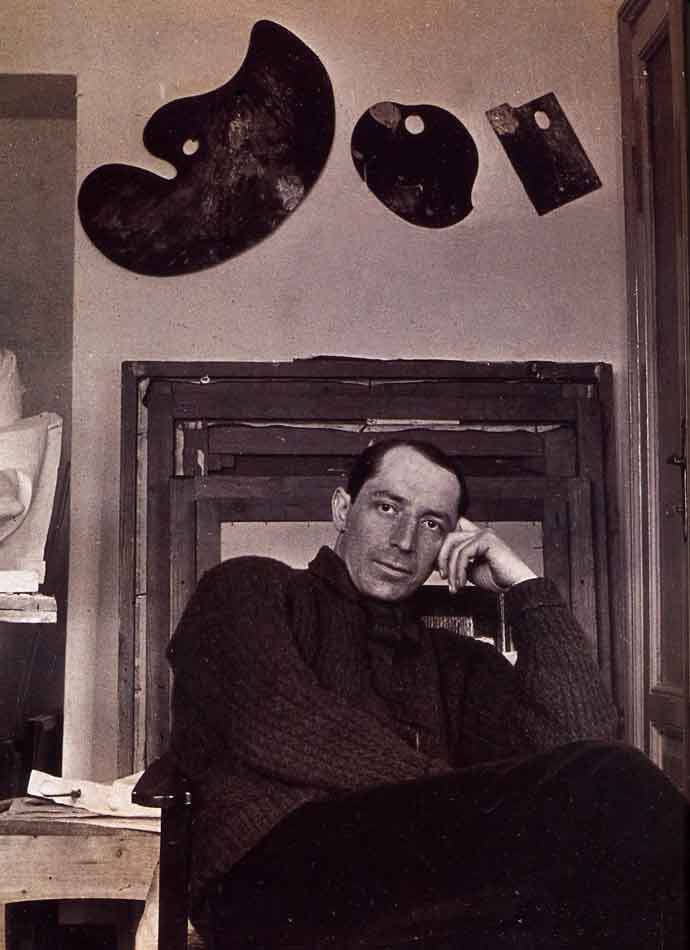
Umberto Boccioni frasi celebri
Origine: Citato in Enrico Crispolti, Storia e critica del Futurismo, Roma-Bari, Laterza, 1986, p. 163.
“[T]utto il mondo apparente deve precipitarsi su di noi, amalgamandosi.”
Manifesto tecnico della scultura futurista
Manifesto tecnico della scultura futurista
“Abolire in scultura come in qualsiasi altra arte il sublime tradizionale dei soggetti.”
n.° 2
Manifesto tecnico della scultura futurista
n.° 5
Manifesto tecnico della scultura futurista
Umberto Boccioni Frasi e Citazioni
Manifesto tecnico della scultura futurista
Manifesto tecnico della scultura futurista
n.° 1
Manifesto tecnico della scultura futurista
n.° 3
Manifesto tecnico della scultura futurista
“Distruggere la nobiltà tutta letteraria e tradizionale del marmo e del bronzo.”
n.° 4
Manifesto tecnico della scultura futurista
Il concetto del "polimaterico"
n.° 4
Manifesto tecnico della scultura futurista
“Che solo una modernissima scelta di soggetti potrà portare alla scoperta di nuove idee plastiche.”
n.° 6
Manifesto tecnico della scultura futurista
“Bisogna distruggere il nudo sistematico, il concetto tradizionale della statua e del monumento!”
n.° 10
Manifesto tecnico della scultura futurista
Umberto Boccioni: Frasi in inglese
1914 - 1916, Pittura e scultura futuriste' Milan, 1914
Boccioni's quote, from an undated letter to Gino Severini (probably July or August 1912, or November); as quoted in Futurism, ed. Didier Ottinger; Centre Pompidou / 5 Continents Editions, Milan, 2008.
1912
Boccioni's critical art quote to Orphism and simultaneity pictures Orphism, as alternative concept for Cubism as a soft version of Futurist painting; in 'Les futurists plagues en France', Boccioni, in 'Lacerba', Florence 1, no. 7, 1 April 1913
1913
As quoted in Futurism, ed. Didier Ottinger; Centre Pompidou / 5 Continents Editions, Milan, 2008, p. 136.
1910, Manifesto of Futurist Painters,' April 1910
cubs refers sneering to the Cubists
as quoted in Futurism, ed. Didier Ottinger; Centre Pompidou / 5 Continents Editions, Milan, 2008.
1912, Boccioni's 'Sculptural Manifesto', 1912,
Origine: 1912, Les exposants au public', 1912, pp. 2, 3.
As quoted in Futurism, ed. By Didier Ottinger; Centre Pompidou / 5 Continents Editions, Milan, 2008, p. 64.
1910, Manifesto of Futurist Painters,' April 1910
As quoted in Futurism, ed. Didier Ottinger; Centre Pompidou / 5 Continents Editions, Milan, 2008, p. 167.
1910, Manifesto of Futurist Painters,' April 1910
As quoted in Futurism, ed. Didier Ottinger; Centre Pompidou / 5 Continents Editions, Milan, 2008, p. 92.
1910, Manifesto of Futurist Painters,' April 1910
Boccioni's quote on motion; as quoted in Futurism, ed. Didier Ottinger; Centre Pompidou / 5 Continents Editions, Milan, 2008, p. 328.
1914 - 1916, Pittura e scultura futuriste' Milan, 1914
As quoted in Futurism, ed. Didier Ottinger; Centre Pompidou / 5 Continents Editions, Milan, 2008, p. 154.
1910, Manifesto of Futurist Painters,' April 1910
In Futurism, ed. Didier Ottinger; Centre Pompidou / 5 Continents Editions, Milan, 2008.
1914 - 1916, Pittura e scultura futuriste' Milan, 1914
Original text:
Agli artisti giovani d'Italia!
Il grido di ribellione che noi lanciamo, associando i nostri ideali a quelli dei poeti futuristi, non parte già da una chiesuola estetica, ma esprime il violento desiderio che ribolle oggi nelle vene di ogni artista creatore.
Origine: 1910, Manifesto of Futurist Painters', Feb. 1910, p. 24: Lead paragraph
in a letter of 12 Feb. 1912 from Paris, to his friend Nino Barbantini (director of the Ca' Pesaro in Venice); as cited in: Shannon N. Pritchard, Gino Severini and the symbolist aesthetics of his futurist dance imagery, 1910-1915 https://getd.libs.uga.edu/pdfs/pritchard_shannon_n_200305_ma.pdf Diss. uga, 2003, p. 67 <br class="br">1912
“No one can any longer believe that an object ends where another begins.”
Quote from Boccioni's text 'Dynamism of a Speeding Horse & Houses', 1914/15
Boccioni is here referring to the starting photography of 'moving horses' c. 1914
1914 - 1916
Origine: 1912, Les exposants au public', 1912, p. 8.
In Futurism, ed. Didier Ottinger; Centre Pompidou / 5 Continents Editions, Milan, 2008.
1914 - 1916, Pittura e scultura futuriste' Milan, 1914
Boccioni's quote, from his lecture, Rome, May 1911, Boccioni's lecture 'La Pittura Futurista', 1911; as quoted in Futurism, ed. Didier Ottinger; Centre Pompidou / 5 Continents Editions, Milan, 2008, p. 55
1911
Quote from 'Il dinamismo futurista et la pittura francese', Boccioni, in 'Lacerba', August 1913; as quoted in Futurism, ed. Didier Ottinger; Centre Pompidou / 5 Continents Editions, Milan, 2008, p. 118
1913
1912, Boccioni's 'Sculptural Manifesto', 1912,
Origine: 1912, Les exposants au public', 1912, pp. 47, 49
In a letter to Gino Severini, Jan. 1913; as quoted in Futurism, ed. Didier Ottinger; Centre Pompidou / 5 Continents Editions, Milan, 2008
Boccioni is referring in this quote to their common former teacher Balla who lived and worked that time in Paris
1913
Boccioni's quote on early realized simultaneity in his art; as quoted in Futurism, ed. Didier Ottinger; Centre Pompidou / 5 Continents Editions, Milan, 2008, p. 458.
1914 - 1916, Pittura e scultura futuriste' Milan, 1914
Origine: 1912, Les exposants au public', 1912, p. 8.
As quoted in Futurism, ed. Didier Ottinger; Centre Pompidou / 5 Continents Editions, Milan, 2008, p. 132.
1910, Manifesto of Futurist Painters,' April 1910
As quoted in Futurism, ed. Didier Ottinger; Centre Pompidou / 5 Continents Editions, Milan, 2008, p. 23.
1910, Manifesto of Futurist Painters,' April 1910
1912
Origine: an 2nd undated letter to Gino Severini (probably July or August 1912, or November); as quoted in Futurism, ed. Didier Ottinger; Centre Pompidou / 5 Continents Editions, Milan, 2008.
“The street enters the house.”
the title of one of Boccioni's most Futurist paintings: street enters the house' https://upload.wikimedia.org/wikipedia/commons/7/74/Boccioni_The_Street_Enters_The_House.jpg'The; Boccioni painted it in 1911. <br class="br">1911
of Picasso and Georges Braque
In 'Dynanisme plastique' 1914, Boccioni; as quoted in Futurism, ed. Didier Ottinger; Centre Pompidou / 5 Continents Editions, Milan, 2008, p. 134
1914 - 1916
of the viewer
Quote from Inventing Futurism: The Art and Politics of Artificial Optimism, by Christine Poggi, Princeton University Press, 2009, p. 21
a note on his tryptich painting, he made late in 1911, containing the canvasses 'States of Mind II', 'The farewells', 'Those Who go Those who Stay'.
1911


