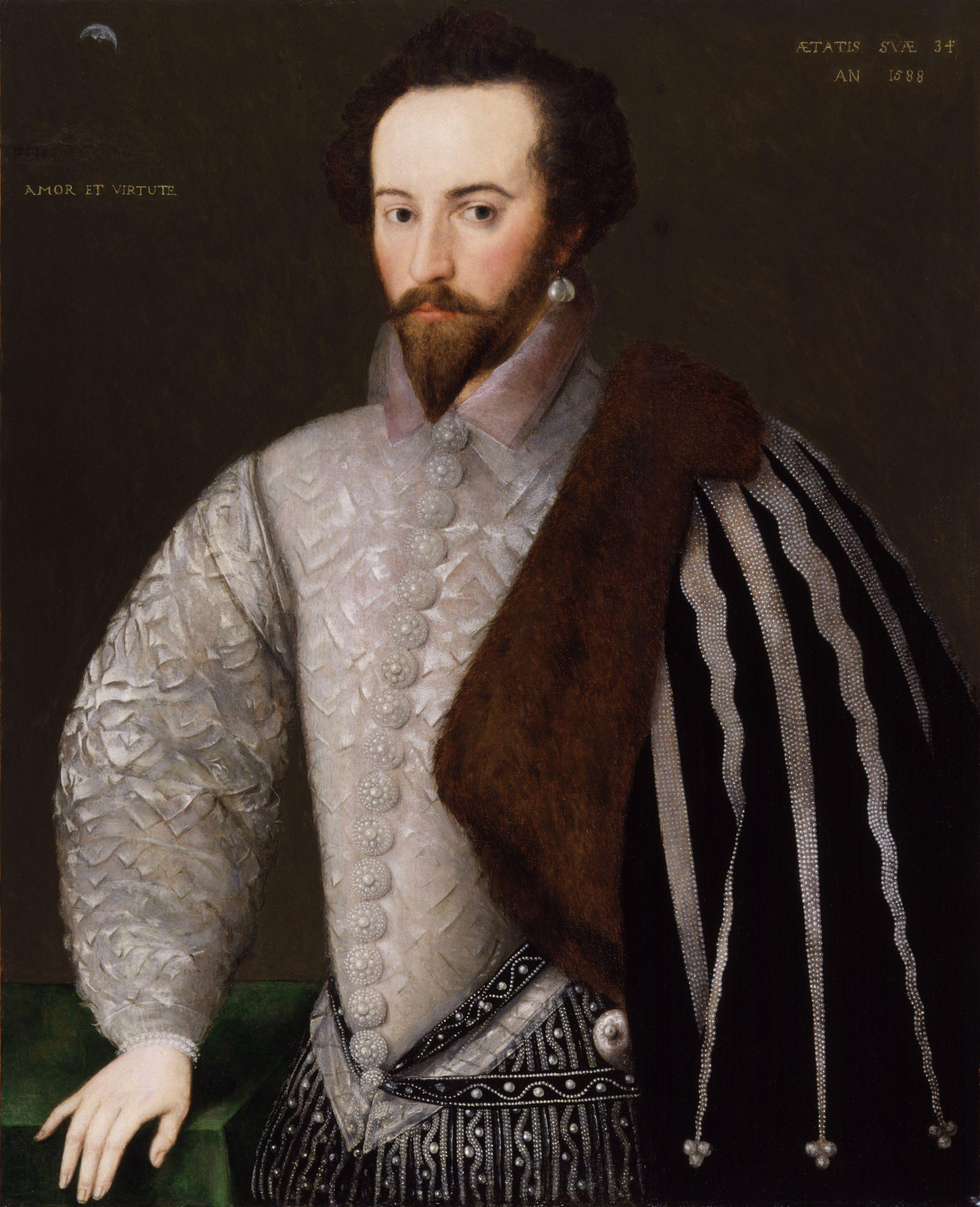
Walter Raleigh frasi celebri
Walter Raleigh: Frasi in inglese
“There is nothing exempt from the peril of mutation.”
Origine: The Cabinet Council (published 1658), Chapter 24
"On the Life of Man" (1612)
Attributed
Origine: Instructions to his Son and to Posterity (published 1632), Chapter III
Contesto: Take care that thou be not made a fool by flatterers, for even the wisest men are abused by these. Know, therefore, that flatterers are the worst kind of traitors; for they will strengthen thy imperfections, encourage thee in all evils, correct thee in nothing; but so shadow and paint all thy vices and follies, as thou shalt never, by their will, discern evil from good, or vice from virtue. And, because all men are apt to flatter themselves, to entertain the additions of other men's praises is most perilous. Do not therefore praise thyself, except thou wilt be counted a vain-glorious fool; neither take delight in the praises of other men, except thou deserve it, and receive it from such as are worthy and honest, and will withal warn thee of thy faults; for flatterers have never any virtue — they are ever base, creeping, cowardly persons. A flatterer is said to be a beast that biteth smiling: it is said by Isaiah in this manner — "My people, they that praise thee, seduce thee, and disorder the paths of thy feet;" and David desired God to cut out the tongue of a flatterer.
But it is hard to know them from friends, they are so obsequious and full of protestations; for as a wolf resembles a dog, so doth a flatterer a friend. A flatterer is compared to an ape, who, because she cannot defend the house like a dog, labour as an ox, or bear burdens as a horse, doth therefore yet play tricks and provoke laughter. Thou mayest be sure, that he that will in private tell thee thy faults is thy friend; for he adventures thy mislike, and doth hazard thy hatred; for there are few men that can endure it, every man for the most part delighting in self-praise, which is one of the most universal follies which bewitcheth mankind.
Origine: The Cabinet Council (published 1658), Chapter 25
Upon receiving discrepant accounts from the participants in a recent quarrel below his window. <br class="br">Robert Chambers, Testimony: its Posture in the Scientific World http://books.google.com/books?id=pChcAAAAQAAJ& (1859) p. 12 <br class="br">Attributed
“Better were it to be unborn than ill-bred.”
Origine: Instructions to his Son and to Posterity (published 1632), Chapter II
Origine: Instructions to his Son and to Posterity (published 1632), Chapter IV
Origine: Instructions to his Son and to Posterity (published 1632), Chapter II
“Our passions are most like to floods and streams;
The shallow murmur, but the deep are dumb.”
Sir Walter Raleigh to the Queen (published 1655); alternately reported in Bartlett's Familiar Quotations, 10th ed. (1919) as:
"Passions are likened best to floods and streams:
The shallow murmur, but the deep are dumb"
and titled The Silent Lover. Compare: "Altissima quæque flumina minimo sono labi", (translated: "The deepest rivers flow with the least sound"), Q. Curtius, vii. 4. 13. "Smooth runs the water where the brook is deep", William Shakespeare, 2 Henry VI. act iii. sc. i.
“No man is esteemed for gay garments but by fools and women.”
Origine: Instructions to his Son and to Posterity (published 1632), Chapter VII
“Why dost thou not strike? Strike, man!”
To his executioner, as reported in Curiosities of Literature (1835) by Isaac Disraeli, p. 302
Attributed
“Fain would I climb, yet fear I to fall.”
Poem written in a glass window obvious to the Queen's eye, reported in Bartlett's Familiar Quotations, 10th ed. (1919). "Her Majesty, either espying or being shown it, did under-write, 'If thy heart fails thee, climb not at all'", Thomas Fuller, Worthies of England, vol. i. p. 419.
“[History] hath triumphed over time, which besides it nothing but eternity hath triumphed over.”
The History of the World (1614), Preface
Origine: The Cabinet Council (published 1658), Chapter 25
Origine: The Cabinet Council (published 1658), Chapter 25
Here lies
The History of the World Book V, chapter 6
“Shall I, like an hermit, dwell
On a rock or in a cell?”
Poem reported in Bartlett's Familiar Quotations, 10th ed. (1919).
Origine: The Cabinet Council (published 1658), Chapter 25
Origine: The Cabinet Council (published 1658), Chapter 25
Fain Would I, reported in Bartlett's Familiar Quotations, 10th ed. (1919)
“If she undervalue me,
What care I how fair she be?”
Poem reported in Bartlett's Familiar Quotations, 10th ed. (1919). Compare: "If she be not so to me, / What care I how fair she be?", George Wither, The Shepherd's Resolution.
“No man is wise or safe, but he that is honest.”
Advice to the Earl of Rutland on his Travels (1596)
The Lie (1608)
The History of the World (1614), Preface
Origine: The Cabinet Council (published 1658), Chapter 25
“The world itself is but a larger prison, out of which some are daily selected for execution.”
Supposed to have been said by Raleigh to his friends as he was being taken to prison, on the day before his execution (William Stebbing Sir Walter Raleigh (1891), chapter 30)
Attributed
“Every fool knoweth that hatreds are the cinders of affection.”
Letter to Sir Robert Cecil (10 May 1593)
“Methought I saw the grave where Laura lay.”
Verses to Edmund Spenser, reported in Bartlett's Familiar Quotations, 10th ed. (1919); Comparable to: "Methought I saw my late espoused saint", John Milton, Sonnet xxiii, and "Methought I saw the footsteps of a throne", William Wordsworth, Sonnet.
Origine: The Cabinet Council (published 1658), Chapter 25


