Origine: Il riferimento è alla cosiddetta Tromba di Torricelli o Tromba di Gabriele, solido ideato da E. Torricelli.
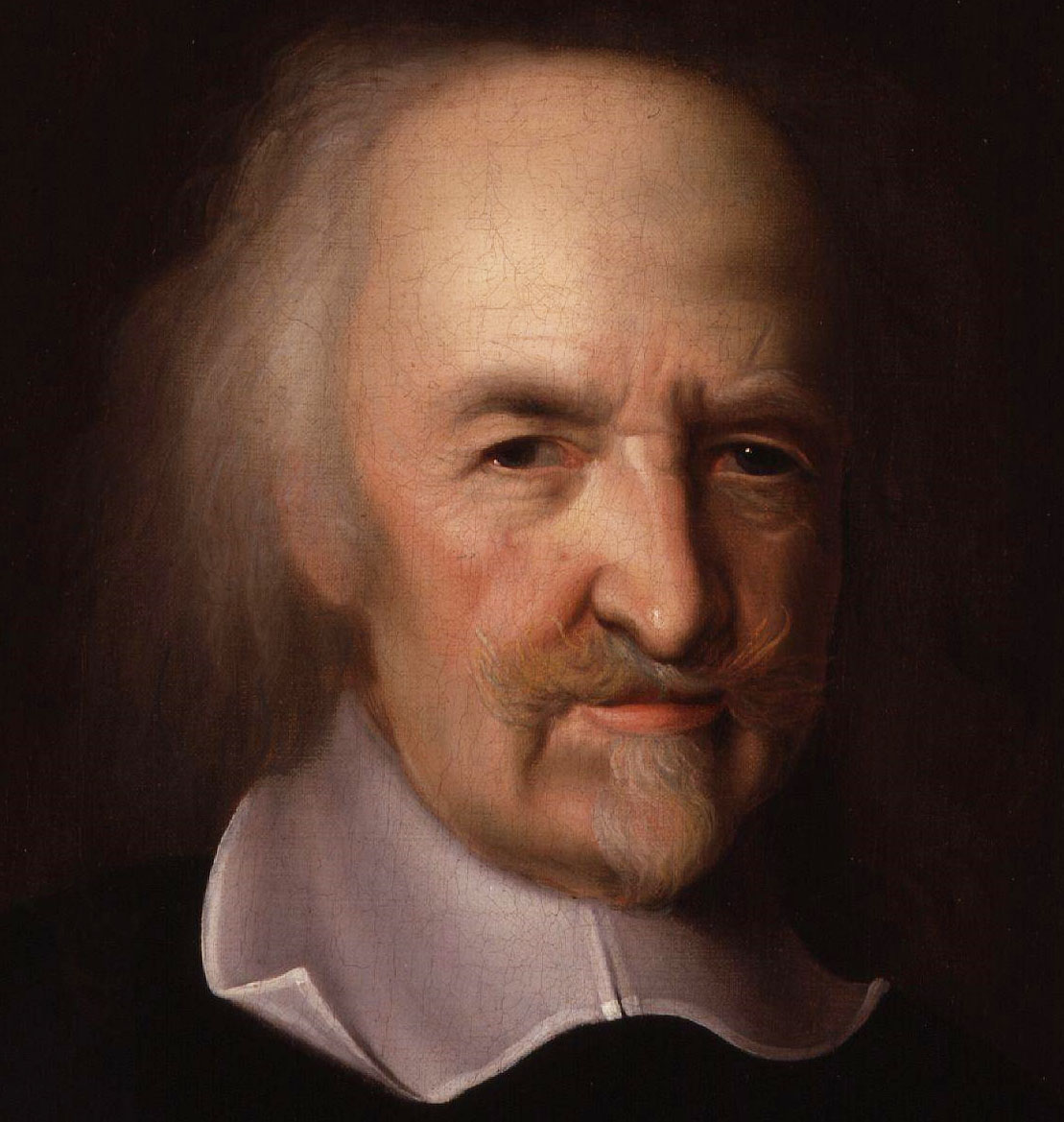
Thomas Hobbes: 126 citazioni48 Mi piace
Thomas Hobbes frasi celebri
“L'interesse e la paura sono i principi della società.”
da Il cittadino
controllare, mancano informazioni bibliografiche
Variante: L'interesse e la paura sono i princìpi della società.
Thomas Hobbes Frasi e Citazioni
Thomas Hobbes libro Leviatano
parte I, XIII, traduzione italiana di M. Vinciguerra, Laterza, Roma-Bari, 1974, pag. 109
Leviatano
Thomas Hobbes libro Leviatano
parte I, XIII
traduttore?
Leviatano
“L'errore di un uomo non diventa la sua legge, né lo obbliga a persistere in esso.”
Thomas Hobbes libro Leviatano
Parte II, XVI
Leviatano
“L'autorità, non la verità, fa la legge.”
Thomas Hobbes libro Leviatano
II, 26
Auctoritas non veritas facit legem.
Leviatano
Thomas Hobbes libro Leviatano
libro Leviathan
“Prima bisogna pensare a vivere, poi a fare della filosofia.”
citato in Giuseppe Fumagalli, Chi l'ha detto?, Hoepli, 1921, p. 477
Attribuite
Thomas Hobbes: Frasi in inglese
“For Appetite with an opinion of attaining, is called HOPE.”
Thomas Hobbes libro Leviatano
Leviathan (1651)
Thomas Hobbes libro Leviatano
The Second Part, Chapter 29, p. 174
Leviathan (1651)
“Give an inch, he'll take an ell.”
Liberty and Necessity (no. 111)
Thomas Hobbes libro Leviatano
The Second Part, Chapter 25, p. 132
Leviathan (1651)
“A Covenant not to defend my selfe from force, by force, is always voyd.”
Thomas Hobbes libro Leviatano
The First Part, Chapter 14, p. 69
Leviathan (1651)
Thomas Hobbes libro Leviatano
The First Part, Chapter 13, p. 62
Leviathan (1651)
Thomas Hobbes libro Leviatano
The First Part, Chapter 5, p. 21
Leviathan (1651)
Thomas Hobbes libro Leviatano
The First Part, Chapter 13, p. 62
Leviathan (1651)
Thomas Hobbes libro Leviatano
The First Part, Chapter 8, p. 34
Leviathan (1651)
Thomas Hobbes libro Leviatano
The Third Part, Chapter 36, p. 226 (See also: Glossolalia)
Leviathan (1651)
Thomas Hobbes libro Leviatano
The First Part, Chapter 6, p. 24
Leviathan (1651)
Thomas Hobbes libro Leviatano
The First Part, Chapter 2, p. 8
Leviathan (1651)
Thomas Hobbes libro Leviatano
The Epistle Dedicatory, Paris, April 15-25, 1651
Leviathan (1651)
Thomas Hobbes libro Leviatano
The First Part, Chapter 6, p. 29 (See also: Rene Girard)
Leviathan (1651)
“For he that hath strength enough to protect all, wants not sufficiency to oppresse all.”
Thomas Hobbes libro De Cive
De Cive "Of the right of him, whether Counsell, or one Man onely, who hath the supreme power in the City" (1642) Ch. 6
“No man is bound by the words themselves, either to kill himselfe, or any other man.”
Thomas Hobbes libro Leviatano
The Second Part, Chapter 21, p. 112
Leviathan (1651)
Thomas Hobbes libro Leviatano
The First Part, Chapter 11, p. 47
Leviathan (1651)
Thomas Hobbes libro Leviatano
The First Part, Chapter 6, p. 26
Leviathan (1651)
“In the state of nature, Profit is the measure of Right.”
...in statu naturae Mensuram juris esse Utilitatem.
Thomas Hobbes libro De Cive
De Cive (1642)
Thomas Hobbes libro Leviatano
The First Part, Chapter 13, p. 60
Leviathan (1651)
Thomas Hobbes libro Leviatano
The Second Part, Chapter 24, p. 130 (See also: Velocity of money)
Leviathan (1651)
Thomas Hobbes libro Leviatano
The Second Part, Chapter 19, p. 97
Leviathan (1651)
Thomas Hobbes libro Leviatano
The Third Part, Chapter 42, p. 315
Leviathan (1651)
On the proposition that the volume generated by revolving the region under 1/x from 1 to infinity has finite volume. Quoted in Mathematical Maxims and Minims by N. Rose (1988)
Thomas Hobbes libro Leviatano
The First Part, Chapter 5, p. 20
Leviathan (1651)
“The same, without such opinion, DESPAIRE.”
Thomas Hobbes libro Leviatano
The First Part, Chapter 6, p. 25
Leviathan (1651)
Thomas Hobbes libro Leviatano
The First Part, Chapter 7, p. 30
Leviathan (1651)
“Time, and Industry, produce everyday new knowledge.”
Thomas Hobbes libro Leviatano
The Second Part, Chapter 30, p. 176
Leviathan (1651)
Thomas Hobbes libro Leviatano
The First Part, Chapter 4, p. 14
Leviathan (1651)
Thomas Hobbes libro Leviatano
The First Part, Chapter 11, p. 50
Leviathan (1651)


