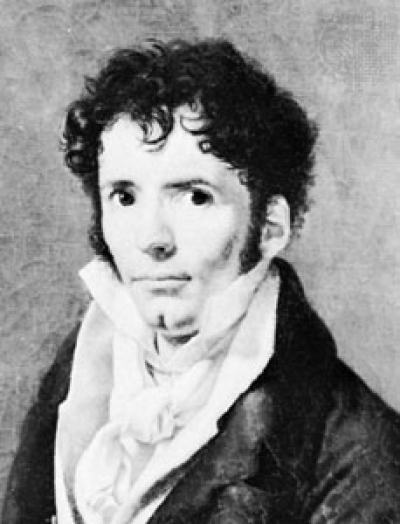
Nicolas Chamfort frasi celebri
da Caratteri e aneddoti, 1988
Caratteri e aneddoti
Origine: Citato in Guido Almansi, Il filosofo portatile, TEA, Milano, 1991.
Frasi sull'amore di Nicolas Chamfort
Frasi su Dio di Nicolas Chamfort
Nicolas Chamfort Frasi e Citazioni
“Le belle ragazze hanno un'infelicità comune ai re: non hanno amici e non se ne accorgono.”
Origine: Citato in L'amore è tutto di Dino Basili, p. 26, Tascabili economici newton, Febbraio 1996
“L'uomo si trova novizio a ogni età della vita.”
da Caratteri e aneddoti, 1993
Caratteri e aneddoti
“Bisogna scegliere tra amare le donne e conoscerle: non c'è via di mezzo.”
Origine: Citato in Focus, n. 118, p. 174.
“Celebrità: il vantaggio di esser conosciuto da coloro che non vi conoscono affatto.”
II, 135
Massime e pensieri
“Tutte le passioni sono eccessi; anzi sono passioni soltanto perché eccedono.”
I, 72
Massime e pensieri
da Caratteri e aneddoti, 1988
Caratteri e aneddoti
Nicolas Chamfort: Frasi in inglese
On se fâche souvent contre les Gens de Lettres qui se retirent du monde. On veut qu'ils prennent intérêt à la Société dont ils ne tirent presque point d'avantage. On veut les forcer d'assister éternellement aux tirages d'une loterie où ils n'ont point de billet.
Maximes et Pensées (Van Bever, Paris :1923), #447
Reflections
“There are well-dressed foolish ideas just as there are well-dressed fools.”
As quoted in The Cynic's Breviary : Maxims and Anecdotes from Nicolas de Chamfort (1902) as translated by William G. Hutchison, p. 37
Reflections
Reflections
“Eminence without merit earns deference without esteem.”
Maximes et pensées (1805)
“In cities the old are more corrupt than the young.”
Les vieillards, dans les capitales, sont plus corrompus que les jeunes gens.
Maximes et Pensées, #585
Maxims and Considerations
"Reflections and Anecdotes", nr. 264 (Douglas Parmée translation)
“Poverty puts crime at a discount.”
La pauvreté met le crime au rabais.
Maximes et Pensées (Van Bever, Paris :1923), #312
Reflections; alternately translated as: "Poverty sets a reduced price on crime"; in The Viking Book of Aphorisms (1962).
On n'est point un homme d'esprit pour avoir beaucoup d'idées, comme on n'est pas un bon général pour avoir beaucoup de soldats.
Maximes et Pensées (Van Bever, Paris :1923), #446
Reflections
“His nobility led him to take a few steps in the direction of fortune, and then to despise her.”
Il avait, par grandeur d'âme, fait quelques pas vers la fortune, et par grandeur d'âme il la méprisa.
Maxims and Considerations, #548
Le public est gouverné comme il raisonne. Son droit est de dire des sottises, comme celui des ministres est d'en faire.
Maximes et Pensées, #503
“Ask of all-healing, all-consoling thought
Salve and solace for the woe it wrought.”
La pensée console de tout et remédie à tout. Si quelquefois elle vous fait du mal, demandez-lui le remède du mal qu'elle vous a fait, elle vous le donnera.
As translated by Samuel Beckett, in Samuel Beckett: Collected Poems 161-163.
Les nouveaux amis que nous faisons après un certain âge, et par lesquels nous cherchons à remplacer ceux que nous avons perdus, sont à nos anciens amis ce que les yeux de verre, les dents postiches et les jambes de bois sont aux véritables yeux, aux dents naturelles et aux jambes de chair et d'os.
Maximes et Pensées (Van Bever, Paris :1923), #303
Reflections
Ce que j'admire dans les anciens philosophes, c'est le désir de conformer leurs mœurs à leurs écrits: c'est ce que l'on remarque dans Platon, Théophraste et plusieurs autres. La Morale pratique était si bien la partie essentielle de leur philosophie, que plusieurs furent mis à la tête des écoles, sans avoir rien écrit; tels que Xénocrate, Polémon, Heusippe, etc. Socrate, sans avoir donné un seul ouvrage et sans avoir étudié aucune autre science que la morale, n'en fut pas moins le premier philosophe de son siècle.
Maximes et Pensées (Van Bever, Paris : 1923), #448
Maxims and Considerations, #448
Il en est un peu des réputations littéraires, et surtout des réputations de théâtre, comme des fortunes qu'on faisait autrefois dans les Iles. Il suffisait presque autrefois d'y passer, pour parvenir à une grande richesse, mais ces grandes fortunes mêmes ont nui à celles de la génération suivante: les terres épuisées n'ont plus rendu si abondamment.
Maximes et Pensées (Van Bever, Paris :1923), #442
Maxims and Considerations, #442
“The most completely wasted of all days is that in which we have not laughed.”
La plus perdue de toutes les journées est celle où l'on n'a pas ri. <br class="br">Maximes et pensées (1805) <br class="br">Variant translations: <br class="br">The days most wasted are those during which we have not laughed. <br class="br">A day without laughter is a day wasted. <br class="br">While many such expressions have become widely attributed to Charlie Chaplin and a few others, research done for "A Day Without Laughter is a Day Wasted" at Quote Investigator http://quoteinvestigator.com/2011/07/16/laughter-day/ indicate that such expressions date back to that of Chamfort, published in "Historique, Politique et Litteraire, Maximes détachées extraites des manuscrits de Champfort" Mercure Français (18 July 1795), p. 351 http://books.google.com/books?id=N3tBAAAAcAAJ&q=%22pas+ri%22#v=snippet&q=%22pas%20ri%22&f=false Translations of this into English have been found as early as one in "Laughing" in Flowers of Literature (1803) by F. Prevost and F. Blagdon:<br>: I admire the man who exclaimed, “I have lost a day!” because he had neglected to do any good in the course of it; but another has observed that “the most lost of all days, is that in which we have not laughed;” and, I must confess, that I feel myself greatly of his opinion.
L'amour, tel qu'il existe dans la société, n'est que l'échange de deux fantaisies et le contact de deux épidermes.
Maximes et pensées (1805), nr. 359


