“Non credete a nulla di quanto sentito dire e non credete che alla metà di ciò che vedete.”
da Il sistema del dott. Catrame e del prof. Piuma
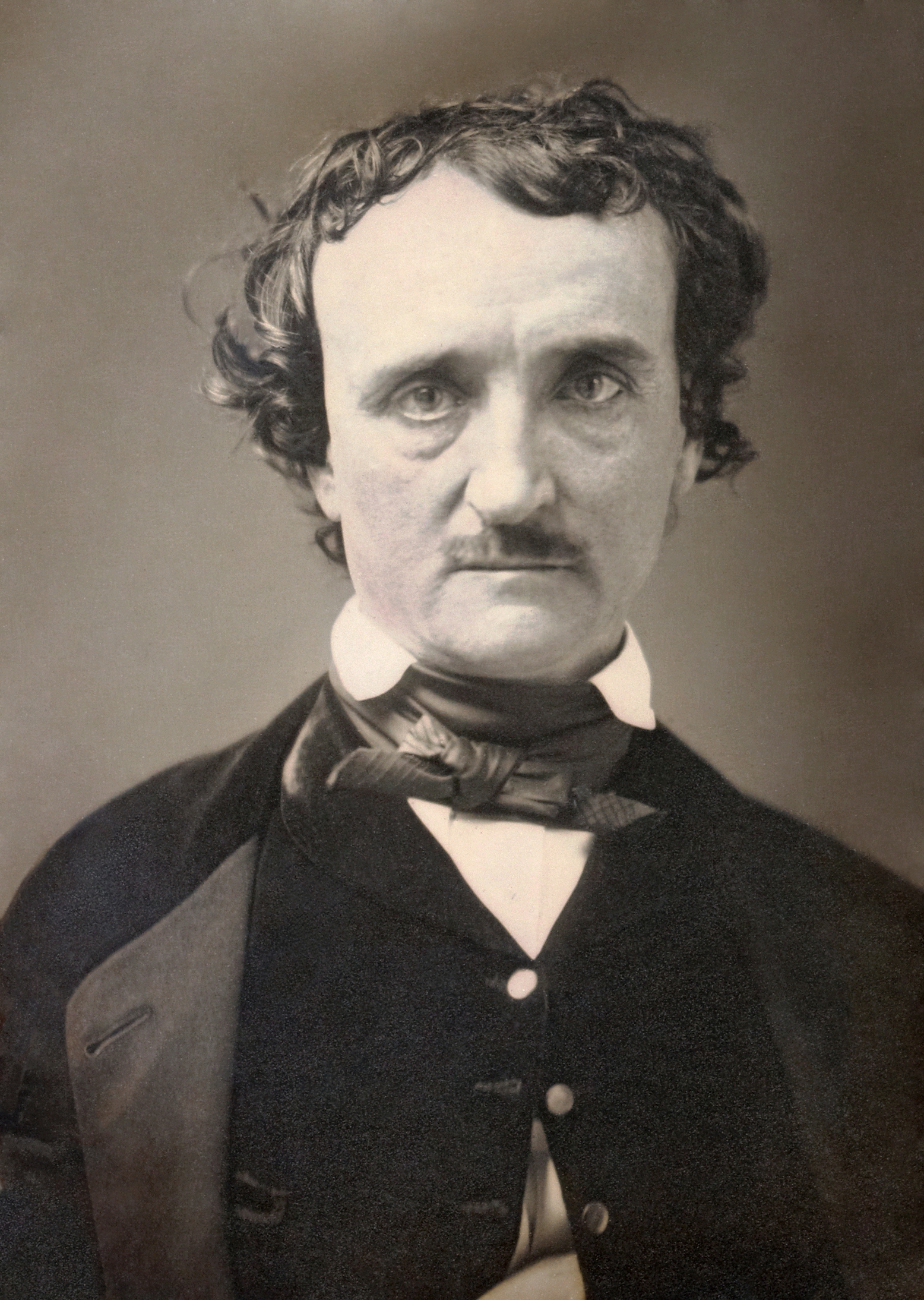
Edgar Allan Poe fu uno scrittore, poeta, critico letterario, giornalista, editore e saggista statunitense. Considerato uno dei più grandi e influenti scrittori statunitensi della storia, Poe è stato l'iniziatore del racconto poliziesco, della letteratura dell'orrore e del giallo psicologico.
Sebbene la sua vita e le sue opere siano posteriori rispetto al periodo del romanzo gotico vero e proprio, Poe ha finito per essere considerato anche uno dei maggiori esponenti del genere gotico. Del movimento neogotico, infatti, riprende talune suggestioni, svincolandosi però dalle ambientazioni tipiche di tale genere, e sviluppandone maggiormente gli aspetti psicologici, indagando fra le ossessioni e gli incubi personali; pertanto può anche essere considerato come un precursore del decadentismo.
Scrittore di grande inventiva, ha anticipato generi letterari quali il racconto poliziesco , e la fantascienza.
Poe è inoltre considerato il primo scrittore alienato d'America, avendo dovuto lottare per buona parte della vita con problemi finanziari, l'abuso di alcolici e sostanze stupefacenti e con l'incomprensione del pubblico e della critica dell'epoca.
“Non credete a nulla di quanto sentito dire e non credete che alla metà di ciò che vedete.”
da Il sistema del dott. Catrame e del prof. Piuma
“Coloro che sognano di giorno sanno molte cose che sfuggono a chi sogna soltanto di notte.”
da Eleonora
Variante: Quelli che sognano ad occhi aperti sono a conoscenza di molte cose che sfuggono a chi sogna addormentato.
da La sepoltura prematura
Edgar Allan Poe libro I delitti della Rue Morgue
1996
I delitti della Rue Morgue
Origine: Citato in Rachael Hale, 101 cataclismi: Per amore dei gatti, Contrasto, 2004, p. 5 http://books.google.it/books?id=CNA4XkQeR8AC&pg=PA48-IA5. ISBN 88-89032-33-2
Edgar Allan Poe libro Quattro chiacchiere con una mummia
1983
Quattro chiacchiere con una mummia
Edgar Allan Poe libro I delitti della Rue Morgue
1996
I delitti della Rue Morgue
da Il sistema del dott. Catrame e del prof. Piuma
“Tutto ciò che vediamo o sembriamo non è altro che un sogno in un sogno.”
da A Dream within a Dream
da Il Corvo, in Il Corvo e altre poesie, traduzione di Raul Montanari, Feltrinelli, 2009, p. 69 http://books.google.it/books?id=ISw0s9rS0iEC&pg=PA69
da Eleonora, 1842
libro Tutti i racconti del mistero, dell'incubo e del terrore
Edgar Allan Poe libro I delitti della Rue Morgue
citato in Tutti i racconti del mistero, dell'incubo e del terrore
I delitti della Rue Morgue
“Oggi sono in catene e sono qui. Domani sarò senza ceppi… ma dove?”
da Il genio della perversione
Edgar Allan Poe libro L'uomo della folla
Origine: L'uomo della folla, p. 19
"Dreamland", st. 1 (1845).
Contesto: By a route obscure and lonely,
Haunted by ill angels only,
Where an Eidolon, named NIGHT,
On a black throne reigns upright,
I have reached these lands but newly
From an ultimate dim Thule —
From a wild weird clime that lieth, sublime,
Out of SPACE — out of TIME.
“I could not awaken
My heart to joy at the same tone —
And all I lov'd — I lov'd alone —”
" Alone http://gothlupin.tripod.com/valone.html", l. 1-8 (written 1829, published 1875). <br class="br">Contesto: From childhood's hour I have not been<br>As others were — I have not seen<br>As others saw — I could not bring<br>My passions from a common spring —<br>From the same source I have not taken<br>My sorrow — I could not awaken<br>My heart to joy at the same tone —<br>And all I lov'd — I lov'd alone
Marginalia http://www.easylit.com/poe/comtext/prose/margin.shtml (November 1844)
Poe stating his arguments that Maelzel's Chess-Player was a hoax. Maelzel's Chess-Player http://www.eapoe.org/works/essays/maelzel.htm, Southern Literary Journal (April 1836).
Marginalia http://www.easylit.com/poe/comtext/prose/margin.shtml (November 1844)
Edgar Allan Poe libro The Angel of the Odd
"The Angel of the Odd" (1850).
Edgar Allan Poe libro The Tell-Tale Heart
The Tell-Tale Heart (1843)
“To observe attentively is to remember distinctly.”
Edgar Allan Poe libro I delitti della Rue Morgue
"The Murders in the Rue Morgue" (1841).
“They who dream by day are cognizant of many things which escape those who dream only by night.”
" Eleonora http://www.classicreader.com/read.php/sid.6/bookid.9/" (1841).
Edgar Allan Poe The Raven
Quoth the Raven, "Nevermore."
Stanza 8.
The Raven (1844)
Edgar Allan Poe The City in the Sea
St. 5.
The City in the Sea (1831)
“A dark unfathom'd tide
Of interminable pride —
A mystery, and a dream,
Should my early life seem.”
Edgar Allan Poe libro Tamerlane and Other Poems
" Imitation http://www.americanpoems.com/poets/poe/17481", Tamerlane and Other Poems (1827).
Edgar Allan Poe libro The Tell-Tale Heart
The Tell-Tale Heart (1843)
Edgar Allan Poe libro The Premature Burial
"The Premature Burial" (1844).
“How many good books suffer neglect through the inefficiency of their beginnings!”
Marginalia http://www.easylit.com/poe/comtext/prose/margin.shtml (November 1844)
"The Angel Of The Odd: An Extravaganza".
“All religion, my friend, is simply evolved out of chicanery, fear, greed, imagination and poetry!”
Sometimes quoted as "All religion, my friend, is simply evolved out of fraud, fear, greed, imagination and poetry" <br class="br">According to John A. Joyce's much-criticized biography Edgar Allen Poe (1901), this was said by Poe to William Barton. <br class="br">Disputed <br class="br">Origine: Google Books link https://books.google.com/books?id=_cdEAAAAYAAJ&printsec=frontcover&dq=John+Alexander+Joyce+poe&hl=en&sa=X&ved=0CBwQ6AEwAGoVChMIsuLtsoXUyAIVVSqICh2cqAI_#v=onepage&q=%22chicanery%2C%20fear%22&f=false
Marginalia http://www.easylit.com/poe/comtext/prose/margin.shtml (November 1844)
Edgar Allan Poe libro The Tell-Tale Heart
The Tell-Tale Heart (1843)
Edgar Allan Poe The Raven
Stanza 17.
The Raven (1844)
“Thus I pacified Psyche and kissed her,
And tempted her out of her gloom.”
Edgar Allan Poe Ulalume
St. 8.
Ulalume (1847)
" A Few Words on Secret Writing http://www.lfchosting.com/eapoe/works/essays/fwsw0741.htm" in Graham's Magazine (July 1841).
“This—all this—was in the olden
Time long ago.”
Edgar Allan Poe The Haunted Palace
"The Haunted Palace" (1839), st. 2.


