Frasi di Isaac Newton
pagina 5

Sir Isaac Newton è stato un matematico, fisico, filosofo naturale, astronomo, teologo, storico e alchimista inglese; citato anche come Isacco Newton, è considerato uno dei più grandi scienziati di tutti i tempi. Ricoprì il ruolo di direttore della zecca inglese e fu Presidente della Royal Society.

Noto soprattutto per il suo contributo alla meccanica classica, Isaac Newton contribuì in maniera fondamentale a più di una branca del sapere. Pubblicò i Philosophiae Naturalis Principia Mathematica nel 1687, opera nella quale descrisse la legge di gravitazione universale e, attraverso le sue leggi del moto, costruì le fondamenta per la meccanica classica. Newton inoltre condivise con Gottfried Wilhelm Leibniz la paternità dello sviluppo del calcolo differenziale o infinitesimale.

Newton fu il primo a dimostrare che le medesime leggi della natura governano il movimento della Terra e degli altri corpi celesti. Egli contribuì alla rivoluzione scientifica e al progresso della teoria eliocentrica. A Newton si deve anche la sistematizzazione matematica delle leggi di Keplero sul movimento dei pianeti. Oltre a dedurle matematicamente dalla soluzione del problema della dinamica applicata alla forza di gravità ovvero dalle omonime equazioni di Newton, egli generalizzò queste leggi intuendo che le orbite potevano essere non solo ellittiche, ma anche iperboliche e paraboliche.

Newton fu il primo a dimostrare che la luce bianca è composta dalla somma di tutti gli altri colori. Egli, infine, avanzò l'ipotesi che la luce fosse composta da particelle, dando vita alla teoria corpuscolare della luce, in contrapposizione alla teoria ondulatoria della luce patrocinata dall'astronomo olandese Christiaan Huygens e dall'inglese Thomas Young e corroborata alla fine dell'Ottocento dai lavori di Maxwell e Hertz. La tesi di Newton trovò invece conferme, circa due secoli dopo, con l'introduzione del quanto d'azione da parte di Max Planck e con l'articolo di Albert Einstein sull'interpretazione dell'effetto fotoelettrico a partire dal quanto di radiazione elettromagnetica, poi denominato fotone. Queste due interpretazioni coesisteranno nell'ambito della meccanica quantistica, come previsto dal dualismo onda-particella.

Occupa una posizione di grande rilievo nella storia della scienza e della cultura in generale. Il suo nome è associato a una grande quantità di leggi e teorie ancora oggi insegnate: si parla così di dinamica newtoniana, di leggi newtoniane del moto, di legge di gravitazione universale. Più in generale ci si riferisce al newtonianesimo come a una concezione del mondo che ha influenzato la cultura europea per tutto il Seicento.

Newton era attratto dalla filosofia naturale; ben presto cominciò a leggere le opere di Cartesio, in particolare La geometria del 1637, in cui le curve sono rappresentate per mezzo di equazioni. Negli anni in cui era studente a Cambridge alla cattedra presiedevano due figure di grande rilievo, Isaac Barrow e Henry More, che esercitarono una forte influenza sul ragazzo; Newton, negli anni seguenti, costruì le sue scoperte matematiche e sperimentali facendo riferimento a un gruppo ristretto di testi. Wikipedia  

✵ 4. Gennaio 1643 – 31. Marzo 1727   •   Altri nomi Sir Isaac Newton
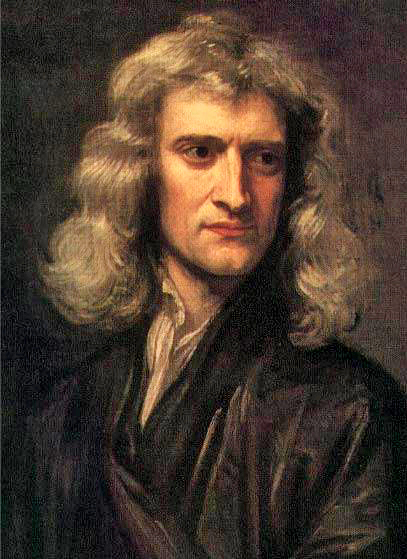
Isaac Newton photo
Isaac Newton: 189   frasi 37   Mi piace

Isaac Newton frasi celebri

Isaac Newton frase: “Ciò che sappiamo è una goccia, ciò che ignoriamo è un oceano.”

“Ciò che sappiamo è una goccia, ciò che ignoriamo è un oceano.”

Origine: Citato in Daniele Cipollini, Dopo il bosone di Higgs, quali grandi domande ci restano? http://daily.wired.it/news/scienza/2012/07/06/misteri-scienza-354678.html, Daily.wired.it, 6 luglio 2012.

“Non credo che ciò [l'universo] si possa spiegare solo con cause naturali, e sono costretto a imputarlo alla saggezza e all'ingegnosità di un essere intelligente.”

da una lettera a Richard Bentley, 10 dicembre 1692
Origine: Citato in Andrea Bacci e Carmen Tunno, L'umanità del tempo, Armando Editore, 2010, p. 37.

“[A proposito del gioco in borsa] So calcolare i movimenti dei corpi celesti, non la pazzia della gente.”

citato in Sergio Ricossa, Straborghese, Editoriale Nuova, Milano, 1980

Isaac Newton Frasi e Citazioni

Questa traduzione è in attesa di revisione. È corretto?

“Il moto delle comete è estremamente regolare e obbedisce alle stesse leggi del moto dei pianeti.”

Origine: Citato in AA.VV., Il libro dell'astronomia, traduzione di Roberto Sorgo, Gribaudo, 2017, p. 73. ISBN 9788858018347

Isaac Newton: Frasi in inglese

“I keep the subject constantly before me, and wait 'till the first dawnings open slowly, by little and little, into a full and clear light.”

Reply upon being asked how he made his discoveries, as quoted in " Biographia Britannica: Or the Lives of the Most Eminent Persons who Have Flourished in Great Britain from the Earliest Ages Down to the Present Times, Volume 5 http://books.google.es/books?id=rYhDAAAAcAAJ&pg=PA3241&dq=I+keep+the+subject+constantly+before+me+and+wait+till+the+first+dawnings+open+little+by+little+into+the+full+light.&hl=es&sa=X&ei=ZBsMUpiLDpPU8wTEkYGAAQ&ved=0CEMQ6AEwAg#v=onepage&q=I%20keep%20the%20subject%20constantly%20before%20me%20and%20wait%20till%20the%20first%20dawnings%20open%20little%20by%20little%20into%20the%20full%20light.&f=false", by W. Innys, (1760), p. 3241.

“Upon Christmas-day, the people of Rome, who had hitherto elected their Bishop, and reckoned that they and their Senate inherited the rights of the ancient Senate and people of Rome, voted Charles their Emperor, and subjected themselves to him in such manner as the old Roman Empire and their Senate were subjected to the old Roman Emperors. The Pope [Leo III] crowned him, and anointed him with holy oil, and worshiped him on his knees after the manner of adoring the old Roman Emperors… The Emperor, on the other hand, took the following oath to the Pope: In nomine Christi spondeo atque polliceor, Ego Carolus Imperator coram Deo & beato Petro Apostolo, me protectorem ac defensorem fore hujus sanctæ Romanæ Ecclesiæ in omnibus utilitatibus, quatenùs divino fultus fuero adjutorio, prout sciero poteroque. The Emperor was also made Consul of Rome, and his son Pipin crowned King of Italy: and henceforward the Emperor styled himself: Carolus serenissimus, Augustus, à Deo coronatus, magnus, pacificus, Romæ gubernans imperium [Charles, most serene Augustus crowned by God, the great, peaceful emperor ruling the Roman empire], or Imperator Romanorum [Emperor of the Romans]; and was prayed for in the Churches of Rome. His image was henceforward put upon the coins of Rome: while the enemies of the Pope, to the number of three hundred Romans and two or three of the Clergy, were sentenced to death. The three hundred Romans were beheaded in one day in the Lateran fields: but the Clergymen at the intercession of the Pope were pardoned, and banished into France. And thus the title of Roman Emperor, which had hitherto been in the Greek Emperors, was by this act transferred in the West to the Kings of France.”

Vol. I, Ch. 7: Of the Eleventh Horn of Daniel's Fourth Beast
Observations upon the Prophecies of Daniel, and the Apocalypse of St. John (1733)

“In default of any other proof, the thumb would convince me of the existence of a God.”

Reported as something said by Newton in Charles Dickens's All the Year Round https://books.google.es/books?id=bd0NAAAAQAAJ&q=%22the+thumb+would+convince+me+of+the+existence+of+a+God%22+dickens&dq=%22the+thumb+would+convince+me+of+the+existence+of+a+God%22+dickens&hl=es&sa=X&ei=fgHtVJ3BB4WXgwTAzoOwBA&ved=0CCAQ6AEwAA (1864), Vol. 10, p. 346; later found in " The Book of the Hand http://dds.crl.edu/loadStream.asp?iid=28101" (1867) by A R. Craig, S. Low and Marston, p. 51:
"In want of other proofs, the thumb would convince me of the existence of a God; as without the thumb the hand would be a defective and incomplete instrument, so without the moral will, logic, decision, faculties of which the thumb in different degrees offers the different signs, the most fertile and the most brilliant mind would only be a gift without worth."
A slight variant of this is cited as something Newton once "exclaimed" in Human Nature : An Interdisciplinary Biosocial Perspective http://books.google.es/books?id=c6O0AAAAIAAJ&q=In+the+absence+of+any+other+proof,+the+thumb+alone+would+convince+me+of+God's+existence.&dq=In+the+absence+of+any+other+proof,+the+thumb+alone+would+convince+me+of+God's+existence.&hl=es&sa=X&ei=KAkMUuLjL-am2gWtnoHgDg&ved=0CFUQ6AEwBQ, Vol. 1, Issues 7-12 (1978), p. 47: "In the absence of any other proof, the thumb alone would convince me of God's existence."

“Do not Bodies act upon Light at a distance, and by their action bend its Rays; and is not this action (caeteris paribus) [all else being equal] strongest at the least distance?”

Isaac Newton libro Opticks, or a Treatise of the Reflections, Refractions, Inflections and Colours of Light

Query 1
Opticks (1704)

“The same King [Greek Empire] placed holiness in abstinence from marriage. Eusebius in his Ecclesiastical history tells us, that Musanus wrote a tract against those who fell away to the heresy of the Encratites, which was then newly risen, and had introduced pernicious errors; and that Tatian, the disciple of Justin, was the author thereof; and that Irenæus in his first book against heresies teaches this… But although the followers of Tatian were at first condemned as heretics by the name of Encratites, or Continentes; their principles could not be yet quite exploded: for Montanus refined upon them, and made only second marriages unlawful; he also introduced frequent fastings, and annual, fasting days, the keeping of Lent, and feeding upon dried meats. The Apostolici, about the middle of the third century, condemned marriage, and were a branch of the disciples of Tatian. The Hierocitæ in Egypt, in the latter end of the third century, also condemned marriage. Paul the Eremite [Hermit] fled into the wilderness from the persecution of Decius, and lived there a solitary life till the reign of Constantine the great, but made no disciples. Antony did the like in the persecution of Dioclesian, or a little before, and made disciples; and many others soon followed his example.”

Vol. I, Ch. 13: Of the King who did according to his will, and magnified himself above every God, and honored Mahuzzims, and regarded not the desire of women
Observations upon the Prophecies of Daniel, and the Apocalypse of St. John (1733)

“Oh, Diamond! Diamond! thou little knowest what mischief thou hast done!”

This is from an anecdote found in St. Nicholas magazine, Vol. 5, No. 4, (February 1878) http://www.gutenberg.org/files/15331/15331-h/15331-h.htm :
Sir Isaac Newton had on his table a pile of papers upon which were written calculations that had taken him twenty years to make. One evening, he left the room for a few minutes, and when he came back he found that his little dog "Diamond" had overturned a candle and set fire to the precious papers, of which nothing was left but a heap of ashes.

“If I had stayed for other people to make my tools and things for me, I had never made anything.”

This first appears in the Isaac Newton : A Biography (1934), citing unpublished papers by John Conduitt reporting an anecdote of an occassion where Conduitt asked Newton where he obtained the tools to make his reflecting telescope. Newton is said to have laughed and replied, "If I had stayed for other people to make my tools and things for me I had never made anything of it."
Disputed

“Every body continues in its state of rest, or of uniform motion in a right line, unless it is compelled to change that state by forces impressed upon it.”

Isaac Newton libro Philosophiae Naturalis Principia Mathematica

Laws of Motion, I
Philosophiae Naturalis Principia Mathematica (1687)

“Whence are you certain that ye Ancient of Days is Christ? Does Christ anywhere sit upon ye Throne?”

He wrote in discussing with John Locke the passage of Daniel 7:9. The Correspondence of Isaac Newton, Vol. III, Letter 362. Cited in The Watchtower magazine, 1977, 4/15, article: Isaac Newton’s Search for God.

“In the reign of the Greek Emperor Justinian, and again in the reign of Phocas, the Bishop of Rome obtained some dominion over the Greek Churches, but of no long continuance. His standing dominion was only over the nations of the Western Empire, represented by Daniel's fourth Beast.”

Vol. I, Ch. 8: Of the power of the eleventh horn of Daniel's fourth Beast, to change times and laws
Observations upon the Prophecies of Daniel, and the Apocalypse of St. John (1733)

“God created everything by number, weight and measure.”
Numero pondere et mensura Deus omnia condidit.

As quoted in Symmetry in Plants (1998) by Roger V. Jean and Denis Barabé, p. xxxvii, a translation of a Latin phrase he wrote in a student's notebook, elsewhere given as Numero pondere et mensura Deus omnia condidit. This is similar to Latin statements by Thomas Aquinas, and even more ancient statements of the Greek philosopher Pythagoras. See also Wisdom of Solomon 11:20 https://en.wikisource.org/wiki/Bible_(King_James)/Wisdom_of_Solomon#Chapter_11

Autori simili

Blaise Pascal photo
Blaise Pascal 139
matematico, fisico, filosofo e teologo francese
Johann Gottfried Herder photo
Johann Gottfried Herder 4
filosofo e teologo tedesco
Galileo Galilei photo
Galileo Galilei 39
scienziato italiano
Cartesio photo
Cartesio 46
filosofo e matematico francese
John Locke photo
John Locke 13
filosofo e fisico britannico
Gottfried Wilhelm von Leibniz photo
Gottfried Wilhelm von Leibniz 29
matematico e filosofo tedesco
Erasmo da Rotterdam photo
Erasmo da Rotterdam 53
teologo, umanista e filosofo olandese
Jeremy Bentham photo
Jeremy Bentham 13
filosofo e giurista inglese
Francesco Bacone photo
Francesco Bacone 39
filosofo, politico e giurista inglese
Paracelso photo
Paracelso 14
medico, alchimista e astrologo svizzero