
Arthur Koestler libro Le radici del caso
Origine: Le radici del caso, p. 62
Arthur Koestler è stato uno scrittore, filosofo e parapsicologo ungherese naturalizzato britannico.
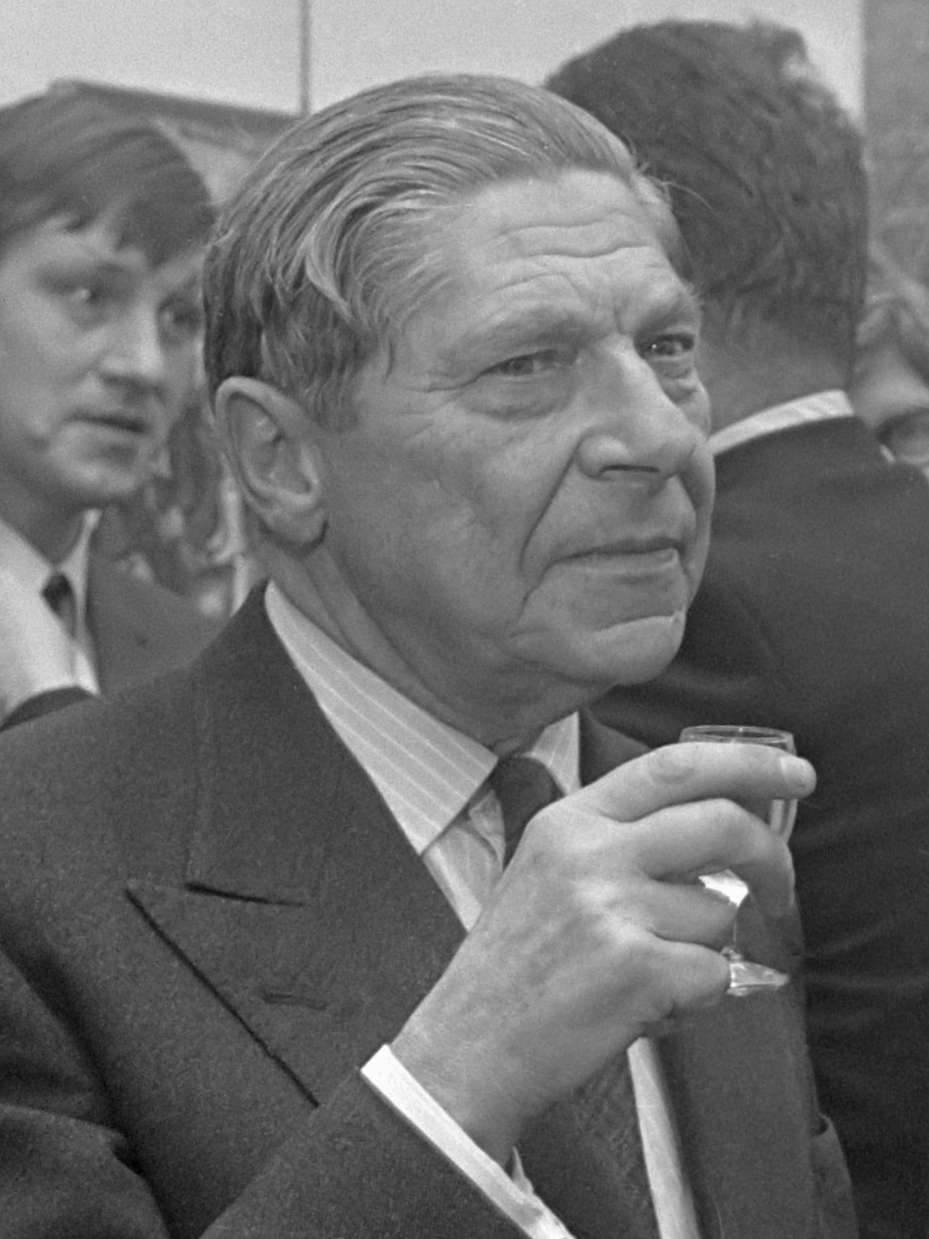
Arthur Koestler libro Le radici del caso
Origine: Le radici del caso, p. 62
Origine: Dall'introduzione a Fred Uhlman, L'amico ritrovato.
Origine: Da The sleepwalkers, Parte 5<sup>a</sup>: The parting of the Ways; [trad. propria].
“La vera creatività comincia spesso dove termina il linguaggio.”
Origine: Da The Act of Creation, 1964.
Origine: Citato in Ralf Dahrendorf, Erasmiani, traduzione di M. Sampaolo, Laterza, p. 30.
“La storia ci ha insegnato che spesso la menzogna la serve meglio della verità…”
Arthur Koestler libro Buio a mezzogiorno
Origine: Buio a mezzogiorno, p. 113
Arthur Koestler libro Buio a mezzogiorno
Origine: Buio a mezzogiorno, p. 252-253
da The sleepwalkers, Parte 5a: The parting of the Ways; [trad. propria]
Origine: Da I gladiatori, Marco Tropea editore.
“Guai al pazzo e all'esteta che chiede solo come e non perché”
Arthur Koestler libro Buio a mezzogiorno
Origine: Buio a mezzogiorno, p. 191
Arthur Koestler libro Buio a mezzogiorno
Origine: Buio a mezzogiorno, p. 179
Arthur Koestler libro Buio a mezzogiorno
Buio a mezzogiorno
Arthur Koestler libro Buio a mezzogiorno
Origine: Buio a mezzogiorno, p. 188
“La verità è ciò che è utile al genere umano, la menzogna ciò che gli è dannoso.”
Arthur Koestler libro Buio a mezzogiorno
Origine: Buio a mezzogiorno, p. 253
“Ogni idea errata che noi seguiamo è un delitto commesso contro le future generazioni.”
Arthur Koestler libro Buio a mezzogiorno
Origine: Buio a mezzogiorno, p. 113
Arthur Koestler libro Le radici del caso
Origine: Le radici del caso, p. 78
A Challenge to 'Knights in Rusty Armor, The New York Times, (14 February 1943).
Contesto: Indeed, the ideal for a well-functioning democratic state is like the ideal for a gentleman's well-cut suit — it is not noticed. For the common people of Britain, Gestapo and concentration camps have approximately the same degree of reality as the monster of Loch Ness. Atrocity propaganda is helpless against this healthy lack of imagination.
Epilogue
The Sleepwalkers: A History of Man's Changing Vision of the Universe (1959)
Contesto: The uomo universale of the Renaissance, who was artist and craftsman, philosopher and inventor, humanist and scientist, astronomer and monk, all in one, split up into his component parts. Art lost its mythical, science its mystical inspiration; man became again deaf to the harmony of the spheres. The Philosophy of Nature became ethically neutral, and "blind" became the favourite adjective for the working of natural law. The space-spirit hierarchy was replaced by the space-time continuum.... man's destiny was no longer determined from "above" by a super-human wisdom and will, but from "below" by the sub-human agencies of glands, genes, atoms, or waves of probability.... they could determine his fate, but could provide him with no moral guidance, no values and meaning. A puppet of the Gods is a tragic figure, a puppet suspended on his chromosomes is merely grotesque.
Return Trip to Nirvana from Sunday Telegraph (1967).
Contesto: I profoundly admire Aldous Huxley, both for his philosophy and uncompromising sincerity. But I disagree with his advocacy of 'the chemical opening of doors into the Other World', and with his belief that drugs can procure 'what Catholic theologians call a gratuitous grace'. Chemically induced hallucinations, delusions and raptures may be frightening or wonderfully gratifying; in either case they are in the nature of confidence tricks played on one's own nervous system.
Arthur Koestler libro The Act of Creation
The Act of Creation, London, (1970) p. 253.
Contesto: Einstein's space is no closer to reality than Van Gogh's sky. The glory of science is not in a truth more absolute than the truth of Bach or Tolstoy, but in the act of creation itself. The scientist's discoveries impose his own order on chaos, as the composer or painter imposes his; an order that always refers to limited aspects of reality, and is based on the observer's frame of reference, which differs from period to period as a Rembrant nude differs from a nude by Manet.
Origine: Drinkers of Infinity: Essays 1955-1967 (1967).
“History had a slow pulse; man counted in years, history in generations”
Arthur Koestler libro Buio a mezzogiorno
Origine: Darkness at Noon
“The more original a discovery the more obvious it seems afterwards.”
Arthur Koestler libro The Act of Creation
The Act of Creation (1970).
Arthur Koestler libro The Thirteenth Tribe
The Thirteenth Tribe (1976).
Arthur Koestler libro The Ghost in the Machine
The Ghost in the Machine (1967).
Arthur Koestler libro The Ghost in the Machine
The Ghost in the Machine (1967).
Epilogue
The Sleepwalkers: A History of Man's Changing Vision of the Universe (1959)
Epilogue [footnote referenced E.T. Whittaker's Space and Spirit (1946)]
The Sleepwalkers: A History of Man's Changing Vision of the Universe (1959)
Writers at Work, ed. George Plimpton (1986).
Epilogue
The Sleepwalkers: A History of Man's Changing Vision of the Universe (1959)
The Sleepwalkers: A History of Man's Changing Vision of the Universe (1959)
Arthur Koestler libro The Invisible Writing
The Invisible Writing (1954).
“God seems to have left the receiver off the hook, and time is running out.”
Arthur Koestler libro The Ghost in the Machine
The Ghost in the Machine (1967).
as quoted by Michael Grossman in the The First Nonlinear System of Differential and Integral Calculus (1979).
The Sleepwalkers: A History of Man's Changing Vision of the Universe (1959)
Arthur Koestler libro The Act of Creation
The Act of Creation (1970).
Arthur Koestler libro The Ghost in the Machine
The Ghost in the Machine (1967, 1976).


.jpg)