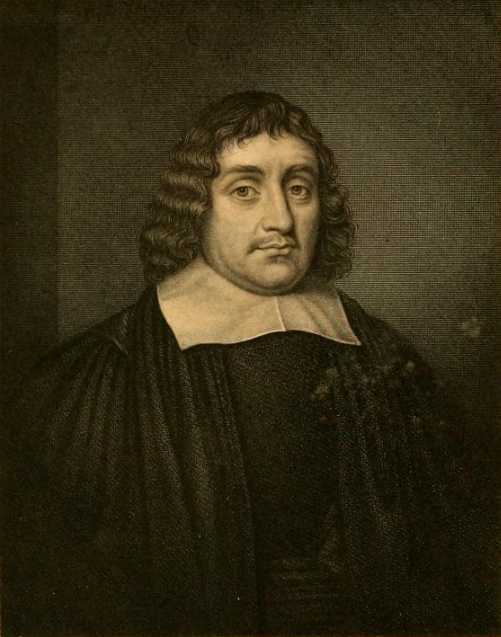
Thomas Fuller frasi celebri
“Chi risparmia il malvagio offende il giusto.”
citato in Armando Massarenti (a cura di), Il significato delle cose, Il Sole 24 Ore, 2007, p. 23
Frasi su Dio di Thomas Fuller
Thomas Fuller Frasi e Citazioni
Origine: Citato in Guido Almansi, Il filosofo portatile, TEA, Milano, 1991.
“La cultura si è avvantaggiata soprattutto dei libri sui quali gli editori hanno perso.”
da The Holy State and the Profane State, III, 18; citato in Dizionario delle citazioni, a cura di Ettore Barelli e Sergio Pennacchietti, BUR, 2013
Thomas Fuller: Frasi in inglese
Life of the Duke of Alva (1642). Compare: "A fiery soul, which, working out its way, Fretted the pigmy-body to decay, And o'er-inform'd the tenement of clay", John Dryden, Absalom and Achitophel, part i. line 156.
The True Church Antiquary. Compare: "A little philosophy inclineth man’s mind to atheism, but depth in philosophy bringeth men's minds about to religion", Francis Bacon, Of Atheism.
The Holy State and the Profane State (1642)
A Pisgah Sight of Palestine (1650), Book II, ch. XI.
“A fox should not be of the jury at a goose's trial.”
Proverbs (1732), p. 116.
“Heat of passion makes our souls to chap, and the devil creeps in at the crannies.”
Of Anger.
The Holy State and the Profane State (1642)
Of Anger.
The Holy State and the Profane State (1642)
“Learning hath gained most by those books by which the printers have lost.”
Of Books.
The Holy State and the Profane State (1642)
The History of the Worthies of England (1662) ; Worthies of Huntingtonshire – John Yong.
“Light, God's eldest daughter, is a principal beauty in a building.”
Of Building.
The Holy State and the Profane State (1642)
The Virtuous Lady.
The Holy State and the Profane State (1642)
Of Marriage.
The Holy State and the Profane State (1642)
“One that will not plead that cause wherein his tongue must be confuted by his conscience.”
The Good Advocate.
The Holy State and the Profane State (1642)
The Good Sea-Captain.
The Holy State and the Profane State (1642)
“Often the cockloft is empty in those whom Nature hath built many stories high.”
Andronicus, or the Unfortunate Politician (1646), Sect. vi. Par. 18, 1. Compare: "My Lord St. Albans said that Nature did never put her precious jewels into a garret four stories high, and therefore that exceeding tall men had ever very empty heads", Francis Bacon, Apothegms, No. 17.
“There is a great difference between painting a face and not washing it.”
Church History, Book VII, Section 32.
“She commandeth her husband, in any equal matter, by constant obeying him.”
The Good Wife.
The Holy State and the Profane State (1642)
“He knows little who will tell his wife all he knows.”
The Good Husband.
The Holy State and the Profane State (1642)
“Miracles are the swaddling-clothes of infant churches.”
The Church History of Britain; Book 4, Section 4 http://books.google.com/books?id=AkcaAAAAMAAJ&q=%22Miracles+are+the+swaddling+clothes+of+infant+churches%22&pg=PA239#v=onepage (1655)
“Do not in an instant what an age cannot recompense.”
Of Anger.
The Holy State and the Profane State (1642)
“Though blood be the best sauce for victory, yet must it not be more than the meat.”
The History of the Holy War (1639), Book I, Ch. 24.
“Anger is one of the sinews of the soul; he that wants it hath a maimed mind.”
Of Anger.
The Holy State and the Profane State (1642)
“The lion is not so fierce as painted.”
Of Preferment. Compare: "is bark is worse than his bite", George Herbert, Jacula Prudentum.
The Holy State and the Profane State (1642)
Of Natural Fools.
The Holy State and the Profane State (1642)
“Fame sometimes hath created something of nothing.”
Of Fame.
The Holy State and the Profane State (1642)
“The Pyramids themselves, doting with age, have forgotten the names of their founders.”
Of Tombs.
The Holy State and the Profane State (1642)
“Music is nothing else but wild sounds civilised into time and tune.”
The History of the Worthies of England (1662): Musicians.


