“L'abitudine ci è data dall'alto: essa è il surrogato della felicità.”
cap. II, st. XXXI
Evgénij Onégin
Aleksandr Sergeevič Puškin è stato un poeta, saggista, scrittore e drammaturgo russo.
In filologia egli è considerato il fondatore della lingua letteraria russa contemporanea e le sue opere, tra le migliori espressioni del romanticismo russo, hanno ispirato numerosi scrittori, compositori e artisti. Le sue opere rappresentano tuttora una tra le migliori espressioni della letteratura russa, in quanto nonostante i quasi due secoli passati dalla loro creazione, ci presentano una lingua tuttora viva e attuale.
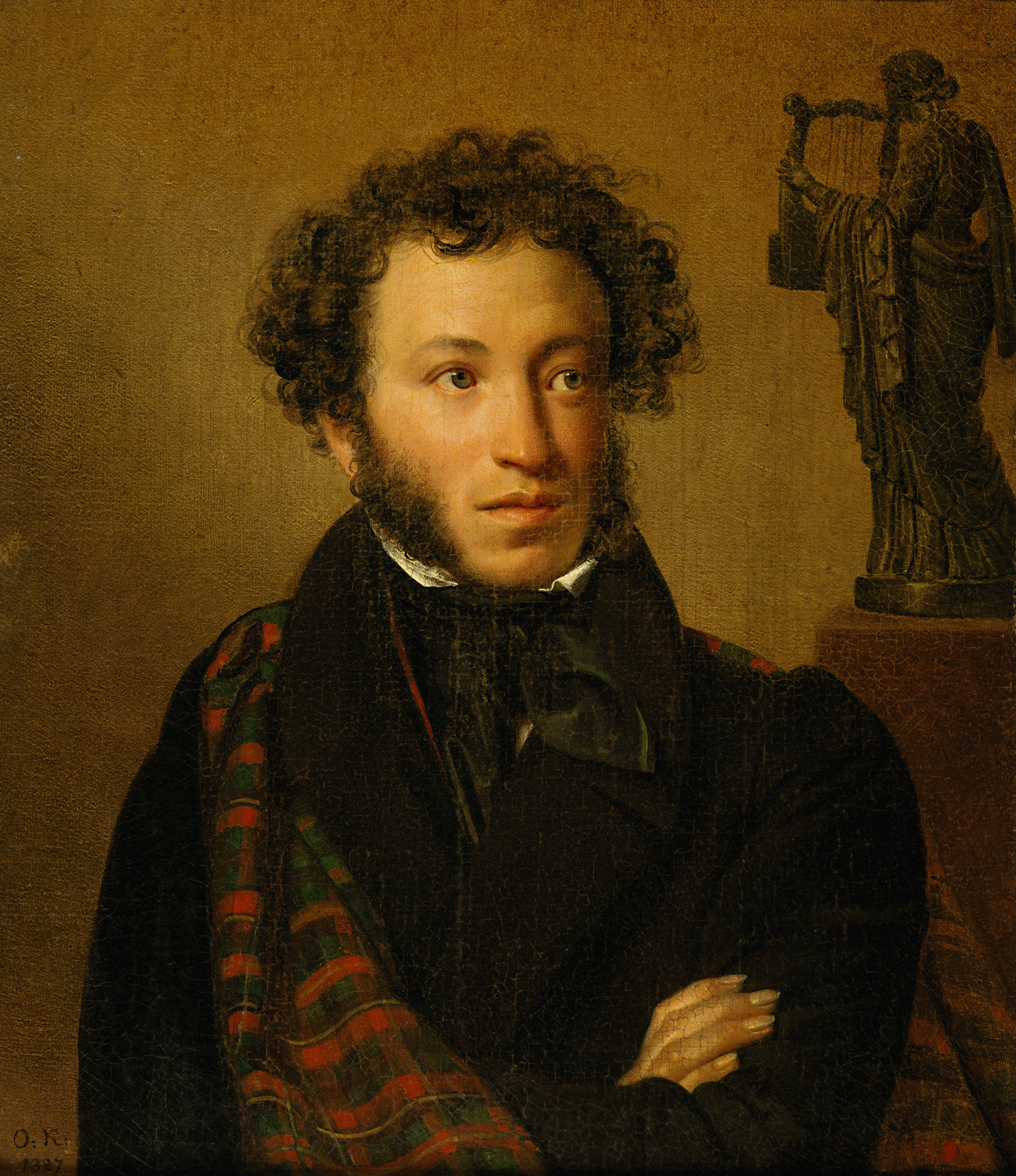
“L'abitudine ci è data dall'alto: essa è il surrogato della felicità.”
cap. II, st. XXXI
Evgénij Onégin
Alexander Sergejevič Puškin La Roussalka
La Rusalka
scena II
Il Convitato di Pietra
Alexander Sergejevič Puškin libro La figlia del capitano
Origine: La figlia del capitano, p. 47
“Da un cane selvatico ci si deve contentare di prendere anche un solo ciuffo di lana.”
Alexander Sergejevič Puškin libro La figlia del capitano
cap. IX, p. 101
La figlia del capitano
“Chi ha vissuto e pensato, questi non può nella sua anima non disprezzare gli uomini.”
cap. I, st. XLVI
Evgénij Onégin
“Chi non sa conservare l'eredità paterna morirà in miseria, nonostante qualsiasi sforzo demoniaco.”
Origine: La donna di picche, p. 264-265
“Donn'Anna: Chi siete dunque?
Don Giovanni: Un'infelice, vittima di una passione disperata.”
scena III
Il Convitato di Pietra
Variante: Donn'Anna': Chi siete dunque?
'Don Giovanni': Un'infelice, vittima di una passione disperata.
“I denari per noi sono buoni sempre, ad ogni età.”
scena I
Il Cavaliere Avaro
“La solitudine e l'ozio rovinano i giovani.”
scena III
Il Cavaliere Avaro
Alexander Sergejevič Puškin libro La figlia del capitano
Origine: La figlia del capitano, p. 21
“Il saltimbanco non è amico del pop.”
Borìs Godunòv
Origine: In russo, prete o sacerdote della chiesa ortodossa.
Borìs Godunòv
“Di quale ardore brucia un bacio in mezzo al gelo.”
Origine: Citato in L'amore è tutto di Dino Basili, p. 48, Tascabili economici newton, Febbraio 1996.
“Il crudele è un po' più debole e la paura vive in un'anima languente di passioni.”
da Un festino durante la peste
da Scene dei tempi cavallereschi, in Opere
“Io Puskin ho scritto Le Lettere.”
Voi signori professori, critici, editori siete i postini, soltanto i postini.
Origine: Citato in Gian Paolo Sevino, recensione di Errata di George Steiner, RES, anno IX numero 17, marzo 1999, p. 63.
“The illusion which exalts us is dearer to us than ten thousand truths.”
The Hero ll. 64-65, quoted in Gooseberries by Anton Chekhov
Aleksandr Pushkin libro Eugene Onegin
Origine: Eugene Onegin (1823), Ch. 1, st. 25.
Found in Pushkin's. The Captain's Daughter and Other Stories. English edition by Random House LLC. 2013. p. 139
As quoted by Joseph Frank in Dostoevsky: A Writer in His Time (2009). Princeton University Press, p. 203.
Aleksandr Pushkin libro The Queen of Spades
"Three, seven, queen!"
VI.
The Queen of Spades (1833)
Aleksandr Pushkin The Bronze Horseman
The Bronze Horseman (1833).
Aleksandr Pushkin libro Eugene Onegin
Eugene Onegin (1823)
Originale: (ru) Но так и быть — рукой пристрастной Прими собранье пестрых глав, Полусмешных, полупечальных, Простонародных, идеальных, Небрежный плод моих забав, Бессониц, легких вдохновений, Незрелых и увядших лет, Ума холодных наблюдений И сердца горестных замет.
Aleksandr Pushkin Boris Godunov
(Variant translation):
One more story, just one more,
And then my history's completed,
All my chronicles written down
And my sinner's debt repaid to God.
Not for nothing.
The Lord appointed me to bear witness
For many many years and it was he
Taught me the art of creating books.
One day, in the far future,
some hard-working monk
Will find my painstaking,
anonymous writings.
He'll light his lamp,
as I light mine,
He'lll shake the dust of centuries from these scrolls.
Then he'll copy out, carefully, these true accounts,
So the descendants of today's Christians
May know the past of their native land
Remember their mighty Tsars warmly
For their glory and their knidness
And our Lord's mercy on their sins and crimes.
In my old age I live my life anew.
Pushkin, Alexander (2012). Pushkin's Boris Gudunov. Oberon Books.
Boris Godunov (1825)
Aleksandr Pushkin libro Eugene Onegin
Origine: Eugene Onegin (1823), Ch. 4, st. 1.
Aleksandr Pushkin libro Eugene Onegin
Origine: Eugene Onegin (1823), Ch. 1, st. 5.
Aleksandr Pushkin The Prophet
English translation found in New Society, Volume 8, (1966). New Society Limited. p. 413.
Also quoted by Kahn, Andrew (2006). The Cambridge Companion to Pushkin. Cambridge University Press, p. 84.
The Prophet (1826)
Secular Power
as quoted in Pushkin, Alexander (2009). Selected Lyric Poetry. Northwestern University Press, p. 121.
Aleksandr Pushkin libro The Queen of Spades
V.
The Queen of Spades (1833)
Aleksandr Pushkin libro Eugene Onegin
Prologue, sec. 5, l. 18-28.
Eugene Onegin (1823)
“Always contented with his life,
and with his dinner, and his wife.”
Aleksandr Pushkin libro Eugene Onegin
Origine: Eugene Onegin (1823), Ch. 1, st. 12.
“The clock of doom had struck as fated;
the poet, without a sound,
let fall his pistol on the ground.”
Aleksandr Pushkin libro Eugene Onegin
Origine: Eugene Onegin (1823), Ch. 6, st. 30.
Aleksandr Pushkin Boris Godunov
Boris Godunov (1825)
Pushkin, 19 October 1827.
as quoted in Pushkin, Alexander (2009). Selected Lyric Poetry. Northwestern University Press, p. 121.
Aleksandr Pushkin libro Eugene Onegin
Что наши лучшие желанья,
Что наши свежие мечтанья
Истлели быстрой чередой,
Как листья осенью гнилой.
Origine: Eugene Onegin (1823), Ch. 8, st. 11.
Aleksandr Pushkin libro Eugene Onegin
Origine: Eugene Onegin (1823), Ch. 1, st. 38.
Aleksandr Pushkin libro Eugene Onegin
Origine: Eugene Onegin (1823), Ch. 1, st. 59.
Remembrance.
Aleksandr Pushkin libro Eugene Onegin
Origine: Eugene Onegin (1823), Ch. 3, st. 28. (Translated by Walter Arndt in Eugene Onegin (2009). Penguin.
Aleksandr Pushkin libro The Queen of Spades
VI.
The Queen of Spades (1833)
A Prayer
as quoted in Pushkin, Alexander (2009). Selected Lyric Poetry. Northwestern University Press, p. 199.
“Habit is Heaven's own redress:
it takes the place of happiness.”
Aleksandr Pushkin libro Eugene Onegin
Origine: Eugene Onegin (1823), Ch. 2, st. 31.
Aleksandr Pushkin libro Eugene Onegin
Originale: (ru) Москва… как много в этом звуке Для сердца русского слилось! Как много в нем отозвалось!
Origine: Eugene Onegin (1823), Ch. 7, st. 36.


