“Perdona i tuoi nemici, ma non dimenticarti mai i loro nomi.”
Origine: Citato in Gino e Michele, Matteo Molinari, Le Formiche: anno terzo, Zelig Editore, 1995, § 1953.
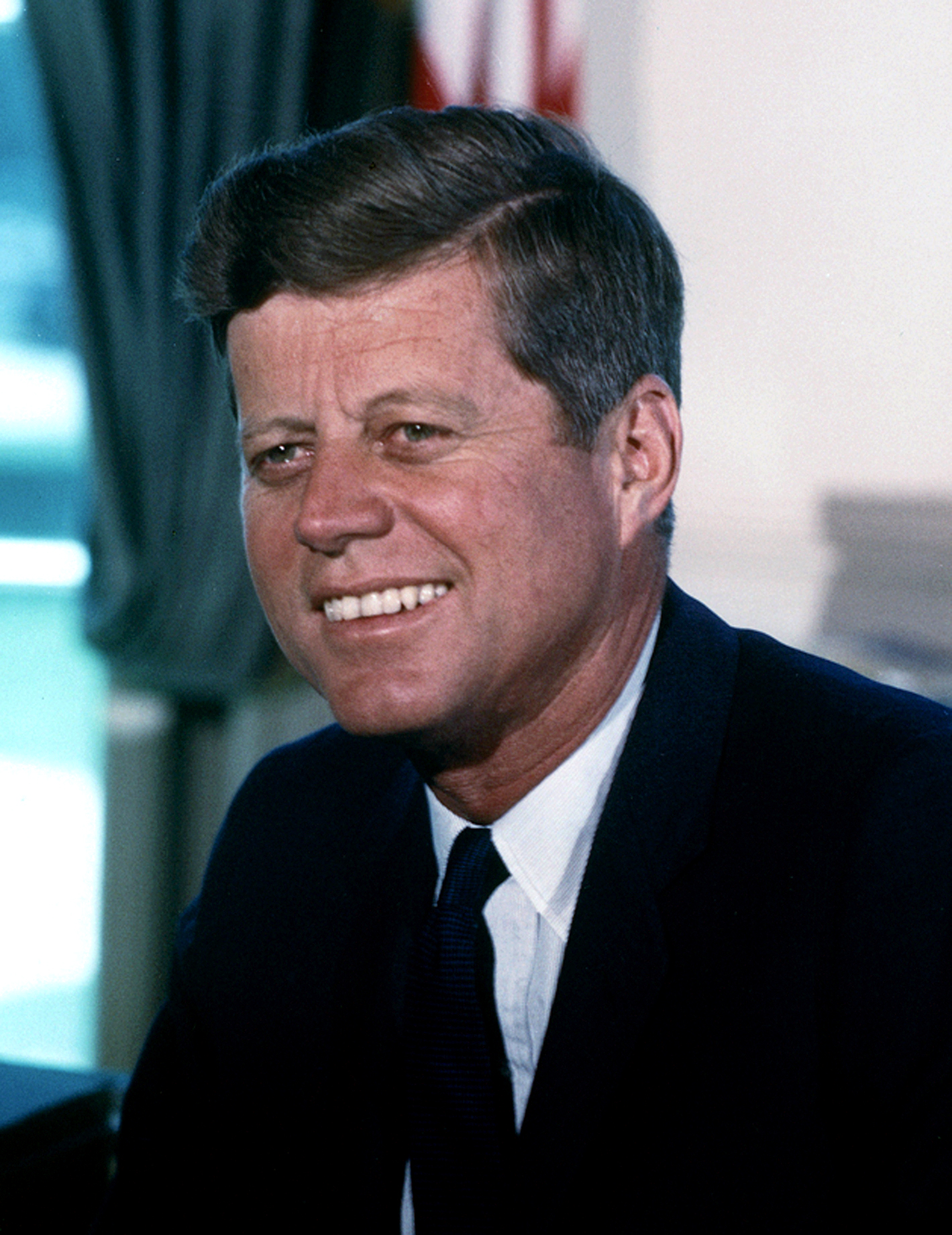
John Fitzgerald Kennedy, comunemente chiamato John F. Kennedy, John Kennedy o solo JFK, , è stato un politico statunitense e il 35º presidente degli Stati Uniti d'America.
Candidato del Partito Democratico, vinse le elezioni presidenziali del 1960 diventando il 35º presidente degli Stati Uniti d'America, carica che ha mantenuto dal 20 gennaio 1961 fino al suo assassinio nel 1963, quando gli subentrò il vicepresidente Lyndon B. Johnson.
Kennedy, di origine irlandese, noto anche con il diminutivo "Jack", è stato il primo presidente degli Stati Uniti d'America di religione cattolica. Fu anche il primo presidente statunitense a essere nato nel XX secolo e il più giovane a morire ricoprendo la carica . La sua breve presidenza, in epoca di guerra fredda, fu segnata da alcuni eventi molto rilevanti: la crisi di Berlino del 1961 con la costruzione del Muro, la corsa alla Luna, la conquista dello spazio, lo sbarco nella baia dei Porci, la crisi dei missili di Cuba, gli antefatti della guerra del Vietnam e l'affermarsi del movimento per i diritti civili degli afroamericani.
Kennedy fu assassinato il 22 novembre 1963 a Dallas, in Texas. Lee Harvey Oswald fu accusato dell'omicidio e fu a sua volta ucciso, due giorni dopo, da Jack Ruby, prima che potesse essere processato. La Commissione Warren concluse che Oswald aveva agito da solo; tuttavia nel 1979 la United States House Select Committee on Assassinations dichiarò che l'atto di Oswald era stato probabilmente frutto di una cospirazione. La questione se Oswald avesse o meno agito da solo rimane dibattuta, con l'esistenza di numerose teorie cospirazioniste. L'assassinio di Kennedy fu un evento focale nella storia degli Stati Uniti per l'impatto che ebbe sulla nazione e sulla politica del Paese. La figura di Kennedy continua tuttora a ricevere stima e apprezzamento.
“Perdona i tuoi nemici, ma non dimenticarti mai i loro nomi.”
Origine: Citato in Gino e Michele, Matteo Molinari, Le Formiche: anno terzo, Zelig Editore, 1995, § 1953.
“Non chiedete cosa possa fare il paese per voi: chiedete cosa potete fare voi per il paese.”
dal discorso inaugurale del proprio mandato, 20 gennaio 1961
dal discorso http://www.jfklibrary.org/Research/Ready-Reference/JFK-Speeches/Commencement-Address-at-American-University-June-10-1963.aspx alla American University, 10 giugno 1963
dal discorso http://www.jfklibrary.org/Research/Ready-Reference/JFK-Speeches/The-President-and-the-Press-Address-before-the-American-Newspaper-Publishers-Association.aspx presso l'Hotel Waldorf-Astoria di New York, 27 aprile 1961
19 maggio 1962; citato in Marilyn, p. 369
“La vittoria ha moltissimi padri, la sconfitta è orfana.”
Origine: Citato in Dizionario mondiale di Storia, Rizzoli Larousse, Milano, 2003, p. 656. ISBN 88-525-0077-4
dal discorso alla Rice University, 12 settembre 1962
“La guerra non ci si propone più come un'alternativa razionale.”
dal messaggio all'ONU del 25 settembre 1961
citato in Arthur Schlesinger Jr., I mille giorni di John F. Kennedy, p. 101
“Mio padre [Joseph P. Kennedy] mi ha detto che tutti gli uomini di affari sono figli di puttana.”
citato in Edward Klein, La maledizione dei Kennedy, p. 64
Origine: Citato in Giovanni Sabbatucci e Vittorio Vidotto, <nowiki></nowiki>Il mondo contemporaneo. Dal 1848 a oggi<nowiki></nowiki>, Editori Laterza, Roma, 2008, <nowiki>ISBN 978-88-420-8741-0</nowiki>, pag. 542
dal discorso http://www.jfklibrary.org/Research/Ready-Reference/JFK-Speeches/Remarks-at-the-Rudolph-Wilde-Platz-June-26-1963.aspx a Berlino Ovest, 26 giugno 1963
“Il conformismo è il carceriere della libertà e il nemico dello sviluppo.”
dal messaggio all'ONU http://www.jfklibrary.org/Research/Ready-Reference/JFK-Speeches/Address-Before-the-General-Assembly-of-the-United-Nations-September-25-1961.aspx del 25 settembre 1961
“Io sono un idealista senza illusioni.”
Origine: Citato in Enzo Biagi, Buoni cattivi: esiste ancora una morale valida per tutti?, BUR, Milano, 1991, p. 15. ISBN 88-17-11549-5
“L'umanità deve porre fine alla guerra, o la guerra porrà fine all'umanità.”
dal messaggio all'ONU del 25 settembre 1961
“L'uomo è ancora il più straordinario dei computer.”
da un discorso del 21 maggio 1963
citato in Guida completa a Frank Sinatra
dalla tesi di laurea di Kennedy, pubblicata come saggio dal titolo Why England Slept nel 1940; citato in Arthur Schlesinger Jr., I mille giorni di John F. Kennedy, p. 105
dal diario tenuto durante il suo soggiorno in Europa nel 1938, citato in Arthur Schlesinger Jr., I mille giorni di John F. Kennedy, p. 102
“Non voglio la capote sulla macchina, tutte la texane devono vedere che bella ragazza è Jackie.”
Origine: Detto al suo collaboratore più stretto, Kenneth O'Donnell, a proposito della sua visita alla città texana di Dallas, che avrebbe avuto luogo di lì a due giorni. Citato in Edward Klein, La maledizione dei Kennedy, p. 183.
“Le migliori manovre strategiche avvengono sempre per caso.”
citato in Arthur Schlesinger Jr., I mille giorni di John F. Kennedy, p. 93
Citato in Edward Klein, La maledizione dei Kennedy, p. 31
“Cuba non deve essere abbandonata ai comunisti.”
citato in AA.VV., Il libro della storia, traduzione di Roberto Sorgo, Gribaudo, 2018, p. 315. ISBN 9788858016572
1963, Remarks Prepared for Delivery at the Trade Mart in Dallas
John F. Kennedy libro Ich bin ein Berliner
1963, Ich bin ein Berliner
First State of the Union Address (30 January 1961)
1961, State of the Union
“We celebrate the past to awaken the future.”
"Remarks at the 25th Anniversary of the Signing of the Social Security Act," Hyde Park, New York (14 August 1960) http://www.jfklibrary.org/Research/Research-Aids/Ready-Reference/JFK-Quotations.aspx; Box 910, Senate Speech Files, John F. Kennedy Papers, Pre-Presidential Papers, John F. Kennedy Presidential Library <br class="br">1960
Origine: 1961, Speech to Special Joint Session of Congress
1961, Address before the American Society of Newspaper Editors
1963, Address at Vanderbilt University
1963, American University speech
“Certain other societies may respect the rule of force — we respect the rule of law.”
1963, Address at Vanderbilt University
Kennedy here references Francis Bacon’s Aphorism 129 of Novum Organum: Again, we should notice the force, effect, and consequences of inventions, which are nowhere more conspicuous than in those three which were unknown to the ancients; namely, printing, gunpowder, and the compass. For these three have changed the appearance and state of the whole world; first in literature, then in warfare, and lastly in navigation: and innumerable changes have been thence derived, so that no empire, sect, or star, appears to have exercised a greater power and influence on human affairs than these mechanical discoveries.
1961, Address to ANPA
Acceptance speech (9 November 1960) http://www.jfklibrary.org/Research/Ready-Reference/JFK-Speeches/Acceptance-Speech-by-John-F-Kennedy-Hyannis-Armory-Hyannis-Massachusetts-November-9-1960.aspx <br class="br">1960
“Somebody once said that Washington was a city of Northern charm and Southern efficiency.”
Speech http://www.jfklibrary.org/Asset-Viewer/Archives/JFKPOF-036-014.aspx to the Trustees and Advisory Committee of the National Cultural Center in the White House Movie Theater, 14 November 1961 <br class="br">1961
Speech at Civic Auditorium, Seattle, Washington (6 September 1960)
1960
“We must first bring others to see their own true interests better than they do today.”
1963, Address at the Free University of Berlin
“Things don't just happen, they are made to happen.”
Speech given at the Arkansas State Fairground, Little Rock, United States of America (3 October 1963); quoted in John F. Kennedy in Quotations: A Topical Dictionary, with Sources (2013), McFarland, entry 1729
1963
1961, Address to ANPA
Radio and Television Report to the Nation on the Situation at the University of Mississippi (30 September 1962)
1962
Message to Chairman Khrushchev Concerning the Meaning of Events in Cuba (18 April 1961).
1961
1962, Second Letter to Nikita Khrushchev
Speech at Civic Auditorium, Seattle, Washington (6 September 1960)
1960
1963, Address at the Free University of Berlin
Remarks at Amherst College (26 October 1963)
1963
[http://www.jfklibrary.org/Research/Research-Aids/Ready-Reference/JFK-Quotations.aspx "President's News Conference (107)" (21 March 1962)
1962
1960, Speech to the Greater Houston Ministerial Association
Undated Letter to a Navy friend http://www.jfklibrary.org/Research/Ready-Reference/JFK-Quotations.aspx; also mentioned by William Safire in his "On Language" article "Warrior" in the New York Times rubric Magazines (26 August 2007) http://www.nytimes.com/2007/08/26/magazine/26wwln-safire-t.html; also in A Thousand Days : John F. Kennedy in the White House (1965), by Arthur Schlesinger, p. 88 http://www.jfklibrary.org/Research/Research-Aids/Ready-Reference/JFK-Quotations.aspx <br class="br">Pre-1960
"Letter to the United States Army" (11 April 1962) http://www.jfklibrary.org/Research/Research-Aids/Ready-Reference/JFK-Quotations.aspx; Box 5, President's Outgoing Executive Correspondence, White House Central Chronological Files, Papers of John F. Kennedy, John F. Kennedy Presidential Library <br class="br">1962
Comments on members of the Republican party, in Remarks at the Cow Palace, San Francisco, California (2 November 1960) http://www.jfklibrary.org/Research/Research-Aids/Ready-Reference/JFK-Quotations.aspx; Box 914, Senate Speech Files, John F. Kennedy Papers, Pre-Presidential Papers, John F. Kennedy Presidential Library <br class="br">1960
1963, American University speech
“It's only when they join together in a forward movement that this country moves ahead…”
"Remarks at Los Banos, CA at the Groundbreaking Ceremonies for the San Luis Dam (337)" (18 August 1962) http://www.jfklibrary.org/Research/Research-Aids/Ready-Reference/JFK-Quotations.aspx <br class="br">1962
1961, Address at the University of Washington


