“Perdona i tuoi nemici, ma non dimenticarti mai i loro nomi.”
Origine: Citato in Gino e Michele, Matteo Molinari, Le Formiche: anno terzo, Zelig Editore, 1995, § 1953.
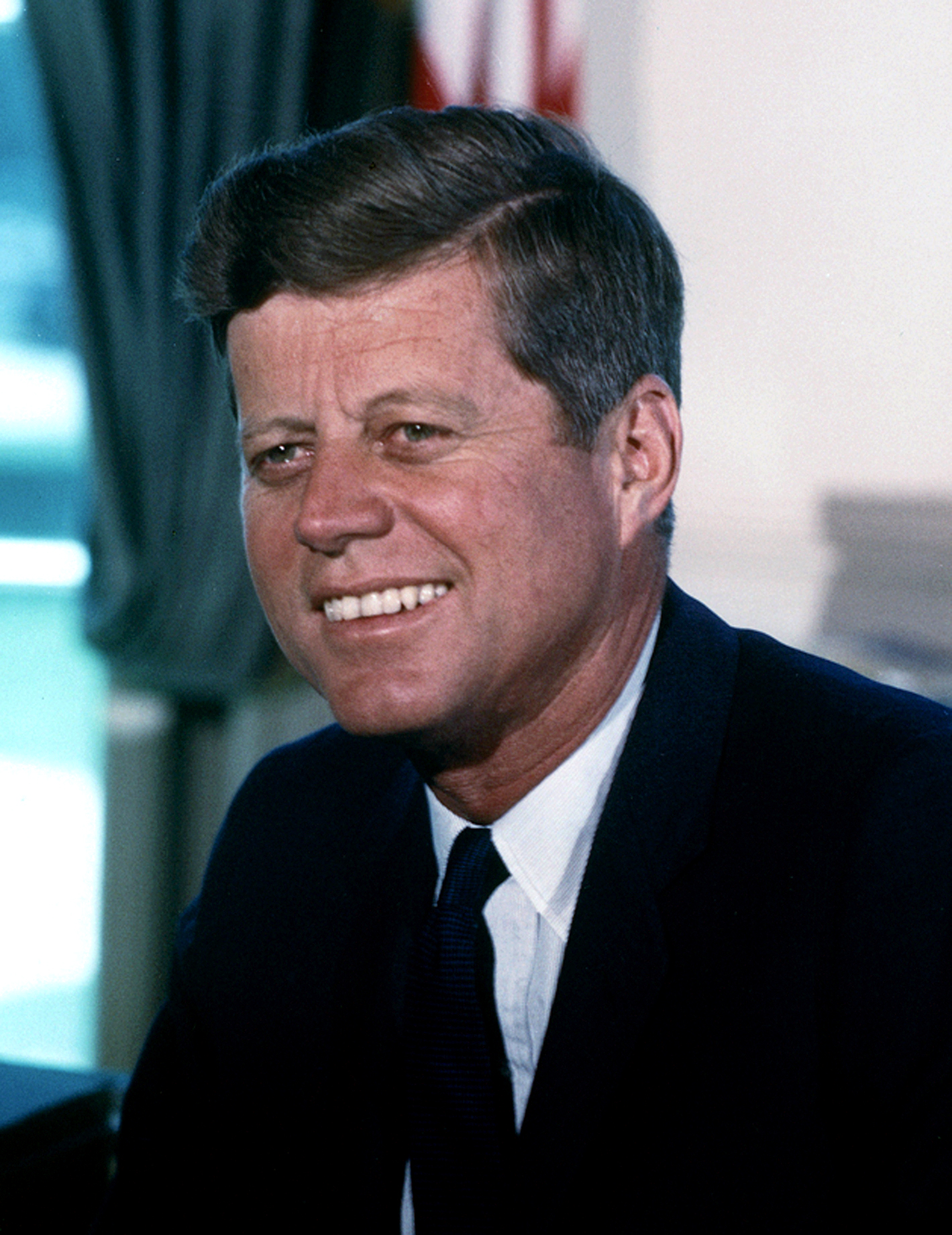
John Fitzgerald Kennedy, comunemente chiamato John F. Kennedy, John Kennedy o solo JFK, , è stato un politico statunitense e il 35º presidente degli Stati Uniti d'America.
Candidato del Partito Democratico, vinse le elezioni presidenziali del 1960 diventando il 35º presidente degli Stati Uniti d'America, carica che ha mantenuto dal 20 gennaio 1961 fino al suo assassinio nel 1963, quando gli subentrò il vicepresidente Lyndon B. Johnson.
Kennedy, di origine irlandese, noto anche con il diminutivo "Jack", è stato il primo presidente degli Stati Uniti d'America di religione cattolica. Fu anche il primo presidente statunitense a essere nato nel XX secolo e il più giovane a morire ricoprendo la carica . La sua breve presidenza, in epoca di guerra fredda, fu segnata da alcuni eventi molto rilevanti: la crisi di Berlino del 1961 con la costruzione del Muro, la corsa alla Luna, la conquista dello spazio, lo sbarco nella baia dei Porci, la crisi dei missili di Cuba, gli antefatti della guerra del Vietnam e l'affermarsi del movimento per i diritti civili degli afroamericani.
Kennedy fu assassinato il 22 novembre 1963 a Dallas, in Texas. Lee Harvey Oswald fu accusato dell'omicidio e fu a sua volta ucciso, due giorni dopo, da Jack Ruby, prima che potesse essere processato. La Commissione Warren concluse che Oswald aveva agito da solo; tuttavia nel 1979 la United States House Select Committee on Assassinations dichiarò che l'atto di Oswald era stato probabilmente frutto di una cospirazione. La questione se Oswald avesse o meno agito da solo rimane dibattuta, con l'esistenza di numerose teorie cospirazioniste. L'assassinio di Kennedy fu un evento focale nella storia degli Stati Uniti per l'impatto che ebbe sulla nazione e sulla politica del Paese. La figura di Kennedy continua tuttora a ricevere stima e apprezzamento.
“Perdona i tuoi nemici, ma non dimenticarti mai i loro nomi.”
Origine: Citato in Gino e Michele, Matteo Molinari, Le Formiche: anno terzo, Zelig Editore, 1995, § 1953.
“Non chiedete cosa possa fare il paese per voi: chiedete cosa potete fare voi per il paese.”
dal discorso inaugurale del proprio mandato, 20 gennaio 1961
dal discorso http://www.jfklibrary.org/Research/Ready-Reference/JFK-Speeches/Commencement-Address-at-American-University-June-10-1963.aspx alla American University, 10 giugno 1963
dal discorso http://www.jfklibrary.org/Research/Ready-Reference/JFK-Speeches/The-President-and-the-Press-Address-before-the-American-Newspaper-Publishers-Association.aspx presso l'Hotel Waldorf-Astoria di New York, 27 aprile 1961
19 maggio 1962; citato in Marilyn, p. 369
“La vittoria ha moltissimi padri, la sconfitta è orfana.”
Origine: Citato in Dizionario mondiale di Storia, Rizzoli Larousse, Milano, 2003, p. 656. ISBN 88-525-0077-4
dal discorso alla Rice University, 12 settembre 1962
“La guerra non ci si propone più come un'alternativa razionale.”
dal messaggio all'ONU del 25 settembre 1961
citato in Arthur Schlesinger Jr., I mille giorni di John F. Kennedy, p. 101
“Mio padre [Joseph P. Kennedy] mi ha detto che tutti gli uomini di affari sono figli di puttana.”
citato in Edward Klein, La maledizione dei Kennedy, p. 64
Origine: Citato in Giovanni Sabbatucci e Vittorio Vidotto, <nowiki></nowiki>Il mondo contemporaneo. Dal 1848 a oggi<nowiki></nowiki>, Editori Laterza, Roma, 2008, <nowiki>ISBN 978-88-420-8741-0</nowiki>, pag. 542
dal discorso http://www.jfklibrary.org/Research/Ready-Reference/JFK-Speeches/Remarks-at-the-Rudolph-Wilde-Platz-June-26-1963.aspx a Berlino Ovest, 26 giugno 1963
“Il conformismo è il carceriere della libertà e il nemico dello sviluppo.”
dal messaggio all'ONU http://www.jfklibrary.org/Research/Ready-Reference/JFK-Speeches/Address-Before-the-General-Assembly-of-the-United-Nations-September-25-1961.aspx del 25 settembre 1961
“Io sono un idealista senza illusioni.”
Origine: Citato in Enzo Biagi, Buoni cattivi: esiste ancora una morale valida per tutti?, BUR, Milano, 1991, p. 15. ISBN 88-17-11549-5
“L'umanità deve porre fine alla guerra, o la guerra porrà fine all'umanità.”
dal messaggio all'ONU del 25 settembre 1961
“L'uomo è ancora il più straordinario dei computer.”
da un discorso del 21 maggio 1963
citato in Guida completa a Frank Sinatra
dalla tesi di laurea di Kennedy, pubblicata come saggio dal titolo Why England Slept nel 1940; citato in Arthur Schlesinger Jr., I mille giorni di John F. Kennedy, p. 105
dal diario tenuto durante il suo soggiorno in Europa nel 1938, citato in Arthur Schlesinger Jr., I mille giorni di John F. Kennedy, p. 102
“Non voglio la capote sulla macchina, tutte la texane devono vedere che bella ragazza è Jackie.”
Origine: Detto al suo collaboratore più stretto, Kenneth O'Donnell, a proposito della sua visita alla città texana di Dallas, che avrebbe avuto luogo di lì a due giorni. Citato in Edward Klein, La maledizione dei Kennedy, p. 183.
“Le migliori manovre strategiche avvengono sempre per caso.”
citato in Arthur Schlesinger Jr., I mille giorni di John F. Kennedy, p. 93
Citato in Edward Klein, La maledizione dei Kennedy, p. 31
“Cuba non deve essere abbandonata ai comunisti.”
citato in AA.VV., Il libro della storia, traduzione di Roberto Sorgo, Gribaudo, 2018, p. 315. ISBN 9788858016572
1963, Address at Vanderbilt University
"Remarks upon signing the Maternal and Child Health and Mental Retardation Planning Bill (434)" (24 October 1963)]
1963
1963, American University speech
1963, Civil Rights Address
1961, Address at the University of Washington
Address at a White House dinner honoring Nobel Prize winners (29 April 1962), quoted in The White House Diary, at the JFK Library http://www.jfklibrary.org/white%20house%20diary/1962/April/29 <br class="br">1962
Quoted in Bill Adler, "The Presidency," The Wit of President Kennedy (1964).
[JFK was speaking]...To a group of women delegates to the United Nations who had suggested that there might one day be a woman President.
Attributed
1960, Speech to the Greater Houston Ministerial Association
“A wall is a hell of a lot better than a war.”
Upon hearing about the construction of the Berlin Wall, as quoted in "Savage century" in "The Sunday Times (28 May 2006) http://entertainment.timesonline.co.uk/tol/arts_and_entertainment/books/non-fiction/article724547.ece <br class="br">Attributed
1961, UN speech
“The quality and spirit of our own society must justify and support our efforts abroad.”
1963, American University speech
1963, Remarks Intended for Delivery to the Texas Democratic State Committee in the Municipal Auditorium in Austin
Remarks at the United Negro College Fund, Indianapolis, Indiana (12 April 1959) http://www.jfklibrary.org/Research/Research-Aids/Ready-Reference/JFK-Quotations.aspx; Box 902, Senate Speech Files, Pre-Presidential Papers, John F. Kennedy Papers, John F. Kennedy Presidential Library; also in Remarks at Valley Forge Country Club, Pennsylvania (29 October 1960), Box 914, Senate Speech Files, Pre-Presidential Papers, John F. Kennedy Papers, John F. Kennedy Presidential Library <br class="br">Pre-1960
1963, Address at Vanderbilt University
1963, Address at the Free University of Berlin
After visiting such Nazi strongholds as were found in Berchtesgaden and Kehlsteinhaus; Personal diary (1 August 1945); published in Prelude to Leadership (1995)
Pre-1960
“O God, thy sea is so great and my boat is so small.”
"Remarks in New York City at the Dedication of the East Coast Memorial to the Missing at Sea (203)" (23 May 1963) http://www.jfklibrary.org/Research/Research-Aids/Ready-Reference/JFK-Quotations.aspx Quoting an old Breton fishermen's prayer that Admiral Rickover had inscribed on plaques that he gave to newly commissioned submarine captains. Rickover presented President Kennedy with one of these plaques, which sat on his desk in the Oval Office. http://www.jfklibrary.org/Research/Research-Aids/Ready-Reference/JFK-Quotations.aspx <br class="br">1963
1960, Speech to the Greater Houston Ministerial Association
1962, Address at Independence Hall
1961, Berlin Crisis speech
President Kennedy's 13th News Conferences on June 28, 1961 John Source: F. Kennedy Presidential Library & Museum http://www.jfklibrary.org/Research/Research-Aids/Ready-Reference/Press-Conferences/News-Conference-13.aspx <br class="br">1961
1960, Sport at the New Frontier: The Soft American
1963, Third State of the Union Address
Third Nixon-Kennedy Presidential Debate (13 October 1960)
1960
1963, President John F. Kennedy's last formal speech and public words
1963, Civil Rights Address
Speech at the Coliseum, Raleigh, North Carolina" (17 September 1960) http://www.presidency.ucsb.edu/ws/?pid=74076 <br class="br">1960
Special message to the Congress on National Health Needs (65)" (27 February 1962) http://www.jfklibrary.org/Research/Research-Aids/Ready-Reference/JFK-Quotations.aspx <br class="br">1962


