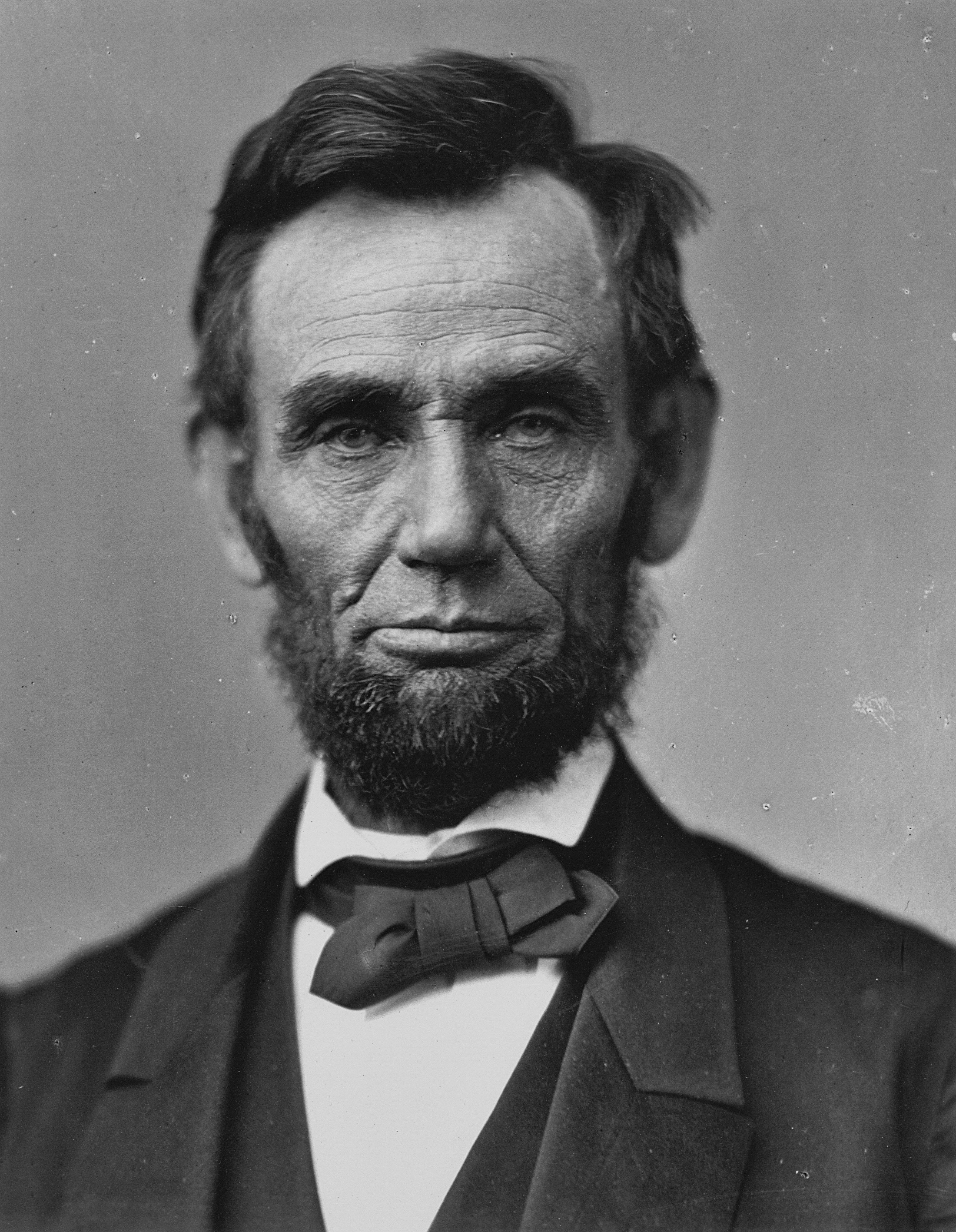
Variante: Quando faccio bene mi sento bene. Quando faccio male mi sento male. Questa è la mia religione.
Abraham Lincoln: 654 citazioni122 Mi piace
Abraham Lincoln frasi celebri
“La miglior cosa del futuro è che arriva un giorno alla volta.”
Origine: Citato in Focus, n. 113, p. 129
Questa traduzione è in attesa di revisione. È corretto?
Frasi sulla vita di Abraham Lincoln
Abraham Lincoln Frasi e Citazioni
Origine: Da Discorso a Clinton, 1858.
Better to remain silent and be thought a fool than to speak and remove all doubt.<br>[Citazione errata] La prima attribuzione ad Abraham Lincoln si trova nel Golden Book magazine del novembre 1931. La citazione è stata attribuita anche a Mark Twain e in misura minore a Confucio, John Maynard Keynes e Arthur Burns. Inoltre diversi proverbi esprimono un concetto simile, tra questi ne va ricordato uno incluso nel Libro dei Proverbi della Bibbia: «Anche lo stolto, se tace, passa per saggio | e, se tien chiuse le labbra, per intelligente.». In realtà la citazione sembrerebbe appartenere a Maurice Switzer, infatti una prima traccia di questa frase si ritrova proprio nel suo libro, Mrs. Goose, Her Book del 1907. La frase viene citata anche da Lisa nel decimo episodio della quarta stagione de I Simpson. <br class="br">Attribuite <br class="br">Variante: Meglio tacere e dare l'impressione di essere stupidi, piuttosto che parlare e togliere ogni dubbio! <br class="br">Origine: Cfr. Better to Remain Silent and Be Thought a Fool than to Speak and Remove All Doubt http://quoteinvestigator.com/2010/05/17/remain-silent/, QuoteInvestigator.com, 17 maggio 2010.
“Nessuno ha una memoria tanto buona da poter essere un perfetto bugiardo.”
Origine: Citato in Selezione dal Redear's Digest, dicembre 1962.
Origine: Citato in John D. Barrow, I numeri dell'universo, Mondadori, 2004.
Origine: Lincoln Abraham Senate document 23, Page 91. 1865.
Origine: Citato in Aldo Grasso, Il vizio antico, fuga dal carro perdente, Corriere della Sera, 11 dicembre 2016, p. 1.
Questa traduzione è in attesa di revisione. È corretto?
“Io credo che il più grande dono che Dio ha fatto all'umanità sia la Bibbia.”
Origine: Da The Collected Works of Abraham Lincoln (Rutgers University Press, 1953), ed. Roy P. Basler, volume VII, p. 542.
Origine: Citato in AA.VV., Il libro degli aforismi, Gribaudo, Milano, 2011, p. 268 http://books.google.it/books?id=PJKwfd6ulGMC&pg=PA268. Citato anche in Giuliana Rotondi, Tutti i gatti del presidente, Focus Storia , n. 70, agosto 2012, p. 61: «La religione di un uomo non è gran cosa se non ne traggono beneficio anche il cane e il gatto».
Origine: Dalla lettera del 4 aprile 1864 ad Albert G. Hodges, editore del Frankfort, Kentucky, Commonwealth (riportando la loro conversazione del 26 marzo 1864). Manuscript at The Library of Congress http://www.loc.gov/exhibits/treasures/trt027.html; anche in The Collected Works of Abraham Lincoln, ed. Roy P. Basler, volume VII, p. 281.
Questa traduzione è in attesa di revisione. È corretto?
Questa traduzione è in attesa di revisione. È corretto?
Questa traduzione è in attesa di revisione. È corretto?
Questa traduzione è in attesa di revisione. È corretto?
Questa traduzione è in attesa di revisione. È corretto?
Questa traduzione è in attesa di revisione. È corretto?
Abraham Lincoln: Frasi in inglese
1850s, The House Divided speech (1858)
1860s, Speech in Independence Hall (1861)
In this famous statement, Lincoln is quoting the response of Jesus Christ to those who accused him of being able to cast out devils because he was empowered by the Prince of devils, recorded in Matthew 12:25: "And Jesus knew their thoughts, and said unto them, Every kingdom divided against itself is brought to desolation; and every city or house divided against itself shall not stand".
1850s, The House Divided speech (1858)
1860s, Second Inaugural Address (1865)
“He can compress the most words into the smallest ideas of any man I ever met.”
Attributed in Lincoln the Lawyer (1906) by Frederick Trevor Hill — Hill noted that he could find no record of whom Lincoln was insulting.
Posthumous attributions
“How many legs does a dog have, if you call a tail a leg?”
His collected works contain no riddle about dog legs, but George W. Julian recounts Lincoln using a similar story about a calf in Reminiscences of Abraham Lincoln by distinguished men of his time (1909), p. 241: "There are strong reasons for saying that he doubted his right to emancipate under the war power, and he doubtless meant what he said when he compared an Executive order to that effect to 'the Pope’s Bull against the comet.' In discussing the question, he used to liken the case to that of the boy who, when asked how many legs his calf would have if he called its tail a leg, replied, 'Five,' to which the prompt response was made that calling the tail a leg would not make it a leg."
A very similar riddle about cow legs was also circulated by Edward Josiah Stearns' Notes on Uncle Tom's Cabin (1853), p. 46: '"Father," said one of the rising generation to his paternal progenitor, "if I should call this cow's tail a leg, how many legs would she have?" "Why five, to be sure." "Why, no, father; would calling it a leg make it one?"'
Misattributed
“Marriage is neither heaven nor hell, it is simply purgatory.”
Attributed in Henry Louis Mencken (1942), A New Dictionary of Quotations
Misattributed
1860s, Speeches to Ohio Regiments (1864), Speech to the One Hundred Sixty-fourth Ohio Regiment
1860s, Allow the humblest man an equal chance (1860)
Contesto: If I saw a venomous snake crawling in the road, any man would say I might seize the nearest stick and kill it; but if I found that snake in bed with my children, that would be another question. I might hurt the children more than the snake, and it might bite them. Much more if I found it in bed with my neighbor's children, and I had bound myself by a solemn compact not to meddle with his children under any circumstances, it would become me to let that particular mode of getting rid of the gentleman alone. But if there was a bed newly made up, to which the children were to be taken, and it was proposed to take a batch of young snakes and put them there with them, I take it no man would say there was any question how I ought to decide!
Contesto: If I saw a venomous snake crawling in the road, any man would say I might seize the nearest stick and kill it; but if I found that snake in bed with my children, that would be another question. I might hurt the children more than the snake, and it might bite them. Much more if I found it in bed with my neighbor's children, and I had bound myself by a solemn compact not to meddle with his children under any circumstances, it would become me to let that particular mode of getting rid of the gentleman alone. But if there was a bed newly made up, to which the children were to be taken, and it was proposed to take a batch of young snakes and put them there with them, I take it no man would say there was any question how I ought to decide! That is just the case! The new Territories are the newly made bed to which our children are to go, and it lies with the nation to say whether they shall have snakes mixed up with them or not. It does not seem as if there could be much hesitation what our policy should be!
1860s, Fourth of July Address to Congress (1861)
As quoted in Recollections of Abraham Lincoln, 1847-1865 https://archive.org/details/recollectionsab00lamogoog (1895), by Ward Hill Lamon, p. 90 <br class="br">1860s
1860s, Speech to Germans at Cincinnati, Ohio (1861), Commercial version
On popular sovereignty; rejoinder in the Sixth Lincoln-Douglas Debate (13 October 1858); reported in The Collected Works of Abraham Lincoln, ed. Roy P. Basler (1953), vol. 3, p. 279
1850s, Lincoln–Douglas debates (1858)
1860s, Speech to Germans at Cincinnati, Ohio (1861), Commercial version
1860s, Letter to Horace Greeley (1862)
Contesto: My paramount object in this struggle is to save the Union, and is not either to save or to destroy slavery. If I could save the Union without freeing any slave I would do it, and if I could save it by freeing all the slaves I would do it; and if I could save it by freeing some and leaving others alone I would also do that. What I do about slavery, and the colored race, I do because I believe it helps to save the Union; and what I forbear, I forbear because I do not believe it would help to save the Union.
“The best way to get a bad law repealed is to enforce it.”
Attributed in A Dictionary of Thoughts (1908) by Tryon Edwards; this is earlier attributed to Theodore Roosevelt in Life of William McKinley (1901) by Samuel Fallows, and could be derived from the remarks of Ulysses S. Grant in his First Inaugural Address (4 March 1869): "I know no method to secure the repeal of bad or obnoxious laws so effective as their stringent execution".
Misattributed
“What is to be, will be, and no prayers of ours can arrest the decree.”
As quoted in The World's Sages, Thinkers and Reformers (1876) by D. M. Bennett
Posthumous attributions
1860s, Reply to an Emancipation Memorial (1862)
1830s, The Lyceum Address (1838)
Letter to William H Herndon (10 July 1848)
1840s
1860s, Speech at Hartford (1860)
These remarks in support of a government-regulated money supply were written by Gerry McGeer, who presented them as his interpretation of what Lincoln believed. [McGeer, Gerald Grattan, w:Gerald Grattan McGeer, The Conquest of Poverty, 5 - Lincoln, Practical Economist, http://heritech.com/pridger/lincoln/mcgeer/mcgeerv.htm, 2009-07-29, 1935, Garden City Press, Gardenvale, Quebec, 186ff]
Misattributed
1850s, Speech at Chicago (1858)
1860s, Speech in Independence Hall (1861)
1860s, First State of the Union address (1861)
1830s, The Lyceum Address (1838)
1860s, Speech at Hartford (1860)
Well, they've got the Union dissolved up to the ankle, but no farther!
1860s, Speech at Hartford (1860)
Fifth Lincoln-Douglas Debate http://www.bartleby.com/251/pages/page328.html (7 October 1858), regarding Stephen A. Douglas and the antebellum Democratic Party's claim that African Americans were exempt from Thomas Jefferson's assertion that all men were created equal. <br class="br">1850s, Lincoln–Douglas debates (1858) <br class="br">Contesto: The Judge has alluded to the Declaration of Independence, and insisted that negroes are not included in that Declaration; and that it is a slander upon the framers of that instrument, to suppose that negroes were meant therein; and he asks you: Is it possible to believe that Mister Jefferson, who penned the immortal paper, could have supposed himself applying the language of that instrument to the negro race, and yet held a portion of that race in slavery? Would he not at once have freed them? I only have to remark upon this part of the Judge's speech, and that, too, very briefly, for I shall not detain myself, or you, upon that point for any great length of time, that I believe the entire records of the world, from the date of the Declaration of Independence up to within three years ago, may be searched in vain for one single affirmation, from one single man, that the negro was not included in the Declaration of Independence; I think I may defy Judge Douglas to show that he ever said so, that Washington ever said so, that any President ever said so, that any member of Congress ever said so, or that any living man upon the whole earth ever said so, until the necessities of the present policy of the Democratic Party, in regard to slavery, had to invent that affirmation. And I will remind Judge Douglas and this audience that while Mister Jefferson was the owner of slaves, as undoubtedly he was, in speaking upon this very subject he used the strong language that “he trembled for his country when he remembered that God was just;” and I will offer the highest premium in my power to Judge Douglas if he will show that he, in all his life, ever uttered a sentiment at all akin to that of Jefferson.


