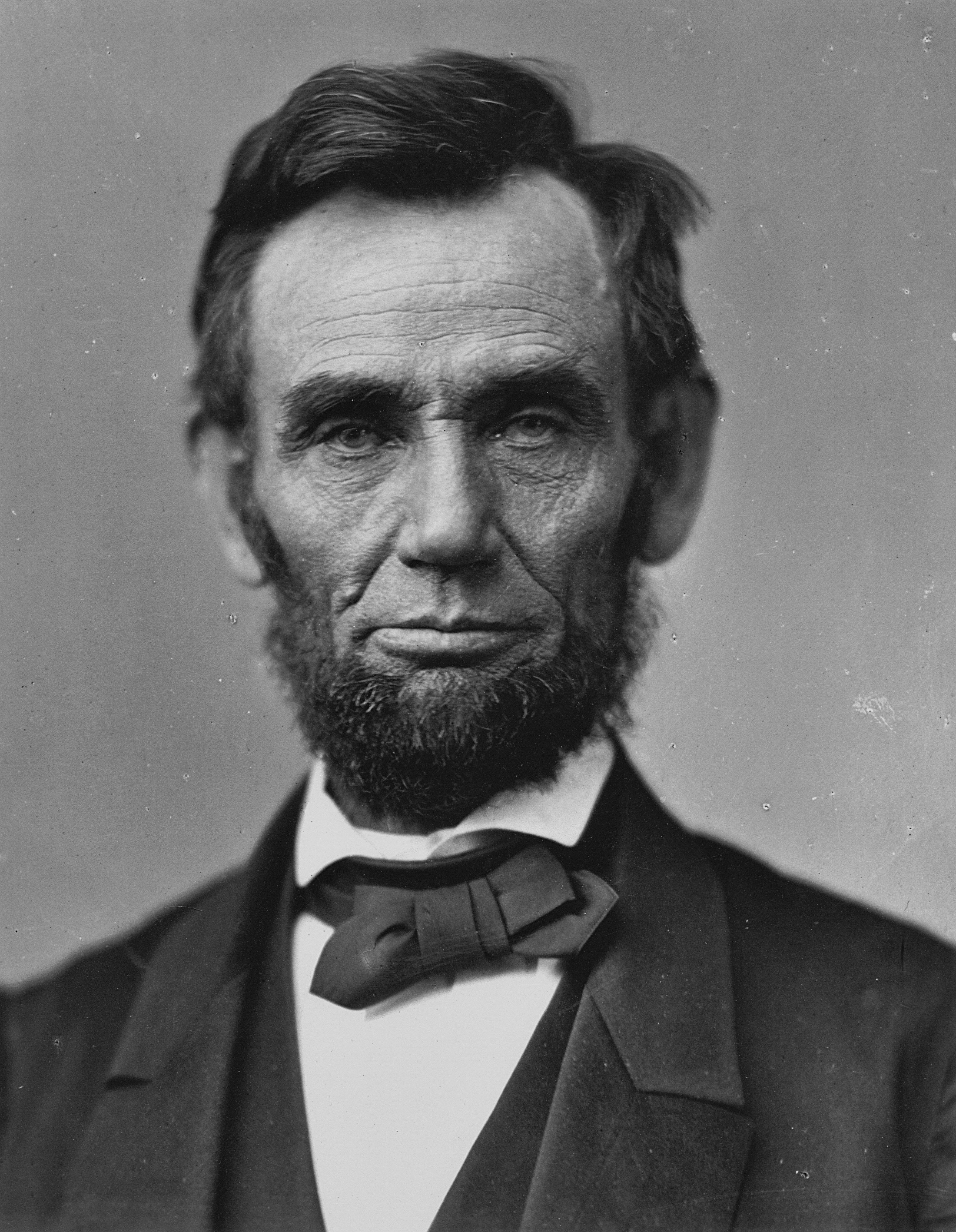
Variante: Quando faccio bene mi sento bene. Quando faccio male mi sento male. Questa è la mia religione.
Abraham Lincoln: 654 citazioni122 Mi piace
Abraham Lincoln frasi celebri
“La miglior cosa del futuro è che arriva un giorno alla volta.”
Origine: Citato in Focus, n. 113, p. 129
Questa traduzione è in attesa di revisione. È corretto?
Frasi sulla vita di Abraham Lincoln
Abraham Lincoln Frasi e Citazioni
Origine: Da Discorso a Clinton, 1858.
Better to remain silent and be thought a fool than to speak and remove all doubt.<br>[Citazione errata] La prima attribuzione ad Abraham Lincoln si trova nel Golden Book magazine del novembre 1931. La citazione è stata attribuita anche a Mark Twain e in misura minore a Confucio, John Maynard Keynes e Arthur Burns. Inoltre diversi proverbi esprimono un concetto simile, tra questi ne va ricordato uno incluso nel Libro dei Proverbi della Bibbia: «Anche lo stolto, se tace, passa per saggio | e, se tien chiuse le labbra, per intelligente.». In realtà la citazione sembrerebbe appartenere a Maurice Switzer, infatti una prima traccia di questa frase si ritrova proprio nel suo libro, Mrs. Goose, Her Book del 1907. La frase viene citata anche da Lisa nel decimo episodio della quarta stagione de I Simpson. <br class="br">Attribuite <br class="br">Variante: Meglio tacere e dare l'impressione di essere stupidi, piuttosto che parlare e togliere ogni dubbio! <br class="br">Origine: Cfr. Better to Remain Silent and Be Thought a Fool than to Speak and Remove All Doubt http://quoteinvestigator.com/2010/05/17/remain-silent/, QuoteInvestigator.com, 17 maggio 2010.
“Nessuno ha una memoria tanto buona da poter essere un perfetto bugiardo.”
Origine: Citato in Selezione dal Redear's Digest, dicembre 1962.
Origine: Citato in John D. Barrow, I numeri dell'universo, Mondadori, 2004.
Origine: Lincoln Abraham Senate document 23, Page 91. 1865.
Origine: Citato in Aldo Grasso, Il vizio antico, fuga dal carro perdente, Corriere della Sera, 11 dicembre 2016, p. 1.
Questa traduzione è in attesa di revisione. È corretto?
“Io credo che il più grande dono che Dio ha fatto all'umanità sia la Bibbia.”
Origine: Da The Collected Works of Abraham Lincoln (Rutgers University Press, 1953), ed. Roy P. Basler, volume VII, p. 542.
Origine: Citato in AA.VV., Il libro degli aforismi, Gribaudo, Milano, 2011, p. 268 http://books.google.it/books?id=PJKwfd6ulGMC&pg=PA268. Citato anche in Giuliana Rotondi, Tutti i gatti del presidente, Focus Storia , n. 70, agosto 2012, p. 61: «La religione di un uomo non è gran cosa se non ne traggono beneficio anche il cane e il gatto».
Origine: Dalla lettera del 4 aprile 1864 ad Albert G. Hodges, editore del Frankfort, Kentucky, Commonwealth (riportando la loro conversazione del 26 marzo 1864). Manuscript at The Library of Congress http://www.loc.gov/exhibits/treasures/trt027.html; anche in The Collected Works of Abraham Lincoln, ed. Roy P. Basler, volume VII, p. 281.
Questa traduzione è in attesa di revisione. È corretto?
Questa traduzione è in attesa di revisione. È corretto?
Questa traduzione è in attesa di revisione. È corretto?
Questa traduzione è in attesa di revisione. È corretto?
Questa traduzione è in attesa di revisione. È corretto?
Questa traduzione è in attesa di revisione. È corretto?
Abraham Lincoln: Frasi in inglese
1850s, Address before the Wisconsin State Agricultural Society (1859)
Fragment, Notes for a Law Lecture (1 July 1850), cited in Abraham Lincoln: Complete Works, Comprising his Speeches, Letters, State Papers, and Miscellaneous Writings, Vol. 2 (1894)
1850s
“The negative principle that no law is free law, is not much known except among lawyers.”
1850s, Speech at Peoria, Illinois (1854)
Origine: 1860s, Fourth of July Address to Congress (1861)
First Debate with Stephen Douglas in the Lincoln-Douglas debates http://www.bartleby.com/251/ of the 1858 campaign for the U.S. Senate, at Ottawa, Illinois (21 August 1858). Lincoln later quoted himself and repeated this statement in his first Inaugural Address (4 March 1861) to emphasize that any acts of secession were over-reactions to his election. During the war which followed his election he eventually declared the Emancipation Proclamation, freeing the slaves in those states in rebellion against the union, arguably as a war measure rather than as an entirely political or moral initiative. <br class="br">1850s, Lincoln–Douglas debates (1858)
“Will springs from the two elements of moral sense and self-interest.”
Speech at Springfield, Illinois (26 June 1857)
1850s, Speech on the Dred Scott Decision (1857)
1860s, Letter to Alexander H. Stephens (1860)
Proclamation Calling Militia and Convening Congress on (15 April 1861) http://www.historyplace.com/lincoln/proc-1.htm <br class="br">1860s
Quoted by Charles A. Dana in his book [http://books.google.com/books?id=rxpCAAAAIAAJ&pg=PA274&q=elephant
1860s
1860s, Last public address (1865)
Fragments: Notes for Speeches, September 1859, The Collected Works of Abraham Lincoln (1953) Vol. III; No transcripts or reports exist indicating that he ever actually used this expression in any of his speeches.
1850s
1860s, First Inaugural Address (1861)
1860s, Emancipation Proclamation (1863)
1850s, Speech at Chicago (1858)
Letter to former Illinois Attorney General Usher F. Linder (20 February 1848)
1840s
1860s, Speeches to Ohio Regiments (1864), Speech to One Hundred Forty-eighth Ohio Regiment (1864)
1860s, A Short Autobiography (1860)
Remarks at Bloomington, Illinois (21 November 1860); published in The Collected Works of Abraham Lincoln (1953) by Roy P. Basler, vol. 4, p. 143
1860s
Letter to Judge J. A. Wakefield, after the death of Lincoln's son Willie in 1862, as cited in Abraham Lincoln: was he a Christian? (1893), p. 292 http://books.google.com/books?id=x8BHAAAAIAAJ&pg=PA292&dq=%22unsoundness+of+the+Christian+scheme%22, by John Eleazer Remsburg. Historian Merrill Daniel Peterson states in Lincoln in American Memory (1994), p. 227 http://books.google.com/books?id=D_FjY_ARcGoC&lpg=PA227&vq=%22Judge%20J.%20A.%20Wakefield%22&pg=PA227, that the letter has never actually been produced to verify the statement and that there's no correspondence with Wakefield noted in the Collected Works. <br class="br">Misattributed
Canto I
1840s, My Childhood's Home I See Again (1844 - 1846)
To Duff Green, aboard the USS Malvern http://www.thelincolnlog.org/Results.aspx?type=CalendarDay&day=1865-04-04&r=L0NhbGVuZGFyWWVhci5hc3B4P3llYXI9MTg2NSZyPUwwTmhiR1Z1WkdGeUxtRnpjSGc9 (4 April 1865), as quoted in Incidents and Anecdotes of the Civil War https://archive.org/details/incidentsanecdot00portiala (1885), by David Dixon Porter, p. 308 <br class="br">1860s
1860s, Last public address (1865)
1850s, Address before the Wisconsin State Agricultural Society (1859)
Upon proclaiming a National Fast Day (30 March 1863)
1860s
This anecdote apparently dates from 1864 Massachusetts Sunday School Teachers' Convention. <br class="br">This has been portrayed to have been Lincoln's "reply" to an unnamed Illinois clergyman when asked if he loved Jesus, as quoted in The Lincoln Memorial Album — Immortelles (1882) edited by Osborn H. Oldroyd [New York: G.W. Carleton & Co. p. 366 http://books.google.com/books?id=pX5DEhCM9M0C&pg=RA10-PA366&lpg=RA10-PA366&dq=%22and+saw+the+graves+of+thousands+of+our+soldiers%22&source=web&ots=Alddnu8KL8&sig=IhhhPHp6tuB7FoiRI8c71w5NUH4#PRA10-PA365,M1 <br class="br">This incident must have appeared in print immediately after Lincoln's death, for I find it quoted in memorial addresses of May, 1865. Mr Oldroyd has endeavored to learn for me in what paper he found it and on whose authority it rests, but without result. He does not remember where he found it. It is inherently improbable, and rests on no adequate testimony. It ought to be wholly disregarded. The earliest reference I have found to the story in which Lincoln is alleged to have said to an unnamed Illinois minister, "I do love Jesus" is in a sermon preached in the Baptist Church of Oshkosh, Wisconsin, April 19, 1865, by Rev. W. W. Whitcomb, which was published in the Oshkosh Northwestern, April 21, 1865, and in 1907 issued in pamphlet form by John E. Burton. <br class="br">William Eleazar Barton (1920) The Soul of Abraham Lincoln http://books.google.com/books?id=UDEOAAAAIAAJ&pg=RA1-PA208&lpg=RA1-PA208&dq=%22and+saw+the+graves+of+thousands+of+our+soldiers%22&source=web&ots=kDphIXKsy-&sig=GclPy5wecnvSuGHYO2R1bhb6lUQ. Further discussion appears in They Never Said It (1989) by Paul F. Boller & John George, p. 91. <br class="br">Disputed
Alledgedly from a speech to the Illinois House of Representatives (18 December 1840) its called "a remarkable piece of spurious Lincolniana" by Merrill D. Peterson: Lincoln in American Memory. Oxford UP 1995, books.google https://books.google.de/books?id=EADk9ZIMJXEC&q=prohibitory#v=page. Cf.Spurious archive.org https://archive.org/details/abrahamlincolnqulinc_41 and Harry Miller Lydenberg: Lincoln and Prohibition, Blazes on a Zigzag Trail. Proceedings Of The American Antiquarian Society, No. 1/1952 pdf http://www.americanantiquarian.org/proceedings/44807229.pdf. <br class="br">Misattributed
1860s, Speech at Hartford (1860)
1860s, Reply to an Emancipation Memorial (1862)
1860s, Speeches to Ohio Regiments (1864), Speech to the One Hundred Sixty-sixth Ohio Regiment


