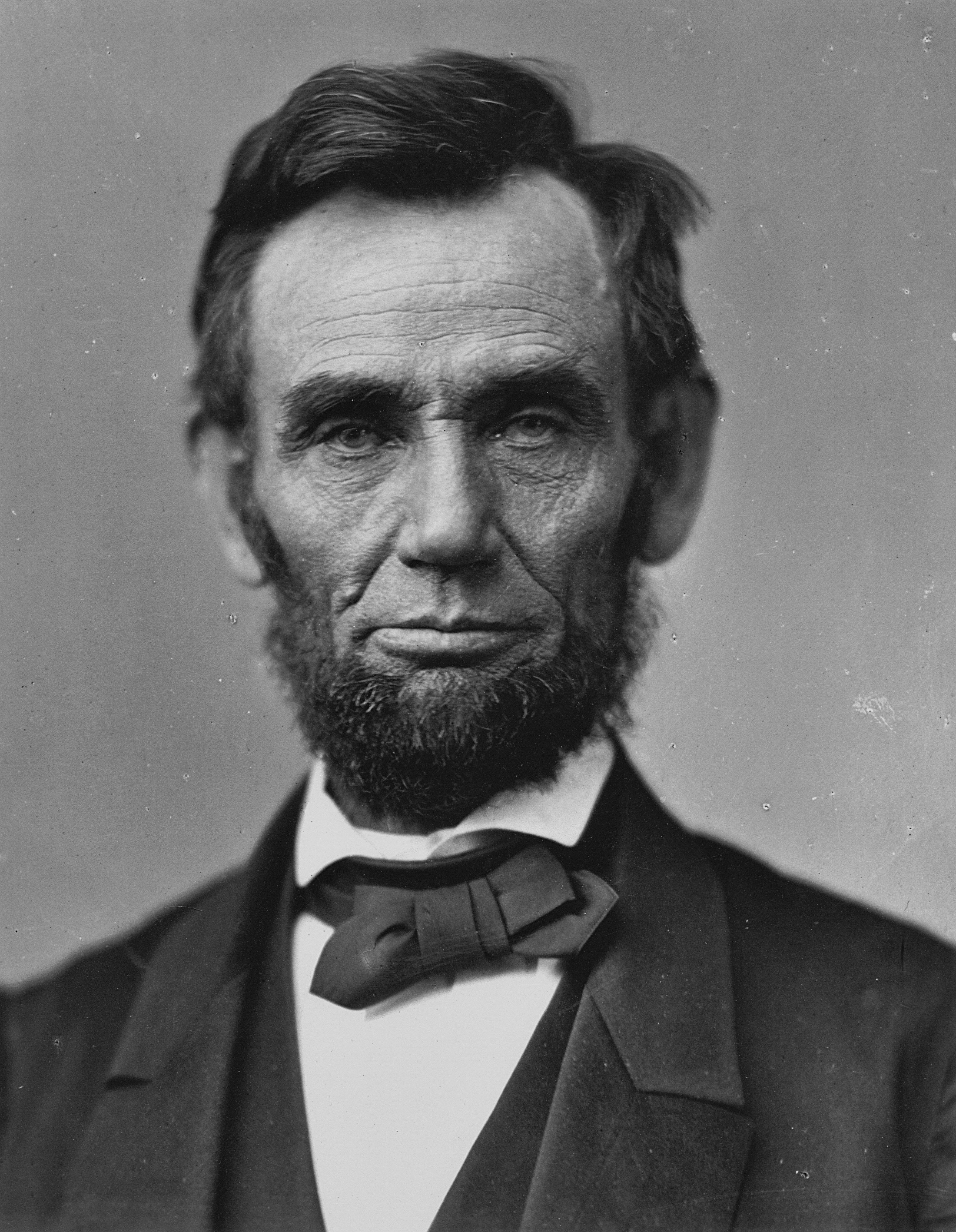
Variante: Quando faccio bene mi sento bene. Quando faccio male mi sento male. Questa è la mia religione.
Abraham Lincoln: 654 citazioni122 Mi piace
Abraham Lincoln frasi celebri
“La miglior cosa del futuro è che arriva un giorno alla volta.”
Origine: Citato in Focus, n. 113, p. 129
Questa traduzione è in attesa di revisione. È corretto?
Frasi sulla vita di Abraham Lincoln
Abraham Lincoln Frasi e Citazioni
Origine: Da Discorso a Clinton, 1858.
Better to remain silent and be thought a fool than to speak and remove all doubt.<br>[Citazione errata] La prima attribuzione ad Abraham Lincoln si trova nel Golden Book magazine del novembre 1931. La citazione è stata attribuita anche a Mark Twain e in misura minore a Confucio, John Maynard Keynes e Arthur Burns. Inoltre diversi proverbi esprimono un concetto simile, tra questi ne va ricordato uno incluso nel Libro dei Proverbi della Bibbia: «Anche lo stolto, se tace, passa per saggio | e, se tien chiuse le labbra, per intelligente.». In realtà la citazione sembrerebbe appartenere a Maurice Switzer, infatti una prima traccia di questa frase si ritrova proprio nel suo libro, Mrs. Goose, Her Book del 1907. La frase viene citata anche da Lisa nel decimo episodio della quarta stagione de I Simpson. <br class="br">Attribuite <br class="br">Variante: Meglio tacere e dare l'impressione di essere stupidi, piuttosto che parlare e togliere ogni dubbio! <br class="br">Origine: Cfr. Better to Remain Silent and Be Thought a Fool than to Speak and Remove All Doubt http://quoteinvestigator.com/2010/05/17/remain-silent/, QuoteInvestigator.com, 17 maggio 2010.
“Nessuno ha una memoria tanto buona da poter essere un perfetto bugiardo.”
Origine: Citato in Selezione dal Redear's Digest, dicembre 1962.
Origine: Citato in John D. Barrow, I numeri dell'universo, Mondadori, 2004.
Origine: Lincoln Abraham Senate document 23, Page 91. 1865.
Origine: Citato in Aldo Grasso, Il vizio antico, fuga dal carro perdente, Corriere della Sera, 11 dicembre 2016, p. 1.
Questa traduzione è in attesa di revisione. È corretto?
“Io credo che il più grande dono che Dio ha fatto all'umanità sia la Bibbia.”
Origine: Da The Collected Works of Abraham Lincoln (Rutgers University Press, 1953), ed. Roy P. Basler, volume VII, p. 542.
Origine: Citato in AA.VV., Il libro degli aforismi, Gribaudo, Milano, 2011, p. 268 http://books.google.it/books?id=PJKwfd6ulGMC&pg=PA268. Citato anche in Giuliana Rotondi, Tutti i gatti del presidente, Focus Storia , n. 70, agosto 2012, p. 61: «La religione di un uomo non è gran cosa se non ne traggono beneficio anche il cane e il gatto».
Origine: Dalla lettera del 4 aprile 1864 ad Albert G. Hodges, editore del Frankfort, Kentucky, Commonwealth (riportando la loro conversazione del 26 marzo 1864). Manuscript at The Library of Congress http://www.loc.gov/exhibits/treasures/trt027.html; anche in The Collected Works of Abraham Lincoln, ed. Roy P. Basler, volume VII, p. 281.
Questa traduzione è in attesa di revisione. È corretto?
Questa traduzione è in attesa di revisione. È corretto?
Questa traduzione è in attesa di revisione. È corretto?
Questa traduzione è in attesa di revisione. È corretto?
Questa traduzione è in attesa di revisione. È corretto?
Questa traduzione è in attesa di revisione. È corretto?
Abraham Lincoln: Frasi in inglese
1860s, Speech at Hartford (1860)
Well, they've got the Union dissolved up to the ankle, but no farther!
1860s, Speech at Hartford (1860)
1860s, Speech at Hartford (1860)
1860s, Speech at Hartford (1860)
1860s, Speech at Hartford (1860)
We stick to the policy of our fathers.
1860s, Speech at Hartford (1860)
1860s, Speech at Hartford (1860)
1860s, Speech at Hartford (1860)
1860s, Speech at Hartford (1860)
Origine: 1860s, Telegram to George B. McClellan (1862)
Origine: 1860s, On Democratic Government (1864)
Origine: 1860s, Interview with Alexander W. Randall and Joseph T. Mills (1864)
Origine: 1860s, Second State of the Union address (1862)
Origine: 1860s, Speech at Hartford (1860)
Contesto: When they get ready to settle it, we hope they will let us know. Public opinion settles every question here, any policy to be permanent must have public opinion at the bottom, something in accordance with the philosophy of the human mind as it is. The property basis will have its weight. The love of property and a consciousness of right or wrong have conflicting places in our organization, which often make a man's course seem crooks, his conduct a riddle.
“During my whole political life, I have loved and revered as a teacher and leader.”
Origine: Letter to Daniel Ullmann (1 February 1861); quoted in "Why Abraham Lincoln Was a Whig" by Daniel Walker Howe, The Journal of the Abraham Lincoln Association, Volume 16, Issue 1 (Winter 1995) http://quod.lib.umich.edu/j/jala/2629860.0016.105?view=text;rgn=main; also in We Have the War Upon Us: The Onset of the Civil War, November 1860-April 1861 (2013) by William J. Cooper, p. 72 http://books.google.com/books?id=meYLTCRlHaQC&pg=PA72&lpg=PA72&dq=Lincoln+%22I+have+loved+and+revered%22&source=bl&ots=A-QLTNlkSN&sig=F0MdGo6rkAVKc3tIQSs0Xp4AdSY&hl=en&sa=X&ei=fmpQUv22LpCi4APhj4HoDQ&ved=0CC8Q6AEwAQ#v=onepage&q=Lincoln%20%22I%20have%20loved%20and%20revered%22&f=false
Origine: 1850s, Autobiographical Sketch Written for Jesse W. Fell (1859)
“Fools rush in where angels fear to tread.”
Origine: 1850s, Speech at Peoria, Illinois (1854)
Contesto: At the hazard of being thought one of the fools of this quotation, I meet that argument — I rush in — I take that bull by the horns. I trust I understand and truly estimate the right of self-government. My faith in the proposition that each man should do precisely as he pleases with all which is exclusively his own lies at the foundation of the sense of justice there is in me. I extend the principle to communities of men as well as to individuals. I so extend it because it is politically wise, as well as naturally just: politically wise in saving us from broils about matters which do not concern us. Here, or at Washington, I would not trouble myself with the oyster laws of Virginia, or the cranberry laws of Indiana. The doctrine of self-government is right, — absolutely and eternally right, — but it has no just application as here attempted. Or perhaps I should rather say that whether it has such application depends upon whether a negro is not or is a man. If he is not a man, in that case he who is a man may as a matter of self-government do just what he pleases with him.
But if the negro is a man, is it not to that extent a total destruction of self-government to say that he too shall not govern himself. When the white man governs himself, that is self-government; but when he governs himself and also governs another man, that is more than self-government — that is despotism. If the negro is a man, why then my ancient faith teaches me that "all men are created equal," and that there can be no moral right in connection with one man's making a slave of another.


