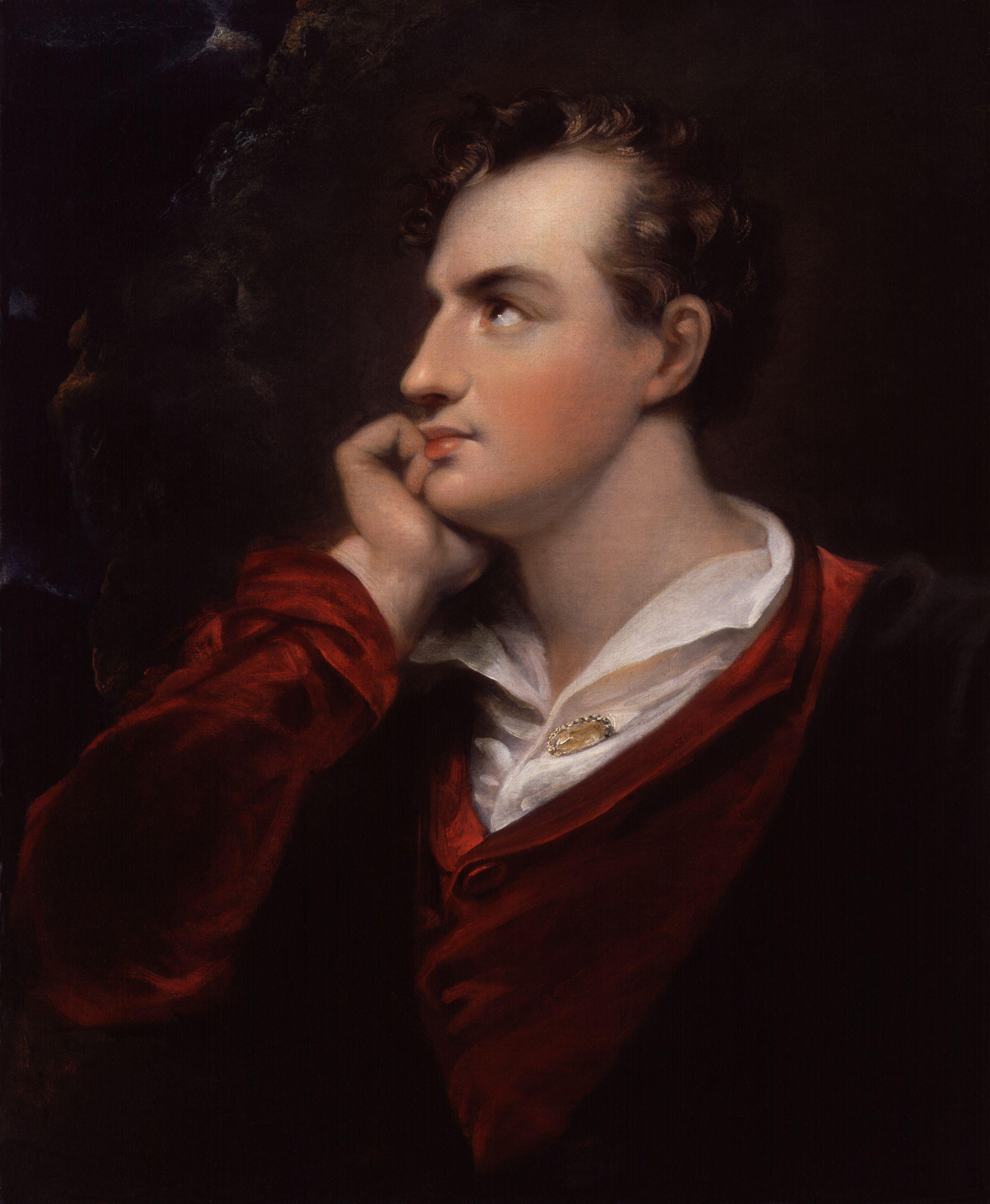

George Gordon Byron: 267 citazioni68 Mi piace
George Gordon Byron frasi celebri
Frasi sull'amore di George Gordon Byron
Questa traduzione è in attesa di revisione. È corretto?
Origine: Da So we'll go no more a-roving, in Poesie, 1817
Origine: Citato in Tomba di Giulietta http://www.verona.com/index.cfm?Page=Guida&section=luoghi&id=177, Notiziario BPV, numero 2, anno 1995.
Frasi sulla vita di George Gordon Byron
Don Giovanni
Origine: Citato in Elena Spagnol, Citazioni, Garzanti, 2003.
Origine: Da Il sogno, capitolo I
Questa traduzione è in attesa di revisione. È corretto?
George Gordon Byron Frasi e Citazioni
“Il ricordo del piacere non è più piacere. Il ricordo del dolore è ancora dolore.”
Origine: Da Marin Faliero doge di Venezia
“Chi ha da fare non ha tempo per le lacrime.”
Origine: Da I due Foscari, Atto IV, Scena 1
“Oh Roma! mia patria! città dell'anima!”
IV canto
Il pellegrinaggio del giovane Aroldo
“Il "buon tempo andato"… il tempo è sempre buono quand'è andato.”
Origine: Da L'età del bronzo
“Non v'è nulla, senza dubbio, che calmi lo spirito come il rum e la vera religione.”
Origine: Citato in Focus, n. 94, p. 168.
canto IV, st. 1
Il pellegrinaggio del giovane Aroldo
“Più riposo non arreca il sonno che il piacere più non sazia.”
George Gordon Byron libro Il corsaro
libro Il corsaro
Un vaso d'alabastro illuminato dall'interno
Origine: Citato in Anthony Clifford Grayling, Il significato delle cose
“Nello sport puoi scegliere tra il piacere della vittoria e il piacere della sconfitta.”
Origine: Citato in Marco Pastonesi e Giorgio Terruzzi, Palla lunga e pedalare, Dalai Editore, 1992, p. 100, ISBN 88-8598-826-2.
Origine: Citato in Kay Redfield Jamison, Toccato dal fuoco, traduzione di A. Serra, TEA, 2009, cap. 1, p. 18.
Origine: Citato in André Maurois, La prima "Lady" stregata da Byron
“Il diavolo non ha al suo arco frecce che vadano dritto al cuore più di una bella voce.”
Origine: Citato in Leggendo qua e là..., La settimana enigmistica, N. 4370, p. 4.
Questa traduzione è in attesa di revisione. È corretto?
Un vaso d'alabastro illuminato dall'interno
Origine: Da A Thomas Moore, luglio 1817, in Pezzi domestici e altre poesie, traduzione di Cesare Dapino, Einaudi, Torino, 1986, p. 189. ISBN 88-06-59386-2
Questa traduzione è in attesa di revisione. È corretto?
George Gordon Byron: Frasi in inglese
The Prisoner of Chillon http://readytogoebooks.com/PC31.htm, st. 1 (1816).
“Folly loves the martyrdom of fame.”
Origine: Monody on the Death of Sheridan (1816), Line 68.
“Lord of himself,—that heritage of woe!”
Lara, Canto I, Stanza 2, reported in Bartlett's Familiar Quotations, 10th ed. (1919).
On This Day I Complete My Thirty-Sixth Year http://readytogoebooks.com/LP14.htm, st. 2 (1824).
Stanza 44.
Beppo (1818)
George Gordon Byron libro The Bride of Abydos
Canto I, stanza 6.
The Bride of Abydos (1813)
“Better to err with Pope, than shine with Pye.”
George Gordon Byron English Bards and Scotch Reviewers
Origine: English Bards and Scotch Reviewers (1809), Line 102.
“Hark! to the hurried question of despair:
"Where is my child?"—an echo answers, "Where?"”
George Gordon Byron libro The Bride of Abydos
Canto II, stanza 27; this can be compared to: I came to the place of my birth, and cried, "The friends of my youth, where are they?" And echo answered, "Where are they?", Anonymous Arabic manuscript
The Bride of Abydos (1813)
“Send me no more reviews of any kind. — I will read no more of evil or good in that line.”
Walter Scott has not read a review of himself for thirteen years.
Letter to his publisher, John Murray (3 November 1821).
Fare Thee Well http://readytogoebooks.com/LB-FTW46.htm, st. 1 (1816).
the horse was brought;<br>In truth, he was a noble steed,<br>A Tartar of the Ukraine breed,<br>Who look'd as though the speed of thought<br>Were in his limbs. <br class="br"> Mazeppa http://readytogoebooks.com/MZP21.htm (1819), stanza 9.
George Gordon Byron Sardanapalus
shall yet be happy.
Assyria is not all the earth—we'll find
A world out of our own — and be more bless'd
Than I have ever been, or thou, with all
An empire to indulge thee.
Act IV, scene 1.
Sardanapalus (1821)


