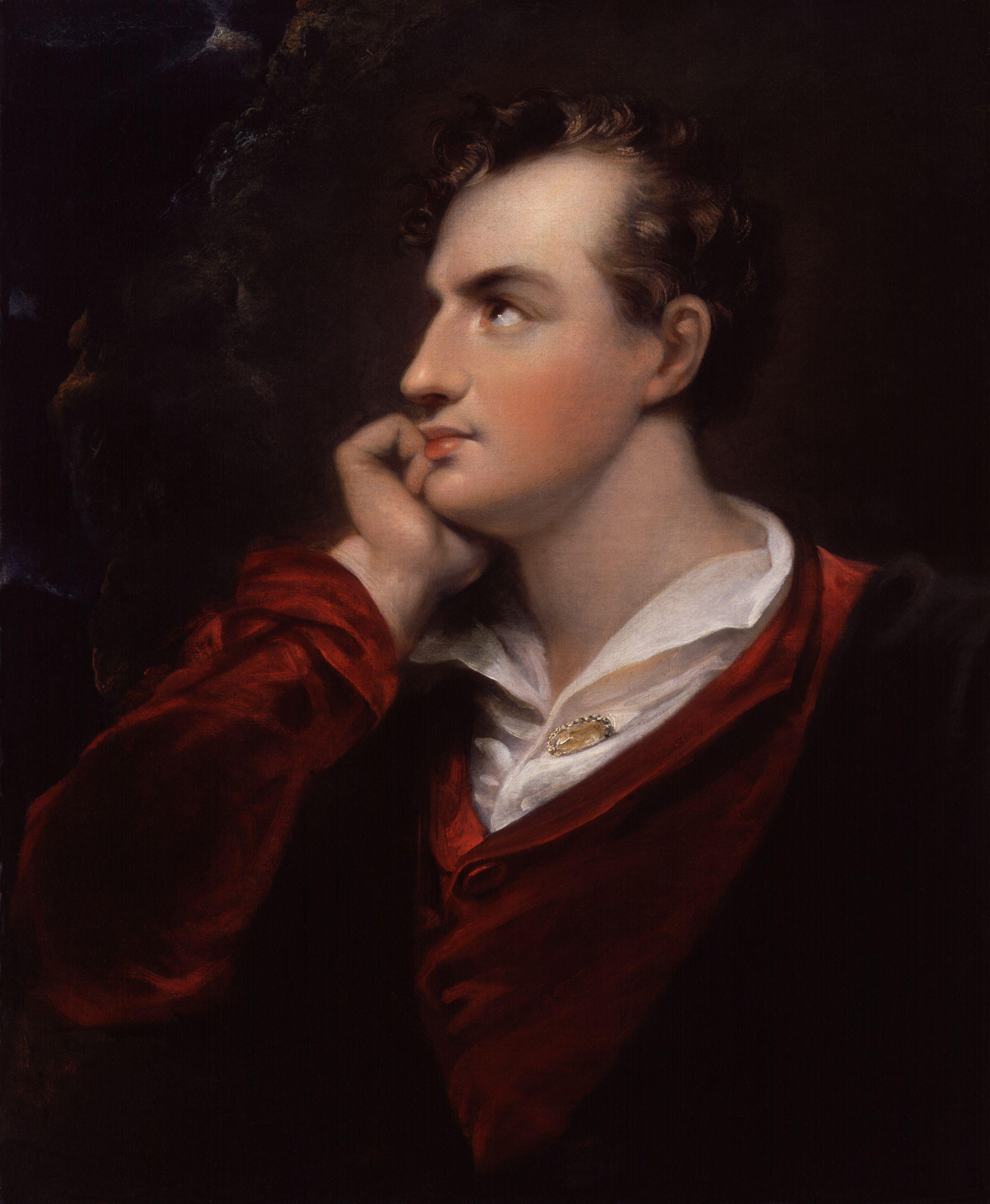

George Gordon Byron: 267 citazioni68 Mi piace
George Gordon Byron frasi celebri
Frasi sull'amore di George Gordon Byron
Questa traduzione è in attesa di revisione. È corretto?
Origine: Da So we'll go no more a-roving, in Poesie, 1817
Origine: Citato in Tomba di Giulietta http://www.verona.com/index.cfm?Page=Guida&section=luoghi&id=177, Notiziario BPV, numero 2, anno 1995.
Frasi sulla vita di George Gordon Byron
Don Giovanni
Origine: Citato in Elena Spagnol, Citazioni, Garzanti, 2003.
Origine: Da Il sogno, capitolo I
Questa traduzione è in attesa di revisione. È corretto?
George Gordon Byron Frasi e Citazioni
“Il ricordo del piacere non è più piacere. Il ricordo del dolore è ancora dolore.”
Origine: Da Marin Faliero doge di Venezia
“Chi ha da fare non ha tempo per le lacrime.”
Origine: Da I due Foscari, Atto IV, Scena 1
“Oh Roma! mia patria! città dell'anima!”
IV canto
Il pellegrinaggio del giovane Aroldo
“Il "buon tempo andato"… il tempo è sempre buono quand'è andato.”
Origine: Da L'età del bronzo
“Non v'è nulla, senza dubbio, che calmi lo spirito come il rum e la vera religione.”
Origine: Citato in Focus, n. 94, p. 168.
canto IV, st. 1
Il pellegrinaggio del giovane Aroldo
“Più riposo non arreca il sonno che il piacere più non sazia.”
George Gordon Byron libro Il corsaro
libro Il corsaro
Un vaso d'alabastro illuminato dall'interno
Origine: Citato in Anthony Clifford Grayling, Il significato delle cose
“Nello sport puoi scegliere tra il piacere della vittoria e il piacere della sconfitta.”
Origine: Citato in Marco Pastonesi e Giorgio Terruzzi, Palla lunga e pedalare, Dalai Editore, 1992, p. 100, ISBN 88-8598-826-2.
Origine: Citato in Kay Redfield Jamison, Toccato dal fuoco, traduzione di A. Serra, TEA, 2009, cap. 1, p. 18.
Origine: Citato in André Maurois, La prima "Lady" stregata da Byron
“Il diavolo non ha al suo arco frecce che vadano dritto al cuore più di una bella voce.”
Origine: Citato in Leggendo qua e là..., La settimana enigmistica, N. 4370, p. 4.
Questa traduzione è in attesa di revisione. È corretto?
Un vaso d'alabastro illuminato dall'interno
Origine: Da A Thomas Moore, luglio 1817, in Pezzi domestici e altre poesie, traduzione di Cesare Dapino, Einaudi, Torino, 1986, p. 189. ISBN 88-06-59386-2
Questa traduzione è in attesa di revisione. È corretto?
George Gordon Byron: Frasi in inglese
“Friendship may, and often does, grow into love, but love never subsides into friendship.”
Quoted by Marguerite Gardiner, Countess of Blessington in Conversations of Lord Byron with the Countess of Blessington http://books.google.com/books?id=w648AAAAYAAJ&q="Friendship+may+and+often+does+grow+into+love+but+love+never+subsides+into+friendship"&pg=PA179#v=onepage (1834).
“Sublime tobacco! which from east to west
Cheers the tar's labor or the Turkman's rest.”
The Island (1823), Canto II, Stanza 19.
“There was a laughing devil in his sneer.”
Canto I, stanza 9.
The Corsair (1814)
“That which I am, I am; I did not seek
For life, nor did I make myself.”
George Gordon Byron libro Cain
Cain (1821), Act III, sc. i.
St. 1.
So, We'll Go No More A-Roving (1817)
“And to his eye
There was but one beloved face on earth,
And that was shining on him.”
George Gordon Byron The Dream
Stanza 2.
The Dream (1816)
“Where the virgins are soft as the roses they twine,
And all, save the spirit of man, is divine?”
George Gordon Byron libro The Bride of Abydos
Canto I, stanza 1.
The Bride of Abydos (1813)
To Thomas Moore, reported in Bartlett's Familiar Quotations, 10th ed. (1919).
Letter to his publisher, John Murray (3 November 1821).
“Eat, drink, and love; the rest's not worth a fillip.”
George Gordon Byron Sardanapalus
Act I, scene 2 http://books.google.com/books?id=q4QR8v_hOigC&pg=PA249&lpg=PA249&dq=%22Eat,+drink,+and+love;+the+rest's+not+worth+a+fillip.%22&source=bl&ots=ey6M4uLNpl&sig=L0zlgXlw1OgHOZzN50sGeRHkc50&hl=en&ei=CJQ7TObKK4XbnAeE-LXlAw&sa=X&oi=book_result&ct=result&resnum=7&ved=0CC4Q6AEwBg#v=onepage&q=%22Eat%2C%20drink%2C%20and%20love%3B%20the%20rest's%20not%20worth%20a%20fillip.%22&f=false. <br class="br">Sardanapalus (1821)
“The best of prophets of the future is the past.”
Journal (28 January 1821).
“Tis pleasure, sure, to see one's name in print;
A book's a book, although there's nothing in 't.”
George Gordon Byron English Bards and Scotch Reviewers
Origine: English Bards and Scotch Reviewers (1809), Line 51.
“Shrine of the mighty! can it be
That this is all remains of thee?”
George Gordon Byron The Giaour
Origine: The Giaour (1813), Line 106.
“The blind old man of Scio's rocky isle.”
George Gordon Byron libro The Bride of Abydos
Canto II, stanza 2.
The Bride of Abydos (1813)
Song for the Luddites http://readytogoebooks.com/LB-Luddites.htm (1816).
George Gordon Byron Parisina
Parisina, Stanza 1, reported in Bartlett's Familiar Quotations, 10th ed. (1919).
George Gordon Byron libro Manfred
Act II, scene ii.
Manfred (1817)
Ode to Napoleon Bonaparte http://readytogoebooks.com/LB-Nap-06.htm, st. 29 (1814).
Age of Bronze, Stanza 3, reported in Bartlett's Familiar Quotations, 10th ed. (1919).
George Gordon Byron libro Hebrew Melodies
The Destruction of Sennacherib, st. 6.
Hebrew Melodies (1815)
George Gordon Byron libro Manfred
Act III, scene i.
Manfred (1817)
George Gordon Byron libro Manfred
Act I, scene ii.
Manfred (1817)
“The dust we tread upon was once alive.”
George Gordon Byron Sardanapalus
Act IV, scene 1.
Sardanapalus (1821)
George Gordon Byron The Giaour
Origine: The Giaour (1813), Line 1127.
“And both were young, and one was beautiful.”
George Gordon Byron The Dream
Stanza 2.
The Dream (1816)
George Gordon Byron libro Manfred
Act I, scene i.
Manfred (1817)
“What say you to such a supper with such a woman?”
Note to a Letter on Bowles's Strictures, reported in Bartlett's Familiar Quotations, 10th ed. (1919).
“The careful pilot of my proper woe.”
Epistle to Augusta, Stanza 3, reported in Bartlett's Familiar Quotations, 10th ed. (1919).


