
“[…] stimare tutti vuol dire non avere stima per nessuno.”
'Alceste'; atto I, scena I
Il misantropo
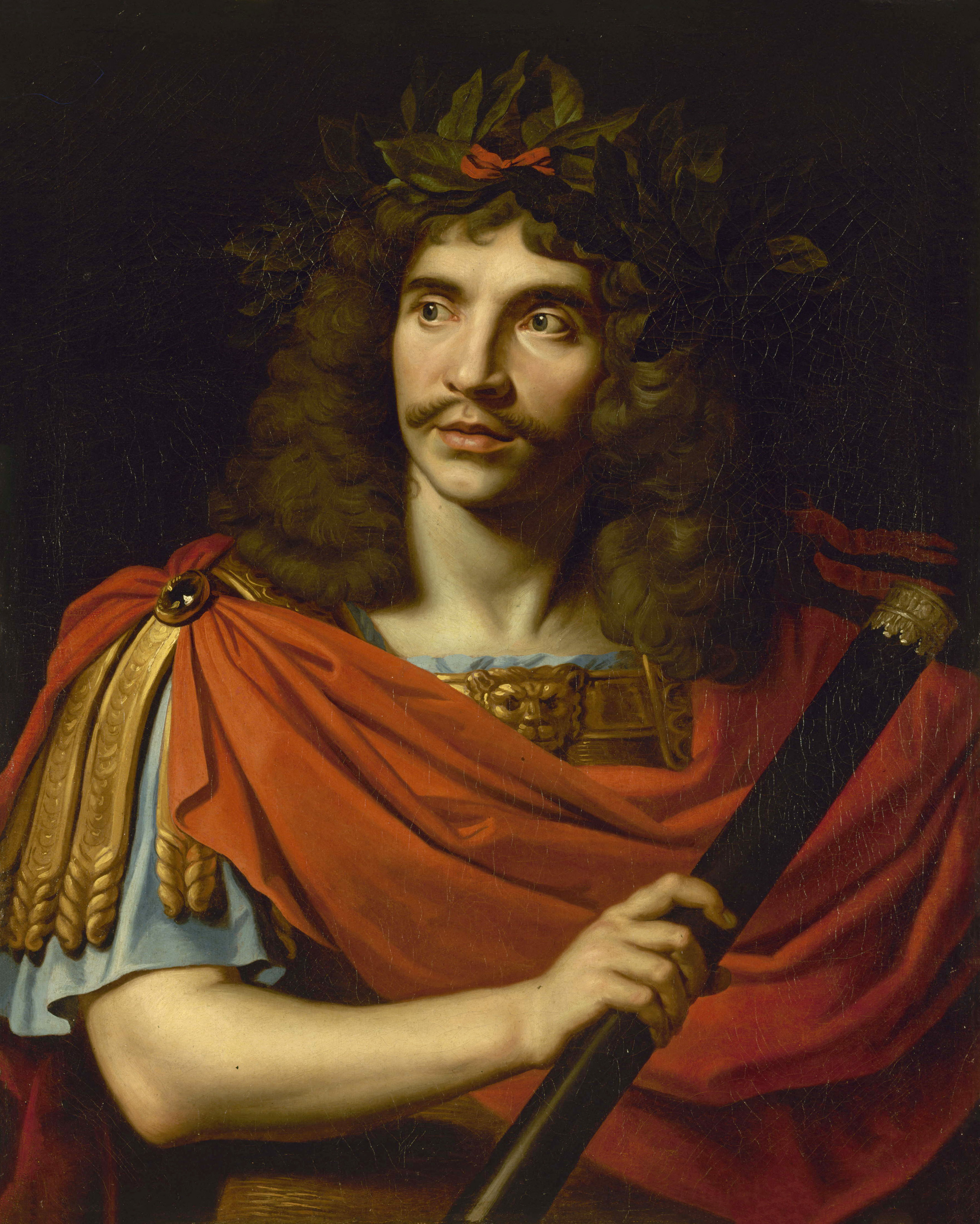
Molière, pseudonimo di Jean-Baptiste Poquelin , è stato un commediografo e attore teatrale francese.
“[…] stimare tutti vuol dire non avere stima per nessuno.”
'Alceste'; atto I, scena I
Il misantropo
“Uno stolto che non dice verbo non si distingue da un savio che tace.”
da Il dispetto amoroso
Beraldo: III, 3, 1995
Il malato immaginario
Oronte; atto V, scena IV
Il misantropo
Alceste; atto IV, scena III
Il misantropo
“Nessuno avrà dello spirito, tranne noi e i nostri amici.”
III, II
Nul n'aura de l'esprit, hors nous et nos amis.
Le donne saccenti
Origine: Giuseppe Fumagalli, Chi l'ha detto?, Hoepli.
Alceste; atto I, scena I
Il misantropo
Molière libro Il medico per forza
Il medico per forza
“Se non essere cornuti vi sembra un gran bene, l'unico modo è non sposarsi affatto.”
da L'École des femmes, V, 9
“Si può essere una persona perbene e scrivere brutte poesie.”
'Filinte'; atto IV, scena I
Il misantropo
“Si muore una sola volta, ma per tanto tempo!”
da Il dispetto amoroso
On ne meurt qu'une fois, et c'est pour si longtemps!
Origine: Citato nel film Una canzone per Bobby Long (2004): «Si muore una volta sola e per così tanto tempo...»
“La grande prova d'amore è obbedire alla volontà della donna amata.”
II, VI
Il malato immaginario
“Il cielo proibisce in verità certi piaceri, ma con lui si trova un accomodamento.”
da Le Tartuffe ou l'imposteur, IV, 5
“Io riprendo la roba mia dovunque la trovo.”
citato in Giuseppe Fumagalli, Chi l'ha detto?, Hoepli, 1921, p. 544
“L'avete voluto, l'avete voluto, Giorgio Dandin, l'avete voluto!”
da George Dandin o il marito confuso, I, 7
“Deve aver ammazzato molta gente per essere tanto ricco.”
I, V
Il malato immaginario
Molière Il misantropo
Plus on aime quelqu'un, moins il faut qu'on le flatte:
À rien pardonner le pur amour éclate.
Act II, sc. iv
Le Misanthrope (1666)
“It is a wonderful seasoning of all enjoyments to think of those we love.”
Molière Il misantropo
C'est un merveilleux assaisonnement aux plaisirs qu'on goûte que la présence des gens qu'on aime.
Act V, sc. iv
Le Misanthrope (1666)
“A learned fool is more foolish than an ignorant one.”
Molière Les Femmes Savantes
Un sot savant est sot plus qu'un sot ignorant.
Act IV, sc. iii
Les Femmes Savantes (1672)
“My lord Jupiter knows how to sugarcoat the pill.”
Le Seigneur Jupiter sait dorer la pilule.
Act III, sc. x
Amphitryon (1666)
“We die only once, and for such a long time!”
Molière Lovers' quarrels
On ne meurt qu'une fois; et c'est pour si longtemps!
Le Dépit Amoureux (1656), Act V, sc. iii
“I have the defect of being more
sincere than persons wish.”
Molière Il misantropo
Origine: The Misanthrope
“One must eat to live, and not live to eat.”
Molière libro The Miser
Il faut manger pour vivre, et non pas vivre pour manger.
L'Avare (1668), Act III, sc. i.
Firstly, an inaccurate sourcing: in Act III, yes—but in Scene I, no: rather, in Scene V—HARPAGON, VALÈRE, MASTER JACQUES (see, e.g., the Project Gutenberg HTML version of the English translation: http://www.gutenberg.org/files/6923/6923-h/6923-h.htm). Secondly, a misattribution made clear by the Molière text—the character in the play, VAL, obviously points out that the quote refers to a "saying of one of the ancients" (and the quote is precisely written in quotation marks as well), in the full line of dialogue below:
Know, Master Jacques, you and people like you, that a table overloaded with eatables is a real cut-throat; that, to be the true friends of those we invite, frugality should reign throughout the repast we give, and that according to the saying of one of the ancients, "We must eat to live, and not live to eat."
The "ancients" to which VAL/Molière refers is Cicero, Diogenes Laertius, and the oldest known attribution, Socrates (whom Laertius explicitly attributes—and Cicero presumably invokes). Various books of quotations document this—e.g., Elizabeth Knowles' 2006 The Oxford Dictionary of Phrase and Fable (http://books.google.com/books?id=r2KIvsLi-2kC&dq=%22one+must+eat+to+live+not+live+to+eat%22&source=gbs_navlinks_s) and Jennifer Speake's 1982 A Dictionary of Proverbs (http://books.google.com/books?id=-IpkOkM3IfEC&dq=%22one+must+eat+to+live+not+live+to+eat%22&source=gbs_navlinks_s): the former lists the quote as "a proverbial saying, late 14th century, distinguishing between necessity and indulgence; Diogenes Laertius says of Socrates, 'he said that other men live to eat, but eats to live.' A similar idea is found in the Latin of Cicero, 'one must eat to live, not live to eat'"; the latter, reiterates this. Moreover, in William Shepard Walsh's 1909 Handy-book of Literary Curiosities, he adds that "According to Plutarch, what Socrates said was, 'Bad men live that they may eat and drink, whereas good men eat and drink that they may live.'" He also adds that Atheneus quotes similarly to Laertius, as well as explores other later variations (http://books.google.com/books?id=hrJkAAAAMAAJ&source=gbs_navlinks_s).
Misattributed
“Each day my reason tells me so; But reason doesn't rule in love, you know.”
Molière Il misantropo
Origine: The Misanthrope
“I prefer an accommodating vice
To an obstinate virtue.”
J'aime mieux un vice commode,
Qu'une fatigante vertu.
Act I, sc. iv
Amphitryon (1666)
“The world, dear Agnes, is a strange affair.”
Le monde, chère Agnès, est une étrange chose.
L'École des Femmes (1662), Act II, sc. v


