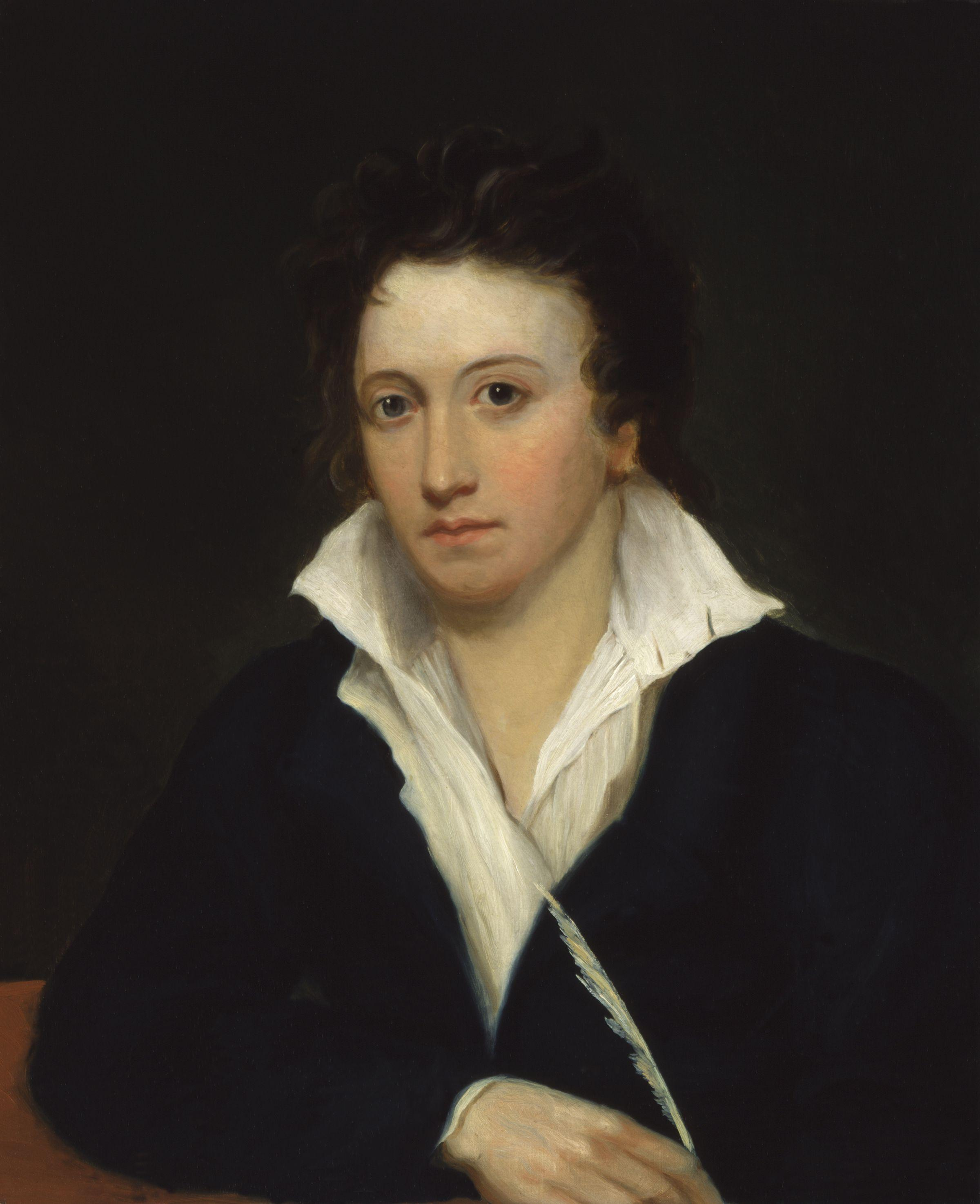
Origine: The butchering of harmless animals cannot fail to produce much of that spirit of insane and hideous exultation in which news of a victory is related altho' purchased by the massacre of a hundred thousand men. If the use of animal food be in consequence, subversive to the peace of human society, how unwarrantable is the injustice and barbarity which is exercised toward these miserable victims. They are called into existence by human artifice that they may drag out a short and miserable existence of slavery and disease, that their bodies may be mutilated, their social feelings outraged. (da On the Vegetable System of Diet, in Complete Works, a cura di Roger Ingpen e Walter E. Peck, vol. 6, Gordian Press, New York, 1965, pp. 343-344)
Percy Bysshe Shelley: 269 citazioni24 Mi piace
Percy Bysshe Shelley frasi celebri
“I poeti sono i legislatori misconosciuti del mondo.”
Origine: Citato in Corriere della Sera, 17 agosto 1992.
“So di essere uno di quelli che gli uomini non amano; ma sono di quelli di cui si ricordano.”
Origine: Citato in Charles Baudelaire, Lettre à Sainte-Beuve.
Origine: Da The Coliseum.
Lettere
Frasi sugli uomini di Percy Bysshe Shelley
Origine: Citato in Charles Morgan, La fontana, Mondadori, 1961.
Lettere
Origine: Da The Letters, Londra, 1912.
Origine: Da Ode a Napoli; citato in Vincenzo Pepe, La baia di Napoli in alcuni campioni di poesia… http://www.lacropoli.it/articolo.php?nid=312, lacropoli.it.
Percy Bysshe Shelley Frasi e Citazioni
poesia Ti amerei
“L'inferno è una città che somiglia molto a Londra, una città con tanta gente e tanto fumo.”
Origine: Citato in Focus, n. 87, p. 144.
Origine: Da Queen Mab; citato in Aa.Vv., Un gusto superiore: un modo nuovo di mangiare e di vivere, The Bhaktivedanta Book Trust Italia, 1992, p. 22.
Lettere
Origine: Da una lettera a Ralph Wedgwood (1766–1837); citato in Poesia n. 193, Crocetti 2005.
“Anche un po' di depressione è troppo.”
Origine: Da Lines of despair; citato in Serena Zoli, Giovanni B. Cassano, E liberaci dal male oscuro, TEA, Milano, 2009, p. 475. ISBN 978-88-502-0209-6
Origine: Da Ode al vento occidentale, traduzione di Roberto Sanesi.
Origine: By all that is sacred in our hopes for the human race, I conjure those who love happiness and truth, to give a fair trial to the vegetable system. (da A Vindication of Natural Diet, F. Pitman – J. Heywood, Londra – Manchester, 1884, p. 18 https://archive.org/stream/vindicationofnat00shelrich#page/18/mode/2up)
Origine: Da La necessità dell'ateismo (1813), Nessun Dogma, Roma, 2012, pp. 15-16.
da Ad un'allodola
Origine: In Poesie, a cura di Roberto Sanesi, Milano, 1983.
Questa traduzione è in attesa di revisione. È corretto?
Percy Bysshe Shelley: Frasi in inglese
Percy Bysshe Shelley The Indian Serenade
The Indian Serenade (1819), st. 3
Article 1 <br class="br"> "Declaration of Rights" http://knarf.english.upenn.edu/PShelley/declarat.html (1812)
“Chameleons feed on light and air:
Poets' food is love and fame.”
An Exhortation http://www.poetryconnection.net/poets/Percy_Bysshe_Shelley/2579 (1819), st. 1
The Question http://rpo.library.utoronto.ca/poem/1907.html (1820), st. 2
On a Future State (1815; publ. 1840)
Percy Bysshe Shelley Queen Mab
Canto III
Queen Mab (1813)
“Thou art unseen, but yet I hear thy shrill delight.”
Percy Bysshe Shelley To a Skylark
St. 4
To a Skylark (1821)
Percy Bysshe Shelley Epipsychidion
Origine: Epipsychidion (1821), l. 595
This passage has sometimes been paraphrased as "History is a cyclic poem written by Time upon the memories of man". <br class="br"> A Defence of Poetry http://www.bartleby.com/27/23.html (1821)
“That orbed maiden with white fire laden,
Whom mortals call the moon.”
Percy Bysshe Shelley The Cloud
The Cloud, iv; reported in Bartlett's Familiar Quotations, 10th ed. (1919)
On a Future State (1815; publ. 1840)
“A Christian, a Deist, a Turk, and a Jew, have equal rights: they are men and brethren.”
Article 24 <br class="br"> "Declaration of Rights" http://knarf.english.upenn.edu/PShelley/declarat.html (1812)
St. 6
Hymn to Intellectual Beauty (1816)
Percy Bysshe Shelley Hellas
Origine: Hellas (1821), l. 696-703
Percy Bysshe Shelley Prometheus Unbound
Demogorgon, Act IV, l. 562–569
Prometheus Unbound (1818–1819; publ. 1820)
“Reason respects the differences, and imagination the similitudes of things.”
A Defence of Poetry http://www.bartleby.com/27/23.html (1821)
One Word is Too Often Profaned (1821), st. 2
One Word is Too Often Profaned http://www.readprint.com/work-1370/Percy-Bysshe-Shelley (1821), st. 1
“Most wretched men
Are cradled into poetry by wrong;
They learn in suffering what they teach in song.”
Origine: Julian and Maddalo http://www.bartleby.com/139/shel115.html (1819), l. 543
Percy Bysshe Shelley Epipsychidion
Origine: Epipsychidion (1821), l. 602
“Thy words are like a cloud of winged snakes;
And yet I pity those they torture not.”
Percy Bysshe Shelley Prometheus Unbound
Prometheus, Act I, l. 632
Prometheus Unbound (1818–1819; publ. 1820)


